

Battery packs
Potting, gasketing and assembling
- Home

- eMobility
- EV Batteries
- Battery (BMS) & Cell Controller
Battery (BMS) & Cell Controller
The rapid growth of electric vehicles (EVs), energy storage systems (ESS), and portable electronics is driving a steady increase in battery capacity, power density, and system complexity. As battery packs scale to deliver higher performance and longer operating life, thermal loads rise and electrical architectures become more demanding at both the module and cell level.
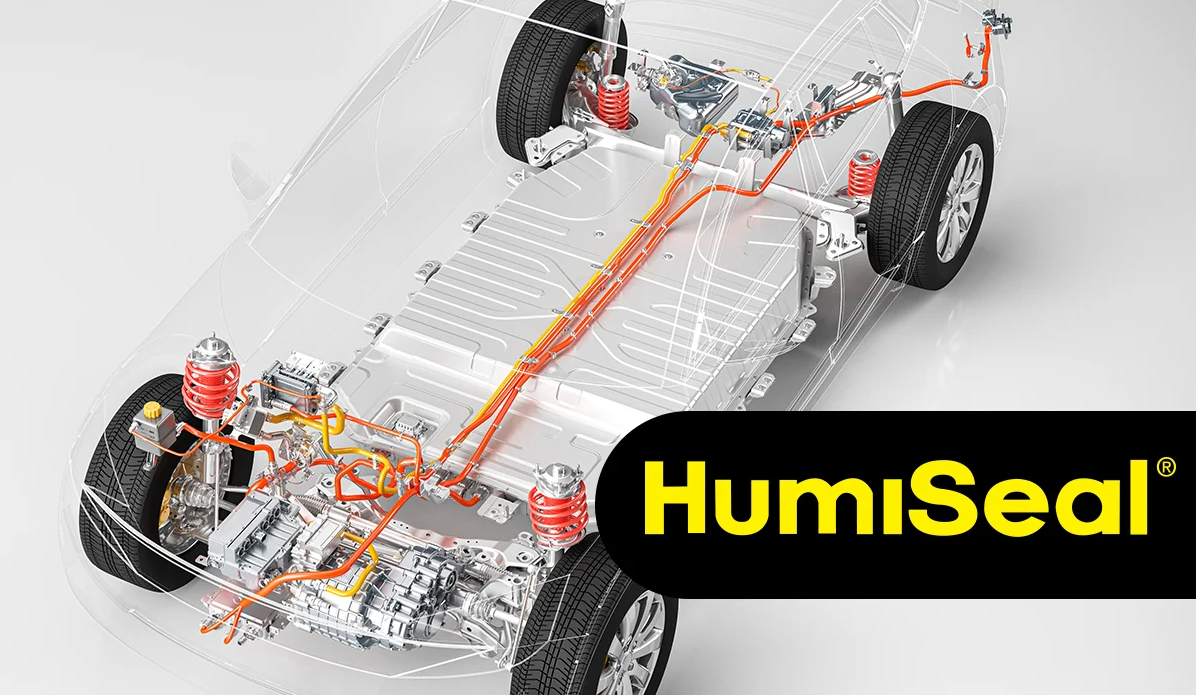 Internal Schematic of an electric vehicle
Automotive environments expose BMS electronics to vibration, humidity, temperature cycling, condensation, and contamination from road salts and chemicals.
Corrosion
Corrosion can occur in BMS electronics when moisture enters the battery pack enclosure or condenses during temperature cycling.
When this moisture dissolves ionic contaminants such as road salts or flux residues, it forms an electrolyte that enables electrochemical reactions that oxidise copper traces, solder joints, and component leads.
Electrical Leakage
Electrical leakage in BMS circuits occurs when condensation or contamination forms a conductive film across the PCB surface, allowing unintended current to flow between adjacent conductors.
In high-voltage EV battery systems, even small leakage currents can affect voltage sensing accuracy and reduce surface insulation resistance.
Circuit Failure
Circuit failure can occur when electrochemical migration causes metal ions to move between biased conductors on the PCB, forming conductive dendrites.
These filaments can eventually bridge adjacent traces in the BMS monitoring circuitry, creating short circuits that disrupt battery monitoring and protection functions.
Key Functions of a Battery Management System
The Battery Management System (BMS) of an EV or hybrid vehicle ensures the battery operates safely, efficiently, and reliably, extending its life while optimising vehicle performance.
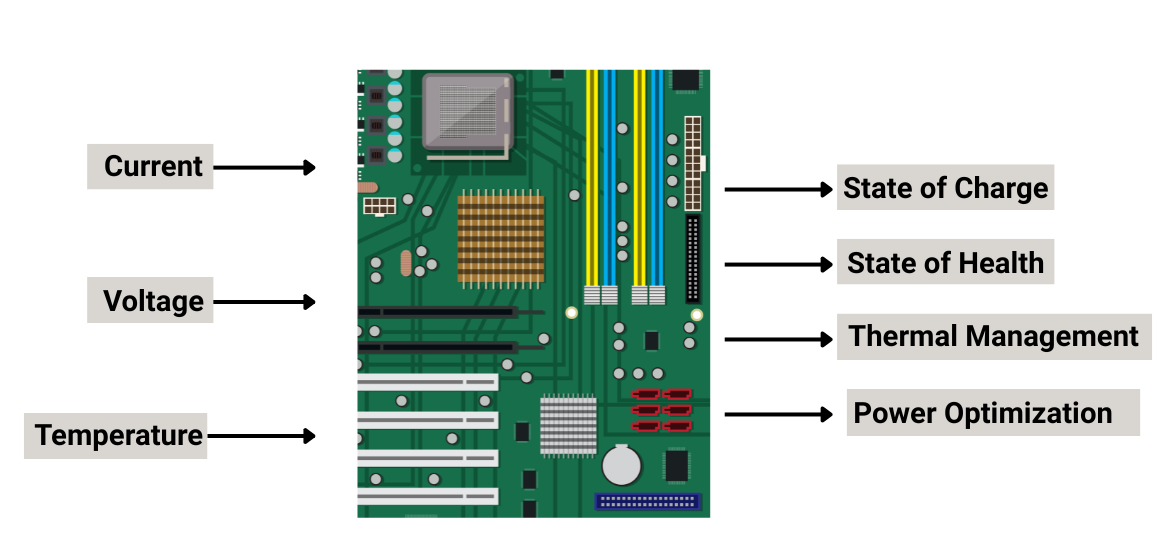
Function 1: Monitoring & Safety
The BMS continuously monitors battery parameters and ensures safe operation, protecting the battery from damage and hazards.
Keeps track of every cell to prevent overcharge or over-discharge.
Detects overheating to maintain safe battery operation.
Automatically limits power or shuts down if unsafe conditions arise.
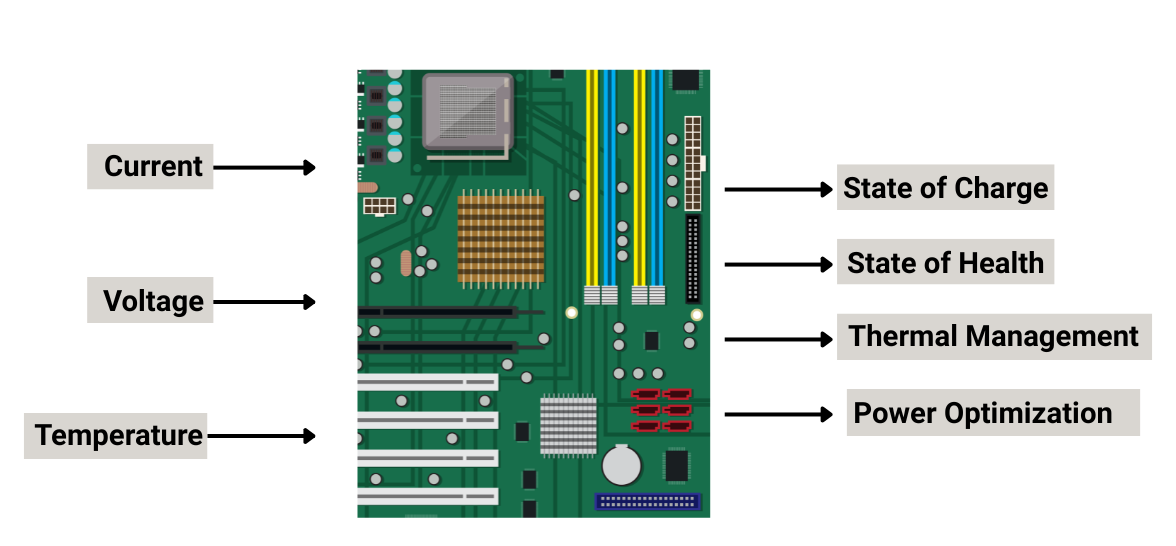
Function 2: Performance & Optimisation
The BMS optimises battery performance, balancing cells and managing energy for maximum efficiency and longevity.
Ensures uniform charge across all cells for consistent capacity.
Optimises charging/discharging cycles for better performance.
Provides accurate battery range for reliable driving.
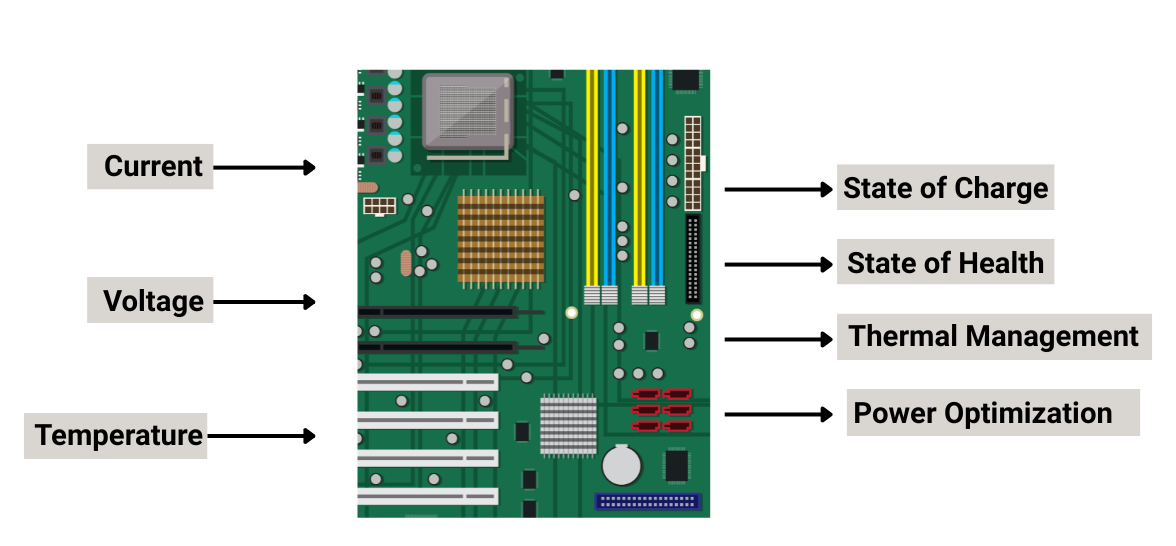
Function 3: Communication & Diagnostics
The BMS communicates vital battery information to the vehicle system, enabling smarter operation and easier maintenance.
Shares voltage, temperature, and charge info with the dashboard.
Detects issues early to reduce downtime.
Interfaces with fleet management and energy storage systems.
Protecting BMS Electronics with Conformal Coatings
Battery Management Systems rely on sensitive electronics to protect EV batteries. These sensitive electronics are exposed to vibration, moisture, dust, and temperature extremes inside the battery pack.
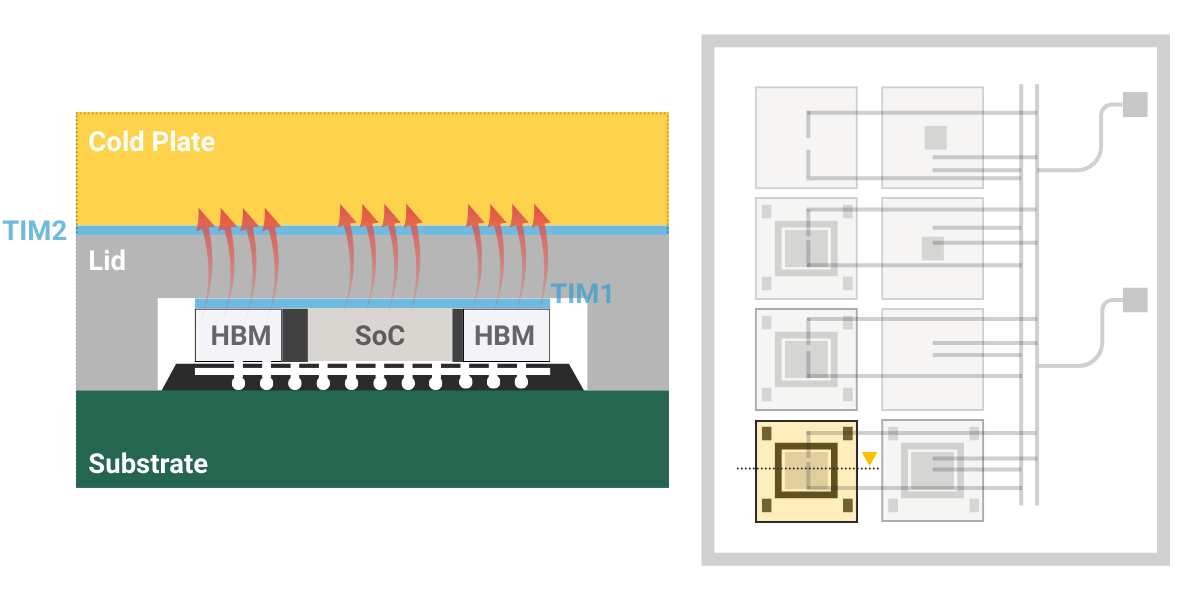
Corrosion Protection
Conformal coatings prevent moisture from entering the electronic component, thereby preventing corrosion in high-humidity or wet environments.
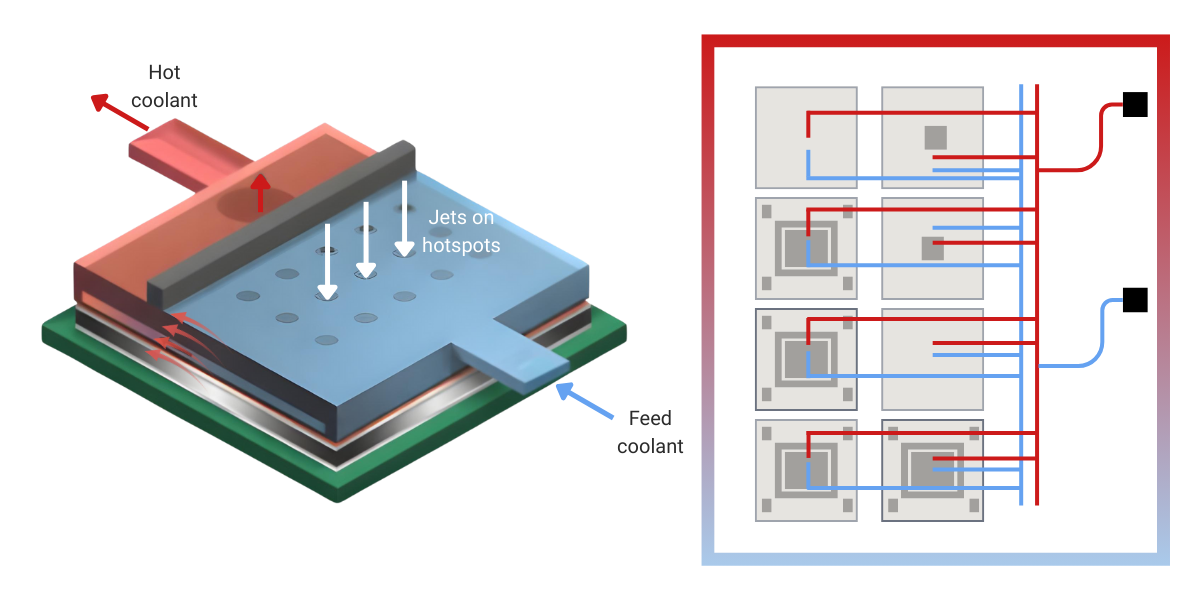
Dust and Chemical Contamination
Conformal coatings shield against dust and chemical contamination, which can cause shorts or signal errors.
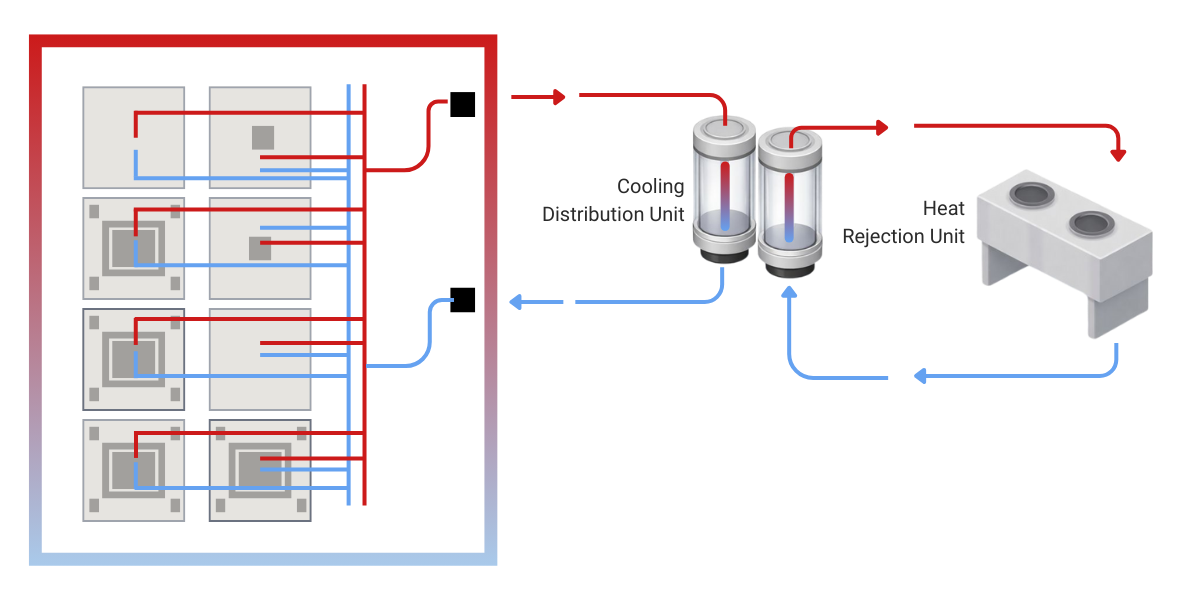
Increased thermal stability
Conformal coatings can increase thermal stability, which allows electronics to operate safely in hot battery packs.
Key Conformal Coating Requirements for Battery Management Systems
The primary function of vibration resistance in BMS conformal coatings is to maintain electrical protection and structural integrity under continuous mechanical stress from vehicle operation. Key material properties include flexibility to absorb shock, strong adhesion to PCB and component surfaces, and the ability to resist cracking or delamination under repeated vibration.
These properties directly influence long-term reliability of solder joints and fine-pitch components, prevent micro-cracks that could lead to electrical leakage, and ensure consistent performance of voltage and temperature monitoring circuits throughout the vehicle’s lifetime.
The primary function of chemical resistance and process compatibility is to ensure coatings withstand exposure to automotive fluids and integrate with high-volume manufacturing. Key material properties include resistance to oils, coolants, and cleaning agents, along with compatibility with selective coating, spray, and UV curing processes.
These properties directly influence manufacturability, repeatable coating quality, and long-term protection of sensitive BMS electronics in real-world automotive conditions.
The primary function of moisture and corrosion resistance is to protect PCB traces, solder joints, and component leads from environmental degradation. Key material properties include water repellency, barrier performance against ionic contaminants, and adhesion to a variety of substrates.
These properties directly influence long-term reliability, prevent corrosion-induced resistance changes, and maintain consistent operation of temperature and voltage monitoring circuits.
The primary function of thermal and mechanical stability is to maintain coating integrity under repeated temperature cycling and mechanical stress. Key material properties include flexibility, adhesion under thermal expansion, and resistance to cracking or delamination under vibration.
These properties directly influence durability of the BMS assembly, reliability of solder joints, and consistent electrical protection throughout the vehicle lifetime.
Silicone Conformal Coatings for Battery Management Systems (BMS)
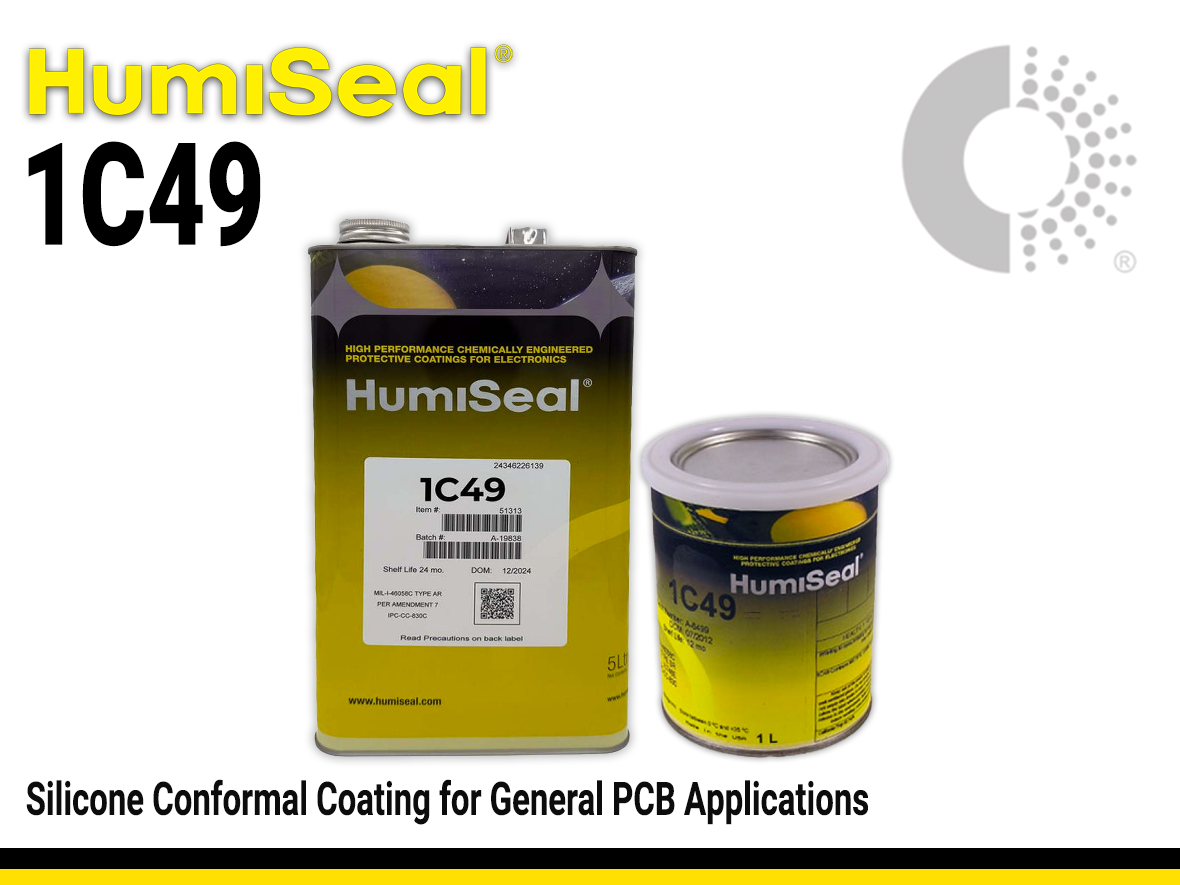
HUMISEAL™ 1C49
Silicone-based conformal coatings are uniquely characterised by their exceptional high-temperature performance. The strong, thermally stable Si–O bonds in silicones outperform the carbon–carbon bonds found in acrylics, enabling these coatings to withstand temperatures above 150 °C. They excel in automotive applications due to their high temperature resistance. Their vibration resistance also makes them suitable for automotive applications.
HumiSeal® 1C49 is a moisture-curing, high-build silicone conformal coating that offers exceptional moisture and environmental protection for printed circuit assemblies. This solvent and VOC-free coating is flexible, easy to inspect under UV light, and can be repaired. 1C49 can be cured at room or elevated temperatures.
Typical Properties
| Density, per ATM D1475 | 0.97 ± 0.03 g/cm³ |
| Min Solids Content % by weight per Fed-Std-141, Meth. 4044 | 95% |
| VOC | 0 grams/L |
| Recommended Coating Thickness | 50 - 200 microns |
| Drying Time to Handle per Fed-Std-141, Meth. 4061 | 3 - 5 hours |
| Recommended Curing Conditions | 24 hrs @ RT or 20 min @ 76°C* |
| Time required to Reach Optimum Properties | 7 days |
| Recommended Stripper | HumiSeal® Stripper 1091 |
| Shelf Life at Room Temperature, DOM | 12 months |
| Thermal Shock, 50 cycles per MIL-I-46058C | -65°C to 200°C |
| Coefficient of Thermal Expansion - TMA | 367 ppm /ºC |
| Glass Transition Temperature - DSC | < -65°C |
| Storage Modulus - DMA | 408 MPa @ -40ºC 1.6 MPa @ 25ºC 1.4 MPa @ 80ºC |
Typical values shown for reference only and should not be used as specifications.
Applications
- Electronic components with high operational temperature requirements
Acrylic Conformal Coatings
Acrylic conformal coatings are typically based on polymers derived from acrylic acid or methacrylic acid esters. These resins are linear and thermoplastic, which means they do not crosslink during curing. This gives them high reworkability and allows for fast curing.
Acrylic-based coatings represent the largest market share of conformal coatings. The widespread choice of acrylic-based coatings can be attributed to their ease of use, short cure time, and reworkability/repairability. Acrylate coatings only use the monomers, which gives higher flexibility and reworkability due to no crosslinking (solvent-based).
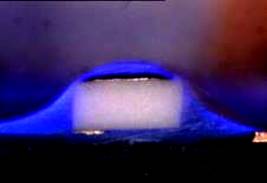
Visual view of conformal coating covering a component on the PCB
Key Findings
- Acrylic conformal coatings provide high dielectric strength and surface insulation resistance, helping prevent leakage currents and electrical tracking in high-voltage BMS circuits.
- They form a protective barrier that blocks moisture and ionic contaminants, reducing the risk of corrosion and electrochemical migration on PCB assemblies.
- Acrylic coatings dry quickly and are compatible with selective coating, spray, and dip processes used in high-volume automotive electronics production.
- Acrylic coatings can be easily removed with common solvents, enabling efficient repair and rework of BMS circuit boards during manufacturing or servicing.
| Physical Properties | 1R32A-2 | 1B31 | 1B73 |
|---|---|---|---|
| Continuous Use Operating Range | -65 to 125 | -65 to 125 | -65 to 125 |
| Thermal Shock °C | -65 to 125 | -65 to 125 | -65 to 125 |
| Glass Transition Temperature (Tg) °C | 14 | 14 | 42 |
| Certifications | IPC CC-830B, UL746E, UL94 V0, | MIL-I-46058C, IPC-CC-830, IEC61086, Reach and RoHS | MIL-I-46058C, IPC-CC-830, Reach and RoHS, UL E105698 |
The information contained here is provided for product selection purposes only and is not to be considered specification or performance data. Under no circumstance will the
seller be liable for any loss, damage, expense or incidental or consequential damage of any kind arising in connection with the use or inability to use its product.
For detailed specifications, material properties, and application guidance relevant to conformal coatings:
Urethane and Synthetic Rubber Conformal Coatings for Battery Management Systems (BMS)
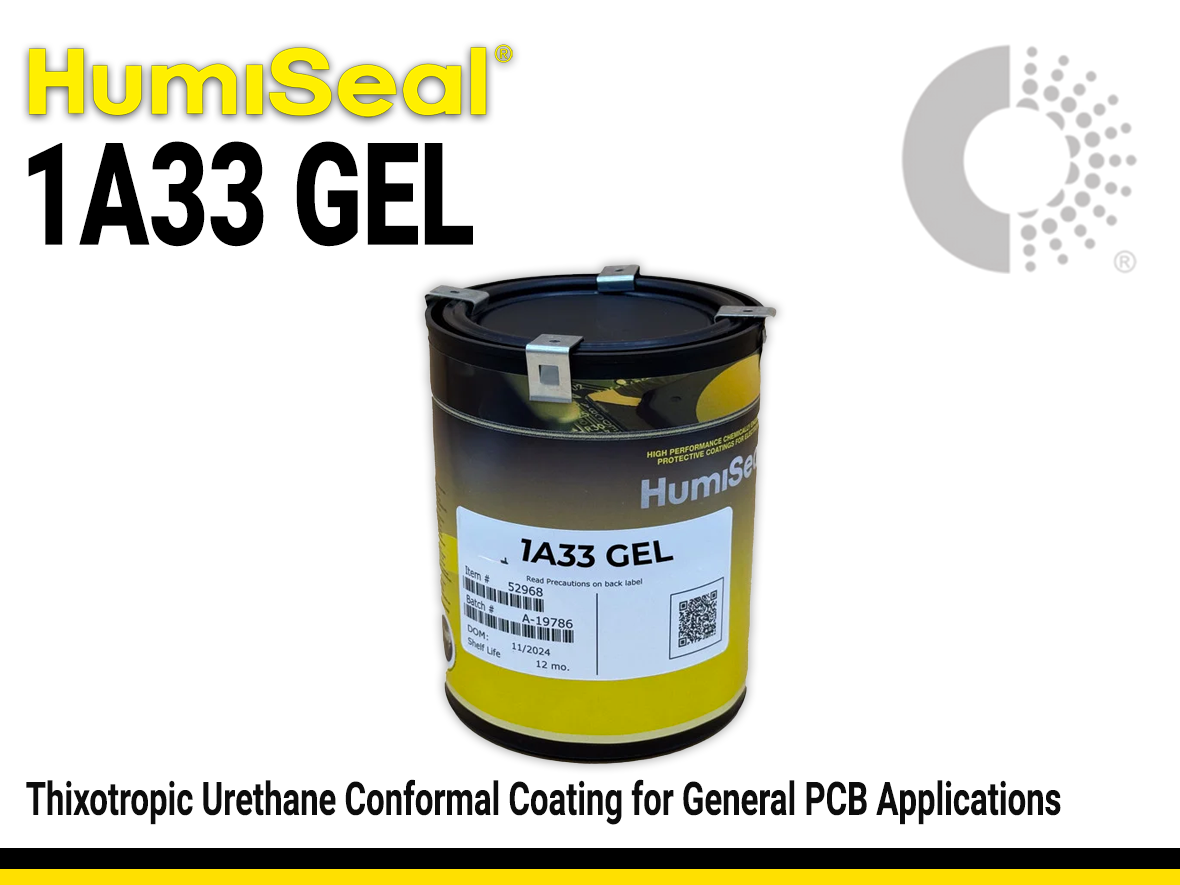
HUMISEAL™ 1A33
Polyurethane coatings are formed by crosslinking polyols with isocyanates, resulting in a flexible, tough layer with excellent abrasion and chemical resistance. Compared to acrylics, polyurethane conformal coatings has higher chemical resistance and mechanical strength, second only to epoxies.
However, they are preferred over epoxies for their easier reworkability. All these make them stand a chance against salt spray and noxious gas, which are meant to simulate corrosive environments and industrial gases. Compared to other conformal coatings, polyurethane-based coatings do have a lengthier curing time.
Visual view of conformal coating covering a component on the PCB
Product Features and Applications
- General printed circuit board applications
- Automotive electronic applications, including in-cabin and exterior use.
- Military equipment requiring durable performance.
- Renewable energy systems needing robust electronic reliability.
- Industrial controls exposed to high humidity, salt-spray, and corrosive environments.
| Physical Properties | 1A33 | 1A20R |
|---|---|---|
| Continuous Use Operating Range | -65 to 125 | -65 to 125 |
| Thermal Shock °C | -65 to 125 | -65 to 125 |
| Glass Transition Temperature (Tg) °C | 26 | 14 |
| Certifications | MIL-I-46058C, IPC-CC-830, IEC61086, UL94V0 | MIL-I-46058C, IPC-CC-830, IEC61086, Reach and RoHS |
The information contained here is provided for product selection purposes only and is not to be considered specification or performance data. Under no circumstance will the
seller be liable for any loss, damage, expense or incidental or consequential damage of any kind arising in connection with the use or inability to use its product.
Synthetic Rubber Conformal Coatings
Synthetic rubber conformal coatings are flexible, elastomer-based protective films. These are typically made from butyl rubber or styrene block copolymers. Rubber-based conformal coatings offer moderate reworkability and good moisture resistance. While not as chemically resistant or thermally stable as polyurethanes or silicones, they provide a balanced performance for less demanding environments. Their mechanical flexibility also makes them well-suited for applications subject to vibration or damping.
HumiSeal® 1B51NS is a fast-drying, single-component, synthetic rubber conformal coating. It's formulated with methylcyclohexane solvent, making it a more environmentally friendly option than traditional solvents. Due to its unique base polymer, this coating offers extremely low moisture vapor permeability, excellent flexibility, and low stress on components. 1B51NS is also easy to repair and fully compliant with the RoHS Directive 2002/95/EC.
Typical Properties
| Density, per ATM D1475 | 0.81 ± 0.02 g/cm³ |
| Min Solids Content % by weight per Fed-Std-141, Meth. 4044 | 22 ± 1.5 % |
| Viscosity, per Fed-Std-141, Meth. 4287 | 185 ± 30 centipoise |
| VOC | 632 grams/L |
| Recommended Coating Thickness | 25 - 75 microns |
| Drying Time to Handle per Fed-Std-141, Meth. 4061 | 10 minutes |
| Recommended Curing Conditions | 24 hrs @ RT or 30 min @ 76°C |
| Time required to Reach Optimum Properties | 7 days |
| Recommended Thinner | HumiSeal® Thinner 905 |
| Recommended Stripper | HumiSeal® Stripper 1080 |
| Shelf Life at Room Temperature, DOM | 18 months |
| Thermal Shock, 50 cycles per MIL-I-46058C | -65°C to 125°C |
| Coefficient of Thermal Expansion - TMA | 55 ppm /ºC |
| Glass Transition Temperature - DSC | 14 °C |
| Storage Modulus - DMA | 93.1 MPa @ -20°C 73.5 MPa @ 0°C 35.3 MPa @ 20°C |
Typical values shown for reference only and should not be used as specifications.
Frequently Asked Questions About HUMISEAL™ Conformal Coatings
▶ What type of conformal coating is typically used for BMS electronics?
Common coating chemistries used in BMS applications include acrylic, silicone, polyurethane, and UV-curable coatings, selected based on requirements such as temperature stability, chemical resistance, and manufacturing process compatibility.
Some elastomers and plastics, including NBR, silicone, polyamide (PA), polyoxymethylene (POM), and certain fluoroelastomers (FKM), may have lower recommended temperature limits or reduced long-term stability when exposed to propylene glycol–based fluids.
▶ How do conformal coatings improve BMS reliability?
By forming a thin protective barrier over the PCB, conformal coatings prevent corrosion, reduce the risk of electrical leakage or dendritic growth, and help maintain stable circuit performance over the vehicle lifetime.
| Total Chlorides (as Cl⁻) | < 25 mg/L |
| Total Sulfates (as SO₄²⁻) | < 25 mg/L |
| Total Hardness (as CaCO₃) | < 50 mg/L |
| Total Iron (as Fe) | < 1 mg/L |
| Electrical Conductivity | < 50 µmhos/cm |
| pH | 5 < pH < 9 |
Solutions for Battery Management Systems
CAPLINQ Conformal Coatings for Printed Circuit Boards
Curious about how the right materials can improve PCB Performance? This quick presentation walks you through CAPLINQ’s lineup for Conformal Coatings: what they’re made of, how they perform, and where they fit best. Whether you’re optimizing for efficiency, durability, or both, these materials are engineered to keep up.
Protect your Battery Managment System and automotive electronic assemblies with advanced conformal coatings.
Talk to our engineers about selecting the right conformal coating for your automotive electronics.