

This blog explains that the performance of polyimide (Kapton) tape across extreme temperatures is determined by the adhesive, not the film. It compares acrylic and silicone adhesives, showing how each behaves in low and high temperatures and helping readers choose the right tape for demanding applications.

Power That Performs
Encapsulation for Aerospace Energy Systems
Insulation and Thermal Control for Power Modules
-
Home

-
Aerospace
-
Power Systems
- Aviation Solar Panel
Aviation Solar Panel
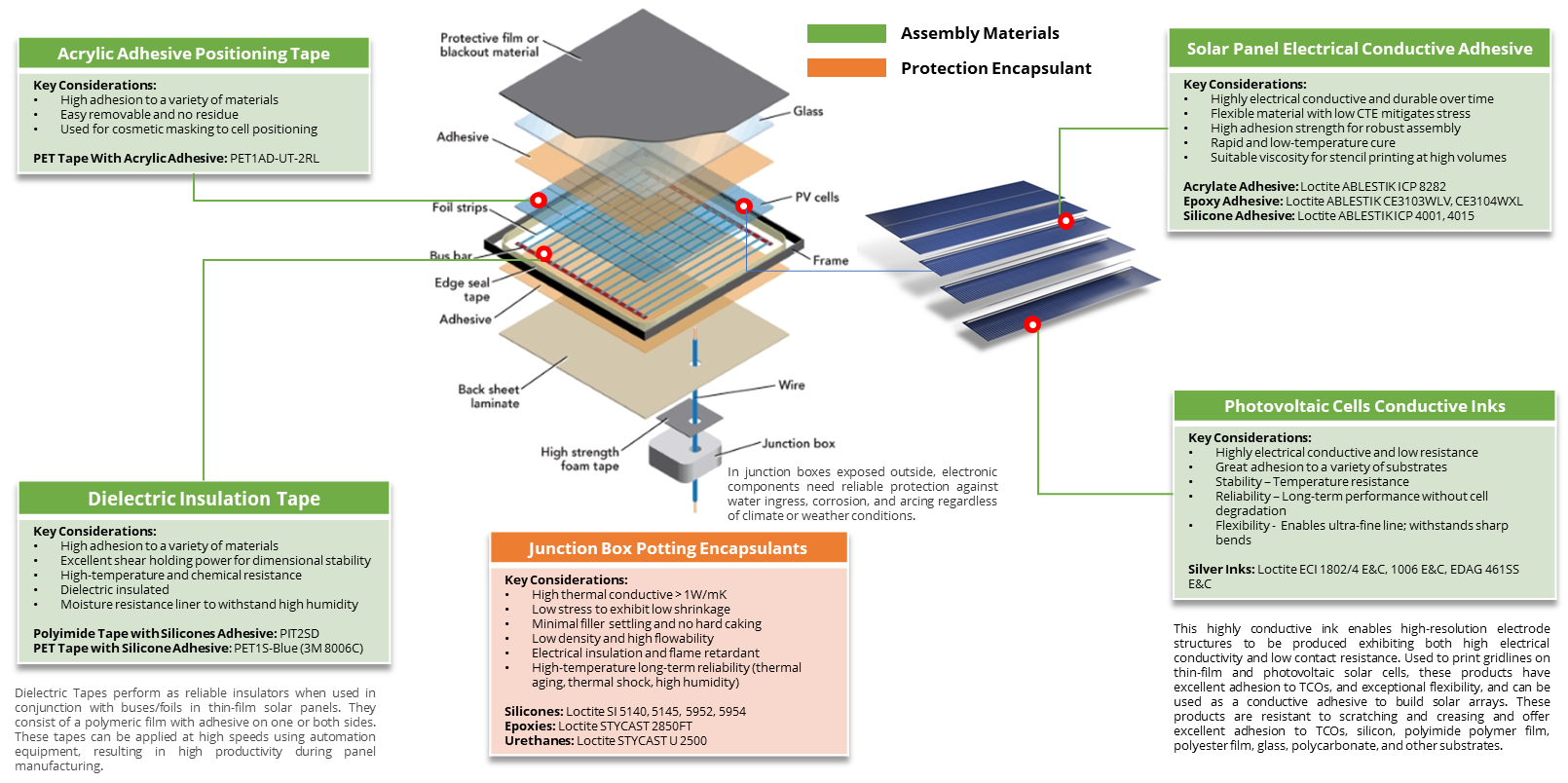
Aviation solar panels are specifically engineered to meet the demanding conditions of flight. Unlike standard solar panels, which are rigid and optimized for stationary installations, aviation panels require lightweight construction, flexibility, and extreme environmental resilience. All this while at the same time still fulfilling their main purpose, which is converting sunlight into electricity.

The limitations of conventional materials in aerospace applications have driven significant innovation. These limitations include:
- Volatile emissions - Standard materials can release gases that deposit on solar cells or sensors, reducing efficiency.
- Contamination risk - Outgassed compounds may degrade coatings, adhesives, or transparent protective layers.
- Compatibility - Non-low-outgassing materials may react with other aerospace components, causing corrosion or adhesion failure.
- Mechanical stability - due to vibration and high speed, materials need to be strong enough to withstand degradation.
- Thermal stability - Aerospace applications go through extreme temperature fluctuations.
These panels often incorporate advanced insulation and protective layers, such as polyimide tapes, which were originally developed for aerospace and satellite technologies. Over the decades, their materials, efficiency, and durability have been refined, making them suitable for solar-powered electronics in planes, hybrid aircraft, and high-altitude drones alike.
How do Aviation Solar Panels Work?
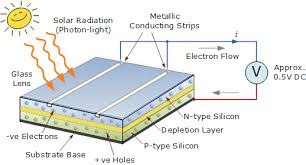
Aviation solar panels convert sunlight into electricity through photovoltaic cells embedded in the panel. When sunlight hits the solar cells, photons excite electrons in the semiconductor material, creating an electric current. The generated electricity is then collected and routed through metallic busbars and wiring to power onboard systems or charge batteries.
-
Photon absorption: Light energy from the sun is absorbed by the semiconductor material, usually monocrystalline or polycrystalline silicon, generating electron-hole pairs.
-
Electron flow: The electrons are directed through an external circuit via busbars and interconnections, producing usable electric current.
-
Current collection: The current flows to batteries or electrical systems on the aircraft, providing power.
Polyimide Tapes

Polyimide tapes are high-performance adhesive films designed to provide electrical insulation, thermal stability, and mechanical protection in demanding environments. They consist of a thin, durable polyimide backing and a pressure-sensitive adhesive, engineered to maintain adhesion and performance across extreme temperatures, chemical exposure, and mechanical stress.
These tapes are used to protect sensitive components, insulate electrical connections, and reinforce surfaces while remaining lightweight and flexible. Their unique combination of heat resistance, chemical inertness, and dimensional stability makes them suitable for applications ranging from electronics and solar panels to aerospace and automotive systems.
Low - Outgassing Polyimide Tapes
Low-outgassing polyimide tapes like PIT1A-LO are also polyimide tapes, but the main difference is that they don't release any or very minimal gases under heat, vacuum, or prolonged UV exposure.
High-performance adhesive films engineered to provide electrical insulation, mechanical protection, and chemical stability in environments where contamination must be minimized. They feature a durable polyimide backing combined with a specially formulated low-outgassing adhesive that resists releasing volatile compounds, even under high heat, vacuum, or prolonged exposure to UV radiation.
These tapes are ideal for protecting sensitive components, insulating electrical connections, and reinforcing surfaces in applications where outgassing could compromise performance, such as aerospace, satellites, high-altitude aircraft, and precision electronics. Their combination of thermal stability, chemical inertness, mechanical strength, and low outgassing ensures reliable, long-term performance in the most demanding environments.
NASA Low Outgassing Specifications
The NASA outgassing specification (NASA-STD-6016 / ASTM E595) sets limits on how much a material can release volatile compounds in vacuum and high-temperature conditions. It defines key metrics such as Total Mass Loss (TML), Collected Volatile Condensable Material (CVCM), and Water Vapor Recovered (WVR) to ensure materials do not contaminate sensitive surfaces like optics, electronics, or solar panels in aerospace applications.
Materials that meet these standards are considered low-outgassing, providing reliable performance and maintaining cleanliness in spacecraft, satellites, and high-altitude aircraft.

TML - Total Mass Loss
% of a materials mass that evaporates when exposed to a vacuum and high temperature.
CVCM - Collected Volatile Condensible Material
The fraction of mass that evaporates from the material then condenses on a cold surface.
WVR - Water Vapor Recovered
% of water vapor released by the material under the same conditions that can condense on a a collector.
LINQTAPE™ PIT1A-LO is an amber high-temperature resistant polyimide film designed for both permanent and temporary bonding in many high-temperature applications.
| Product | Total Mass Loss (TML-WVR) | Condensed Volatiles (CVCM) | |
|---|---|---|---|
| PIT1A-LO | <1.0 % | <0.1 % | |
|
ASTM E 595 Standard |
<1.0 % | <0.1 % |
⚡ Applications
- Electrical Insulation
- Edge protection
- Vibration damping
- Thermal Stability
- Temporary or permanent masking
✅ Advantages
✔ Low outgassing
✔ Excellent high temperature resistance
✔ Electrical Insulation
Frequently Asked Questions about Low Outgassing Tapes
What are low-outgassing tapes used for?
Low-outgassing tapes are used to protect sensitive components in environments where contamination from volatile compounds must be minimized. Common applications include aerospace, satellites, high-altitude aircraft, solar panels, and precision electronics. They provide electrical insulation, mechanical protection, and chemical stability without releasing gases that could compromise performance.
What specifications do I need to review when selecting a polyimide tape for an aerospace application?Aerospace outgassing tapes should have TML <1%, CVCM <0.1%, high temperature resistance (typically -70°C to 260°C), and strong adhesion without leaving residue.
What materials are used in low-outgassing tapes?
These tapes typically use high-purity polyimide (Kapton) films combined with specialized low-volatility adhesives. Both components are processed and cured to remove residual solvents and ensure long-term chemical stability.
What would happen if I used a non-outgassing tape in an aircraft solar panel?Non- outgassing tapes can release volatiles that condense on cells, reducing efficiency and damaging contacts, while low outgassing tapes ensure long-term performance.
Introduction to Specialty Tapes
This presentation introduces the main types of specialty tapes and films, focusing on high-performance materials engineered for demanding environments. It explores adhesion properties, common tape constructions, typical applications across multiple industries, and best practices for selecting and using specialty tapes to achieve optimal performance and long-term reliability.
Materials for Specialty Tapes and Films
Curious about how the right materials can improve performance? This presentation showcases KRAYDEN's portfolio of specialty tapes and films, highlighting key material technologies, performance characteristics, and recommended applications. Learn how these solutions provide reliable bonding, insulation, protection, thermal management, and electrical performance across a wide range of electronics and industrial applications.
Related Blogs

Hydrogen Safety with Hydrogen Detection Tapes?
This blog explains how KRAYDEN’s hydrogen‑detection tapes help improve safety when working with hydrogen — a gas that’s highly flammable, diffuses quickly, and is very hard to detect because it’s colorless, odorless, and lighter than air.

Copper Foil Tape for EMI Shielding?
This blog discusses how copper foil tape is used for EMI (electromagnetic interference) shielding, static dissipation, and grounding in electronic devices. It highlights the tape’s conductive adhesive, easy application, and ability to protect sensitive circuits while improving signal integrity and device reliability.