
Engineered for Orbit
Space-Qualified Coatings and Adhesives
-
Home

-
Aerospace
-
Space Systems
- Low-Outgassing Encapsulation & Potting
Low-Outgassing Encapsulation & Potting
Low-Outgassing Encapsulation & Potting
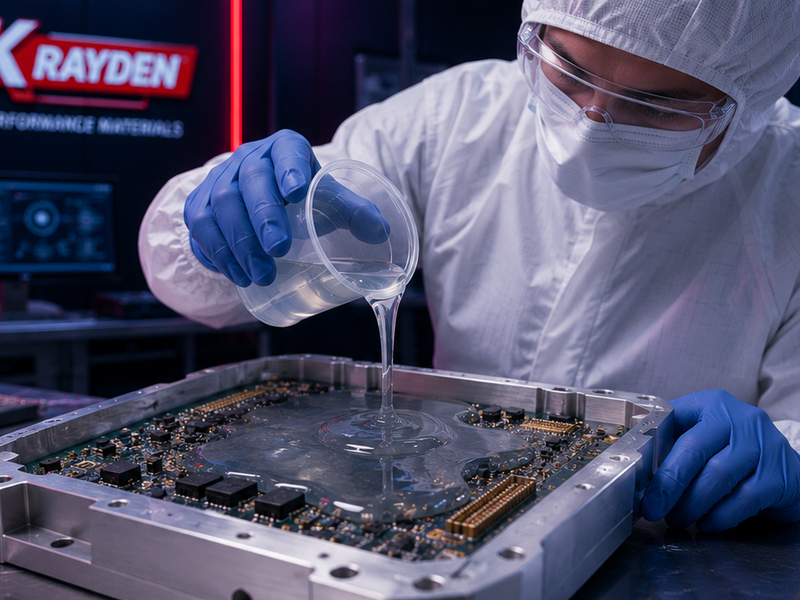
Flight electronics and payload modules need protection from vibration, moisture, and vacuum, but the encapsulant itself can become the contamination source if it isn't formulated for low outgassing. Materials that release volatiles in vacuum can deposit on nearby optics, sensors, and thermal control surfaces, degrading exactly the hardware the potting was meant to protect.
This page covers potting compounds and encapsulants tested and documented against NASA low-outgassing requirements, used to protect electronics, seal optical sensors, and support solar cell assembly.
Where This Is Used
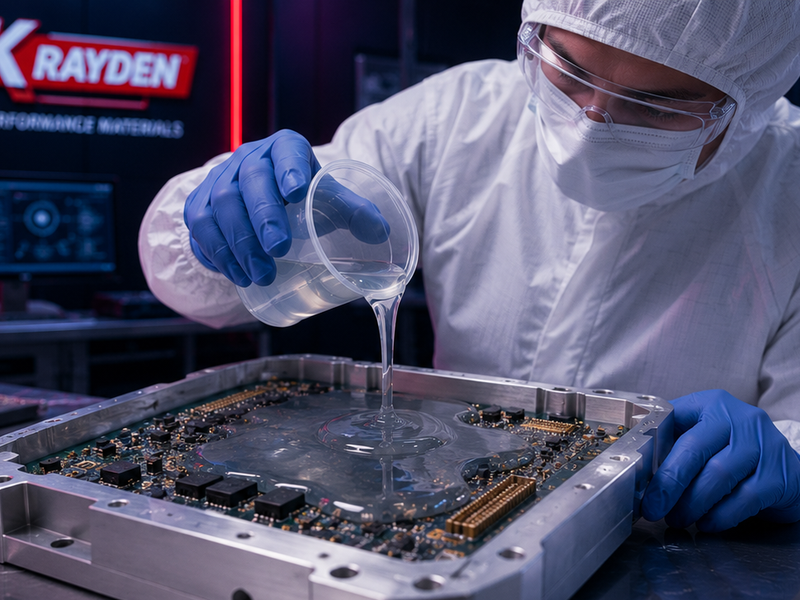
Low-outgassing potting compounds used to protect circuit boards and electronic modules from vibration, moisture, and mechanical shock.
Encapsulants used to seal cameras, telescopes, and other optical sensors, protecting sensitive optics from contamination and the elements.
The same encapsulant chemistry used for potting can bond solar cells to substrates and cover glasses to cells, where low outgassing matters just as much.
Understanding Outgassing
Under vacuum and heat, some materials release volatile compounds that travel and condense on nearby cold surfaces. The standard test, ASTM E595, heats a sample under vacuum and measures two figures: Total Mass Loss (TML) and Collected Volatile Condensable Material (CVCM). NASA's commonly referenced thresholds are TML ≤ 1.0% and CVCM ≤ 0.1%.
The percentage of a sample's original mass lost during the 24-hour heated vacuum exposure. Lower is better.
The percentage of condensable material collected on a chromium-plated disk during the test, an indicator of contamination risk to nearby surfaces.
ASTM E595 is a test method, not a pass/fail spec on its own. Materials are more accurately described as tested "according to ASTM E595" and meeting NASA's low-outgassing requirements.
Frequently Asked Questions
When should I use the flowable grade versus the thixotropic grade?
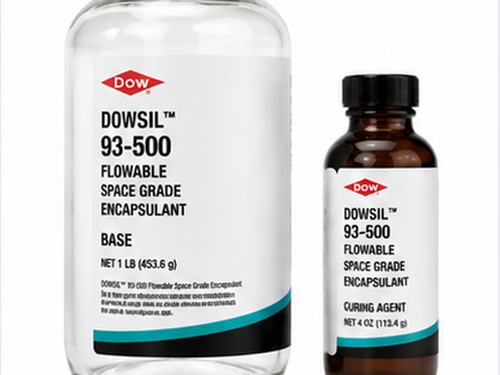
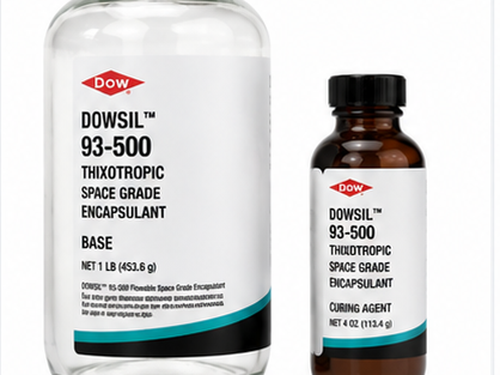
Flowable grades self-level and are generally easier to fully wet out a horizontal cavity, such as a circuit board in a tray. Thixotropic grades resist sagging and slumping, which matters for vertical or overhead application, such as encapsulating a component on an angled or upright assembly, where a flowable material would run before it cures.
Can I speed up the cure without affecting outgassing performance?
Some space-grade encapsulants offer a range of cure schedules, from roughly 24 hours at room temperature down to a few minutes at elevated temperature, without changing the outgassing classification of the cured material. The specific product's datasheet should be checked, since not every formulation is validated across the same range of cure conditions.
Does a low-outgassing rating mean the material is safe for use near optics specifically?
A low CVCM result indicates reduced risk of condensable contamination, which is the main concern for optics, but "low" is still a nonzero number. For the most contamination-sensitive optical paths, program-specific contamination control requirements may call for additional bakeout, testing, or a stricter material than a general low-outgassing threshold implies.
Are these products qualified to NASA or ESA standards?
Some products, including DOWSIL 93-500, are documented by the manufacturer as meeting NASA's low thermal vacuum outgassing requirements per ASTM E595. Current certification status, test data, and any additional agency-specific approvals should be confirmed for the specific product and grade in question. Contact the technical team for documentation.
Do you provide support for encapsulant selection on a specific program?
Yes. The Krayden technical team works directly with engineers on encapsulant selection, datasheets, and application support for new satellite program qualification or production work.
Need Help Selecting a Low-Outgassing Encapsulant?
Selection depends on the application (potting, sealing, or bonding), cure schedule, and contamination sensitivity of nearby hardware. The Krayden technical team provides material selection support, datasheets, and application guidance across space-grade encapsulation systems.
Low-Outgassing Encapsulation – Quick Reference