
Engineered for Orbit
Space-Qualified Coatings and Adhesives
-
Home

-
Aerospace
-
Space Systems
- Ablative & Reentry Thermal Protection
Ablative & Reentry Thermal Protection
Ablative & Reentry Thermal Protection
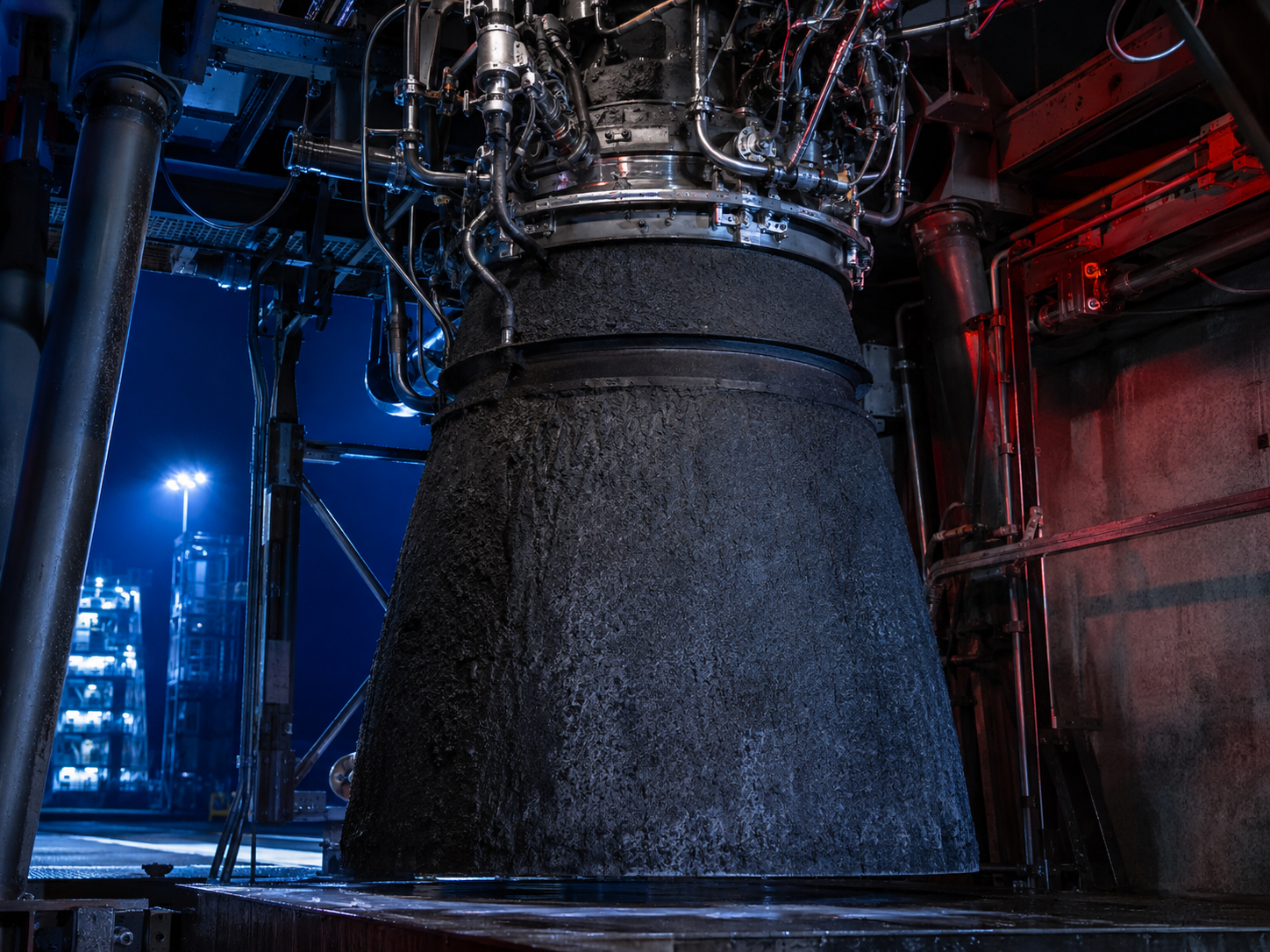
Rocket nozzles, launch structures, and reentry surfaces face direct flame and atmospheric friction that can exceed 3000°C, far beyond what any conventional coating or structural material can survive by simply resisting the heat. Ablative materials work differently: they're designed to char, erode, and sacrifice a controlled outer layer, carrying heat away with the material that burns off and insulating what's underneath.
This page covers silicone ablative materials used to protect launch structures, rocket nozzles, and hypersonic surfaces.
Where This Is Used
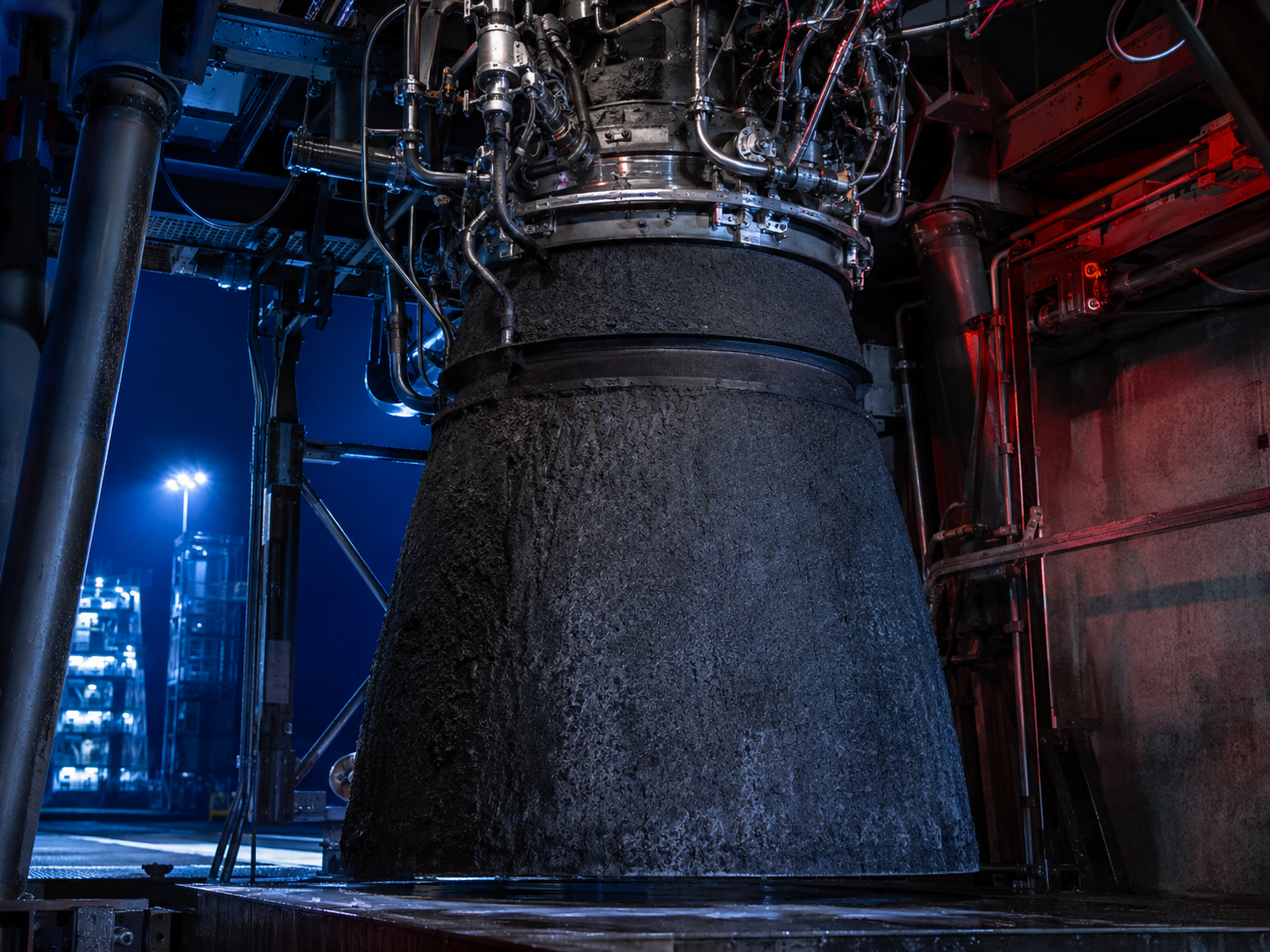
Ablative coatings applied to rocket nozzles and ramjet combustion chambers to insulate the underlying structure from direct exhaust flame.
Ablative coatings on launch platforms and ground structures exposed to direct flame during rocket launches.
Heat shielding for external surfaces exposed to atmospheric friction at hypersonic speeds during reentry or high-speed flight.
Case Study: Ablative Material on Rocket Nozzles
A company needed a material to apply onto rocket nozzles exposed to extreme high-flux temperatures, forming an insulating layer to protect the underlying substrate. Krayden recommended DOWSIL 93-104 ablative silicone, suitable for use in phenolic applications.
The material provided effective insulation against extreme heat exposure, met the relevant aerospace design and military specification approvals, and simplified processing since it was easy to apply and remove. The solution was applied across aerospace, avionics, and space-bound hardware.
Read the Full Case Study →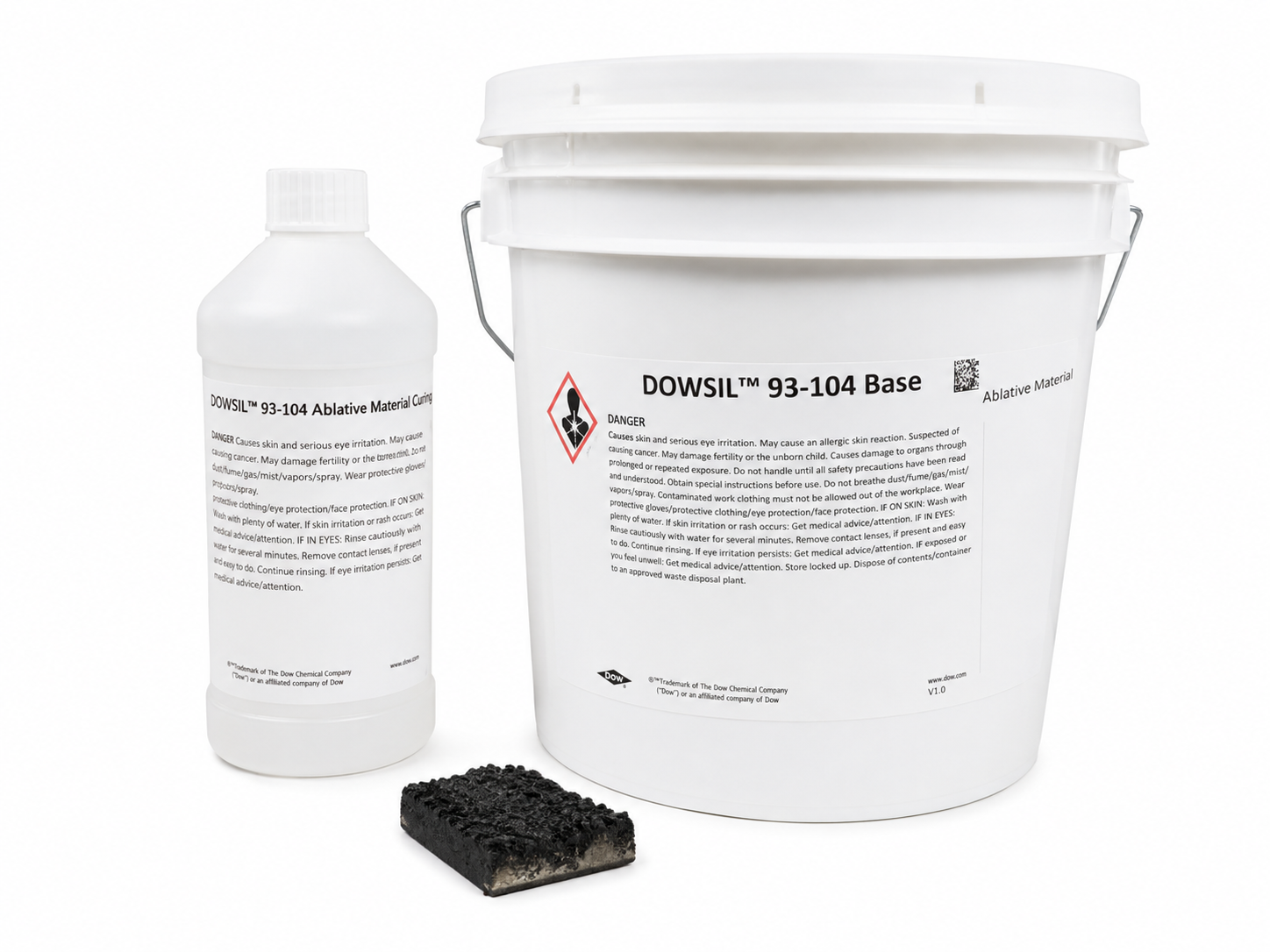
Frequently Asked Questions
How does an ablative material protect against heat if it's designed to burn away?
The material chars and erodes in a controlled way, and that process itself consumes energy and carries heat away from the surface with the material that's lost. The resulting char layer also acts as an insulator for whatever is left underneath, so the sacrificial behavior is the protection mechanism rather than a failure of it.
Can an ablative material be reused after exposure?
It depends on the exposure duration and how much of the material charred or eroded. Short exposures can leave a tough, tenacious char that continues to offer some protection, while longer direct exposure produces more significant topographic change and material loss, at which point the ablative layer typically needs to be reapplied before the next use.
What's the difference between the standard and fast-cure versions of DOWSIL 93-104?
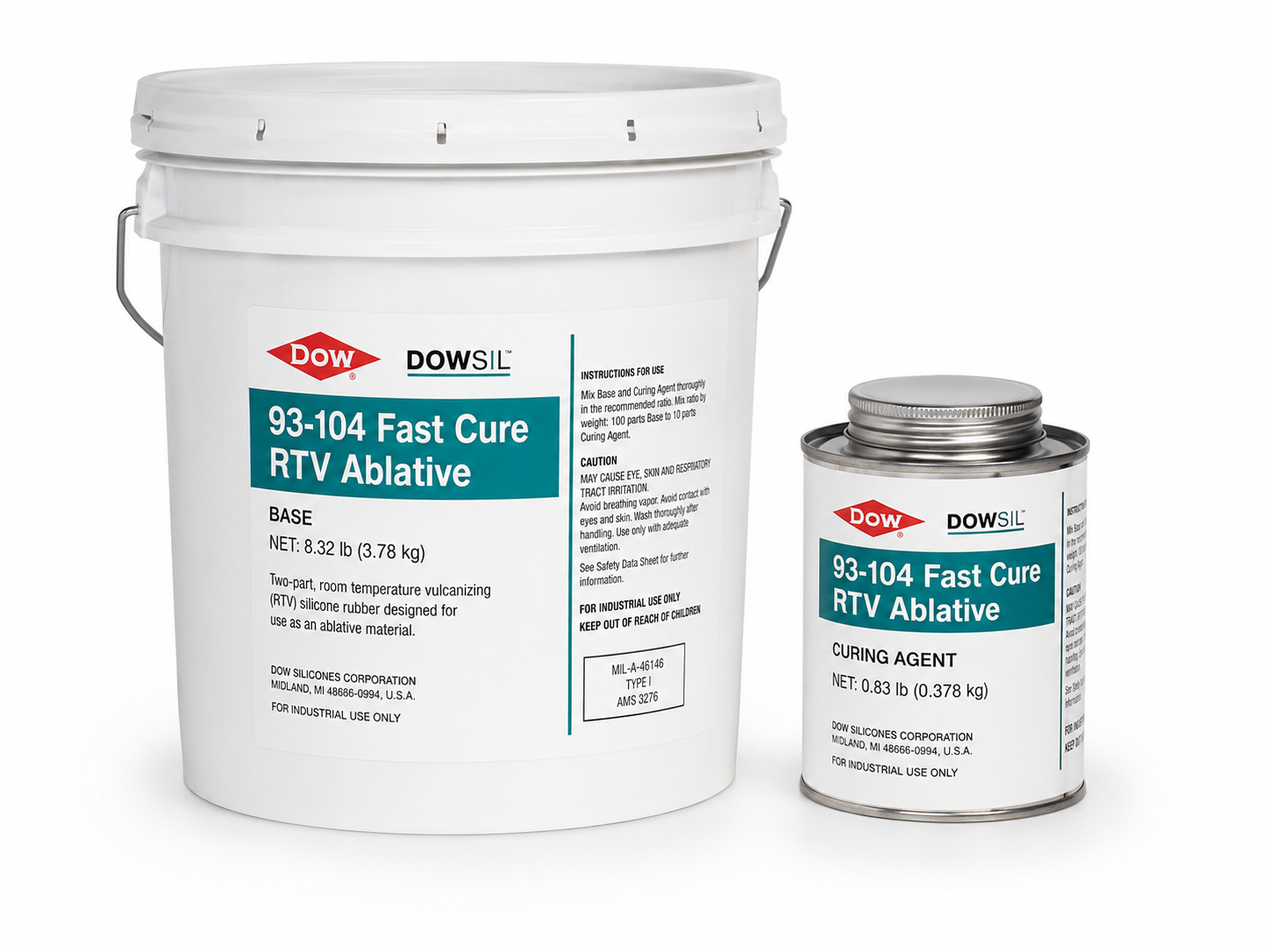
Both are two-part silicone elastomer ablatives with the same core protective function. The fast-cure RTV version is formulated for quicker turnaround where schedule is a driver, while the standard version may be preferred where longer working time is needed for application over a larger or more complex surface. The right choice depends on the specific application window and part geometry.
Is this the same material used for atmospheric reentry heat shields on crewed spacecraft?
Silicone ablatives like DOWSIL 93-104 share the same general protection mechanism as reentry heat shield materials, but large crewed reentry vehicles often use purpose-built ablative heat shield systems engineered and qualified specifically for that mission profile. Confirm the exact application and qualification requirements before assuming a given ablative grade covers both rocket nozzle protection and full reentry heat shield duty.
Do you provide support for ablative material selection and application?
Yes. The Krayden technical team has direct experience recommending and supporting ablative material application on rocket nozzles and related hardware, and works with engineers on material selection, datasheets, and application guidance for new programs.
Need Help Selecting an Ablative Material?
Selection depends on the heat flux, exposure duration, application method, and processing constraints. The Krayden technical team has direct experience recommending and supporting ablative material application on rocket nozzles and related hardware.
Ablative & Reentry Protection – Quick Reference