

Strength Without the Weight
Bond and Seal Aerospace Structures
-
Home

-
Aerospace
-
Structures & Airframes
- Composite Fuselage & Wing Bonding
Composite Fuselage & Wing Bonding
Composite Fuselage & Wing Bonding
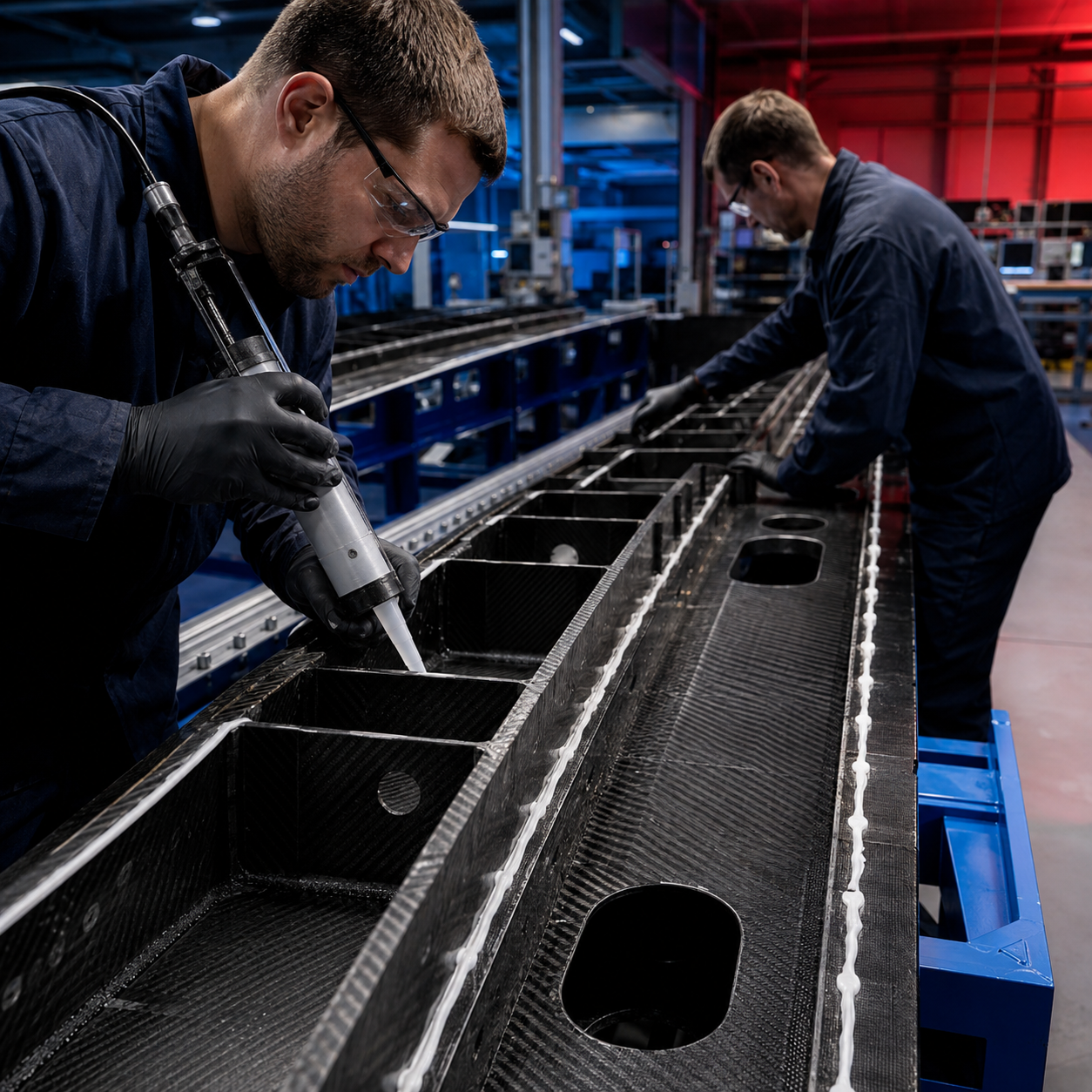
Composite fuselage skins, wing spars, and substructure are joined with structural adhesives rather than mechanical fasteners wherever the design allows, reducing weight and eliminating fastener-hole stress concentrations. The adhesive carries real flight loads for the life of the airframe, so selection depends on the substrate, service temperature, and whether the joint is metal-to-composite or composite-to-composite.
This page covers structural pastes and films used for fuselage and wing bonding, along with the surfacing films used to protect and finish composite skins.
Where This Bonding Is Used
Structural film and paste adhesives bonding composite wing skins to spars and ribs, carrying primary bending and torsion loads.
Adhesive bonding of fuselage skin panels to internal frames and stringers, often supplementing or replacing riveted joints.
Surfacing films applied over composite skins to improve finish quality and, on some platforms, provide lightning strike protection.
Selection Factors
Films give a controlled, uniform bondline over large flat or gently curved areas; pastes handle gap-filling and irregular joints that a film can't conform to.
Continuous-use temperature rating of the adhesive versus the actual location on the airframe, since wing and fuselage zones vary in thermal exposure.
Whether the joint can be autoclave-cured under pressure or needs a film or paste rated for low-pressure or vacuum-only cure.
Working time available for large-panel layup and positioning, and whether the joint needs to support field repair after entry into service.
Specific OEM specification approval (such as BMS or comparable customer specs), confirmed for the platform in question.
Retained bond strength after exposure to hot/wet conditions, fuel, and hydraulic fluid over the service life of the joint.
Frequently Asked Questions
When would I choose a film adhesive over a paste for wing or fuselage bonding?
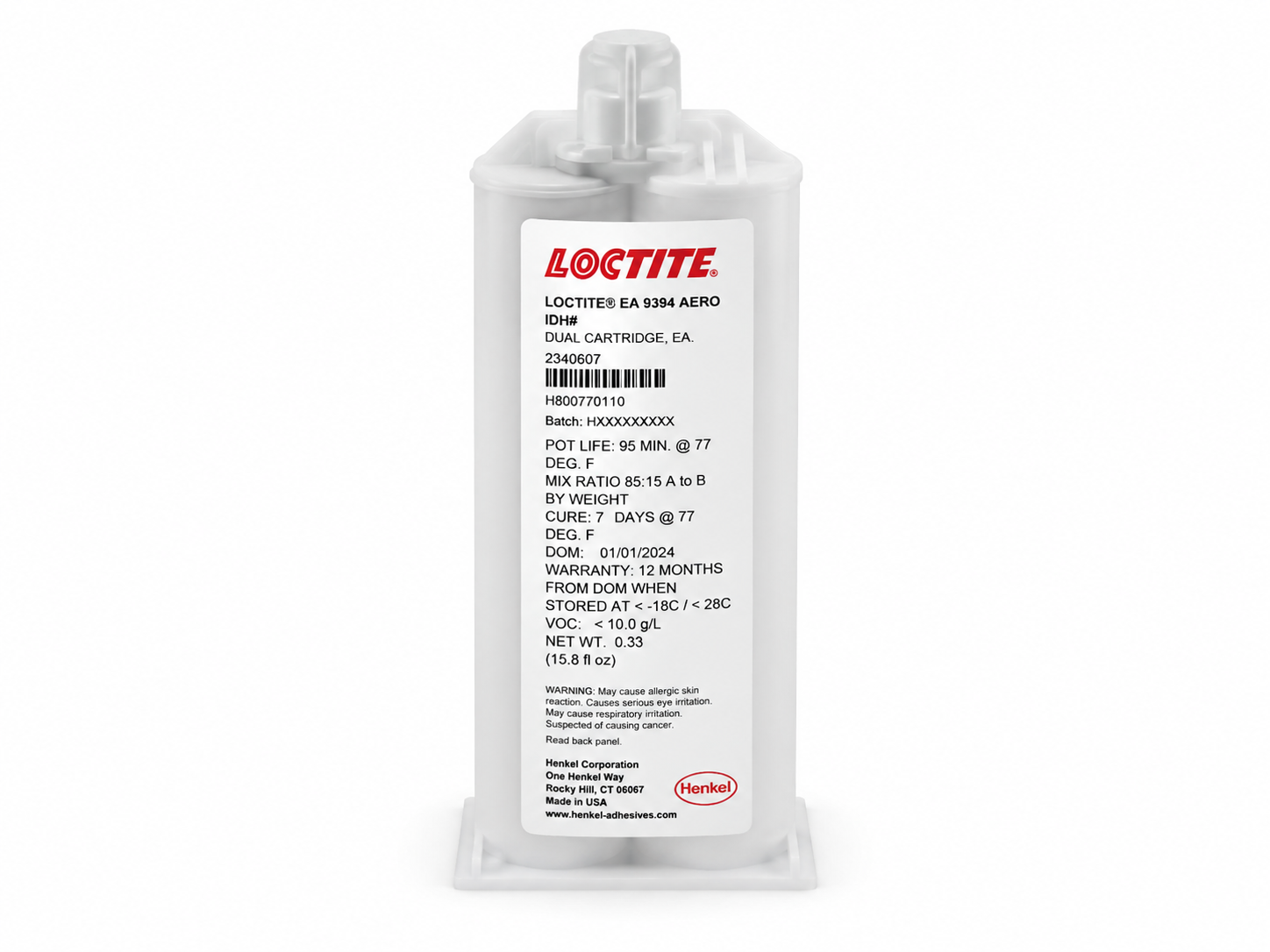
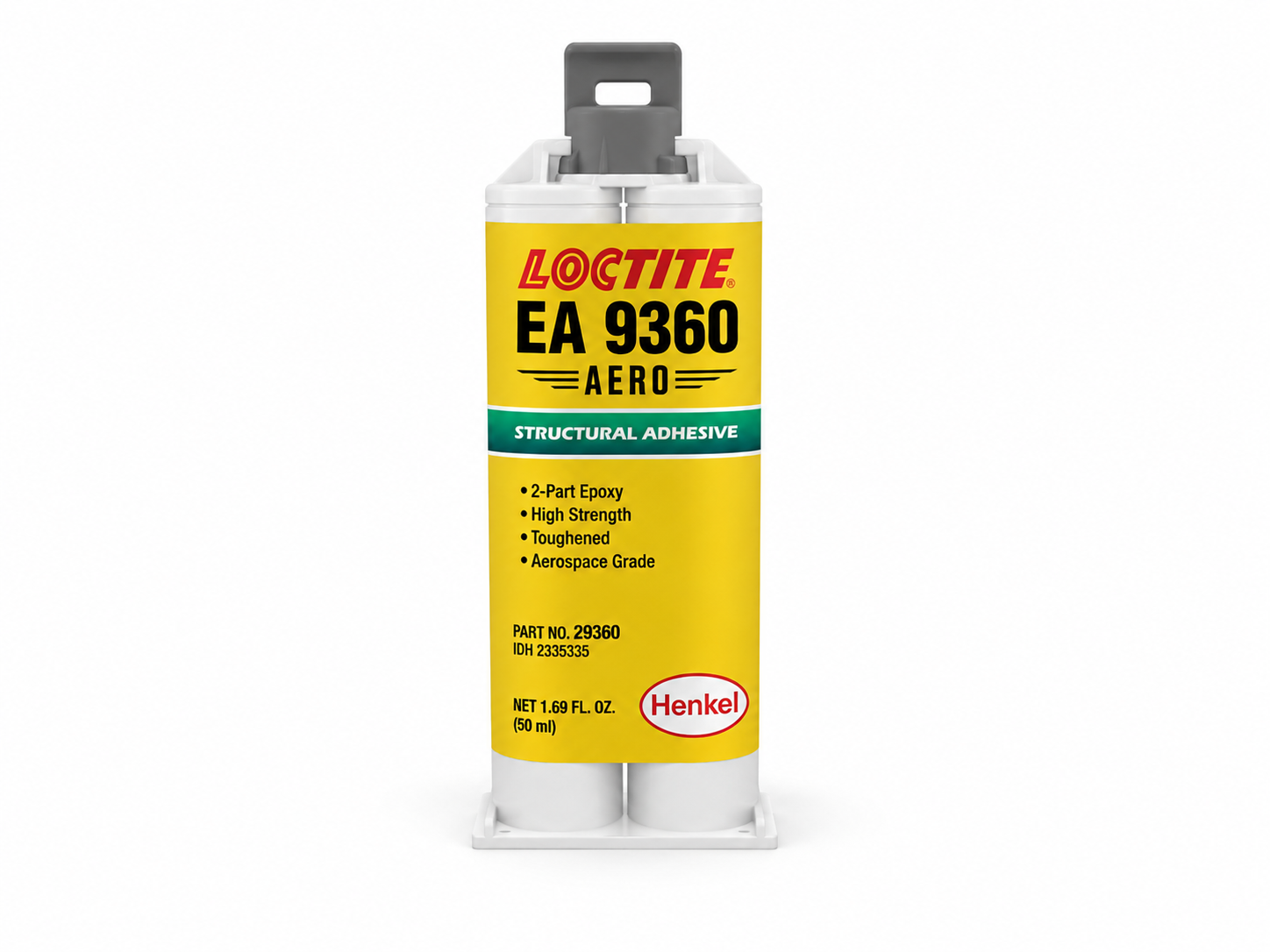
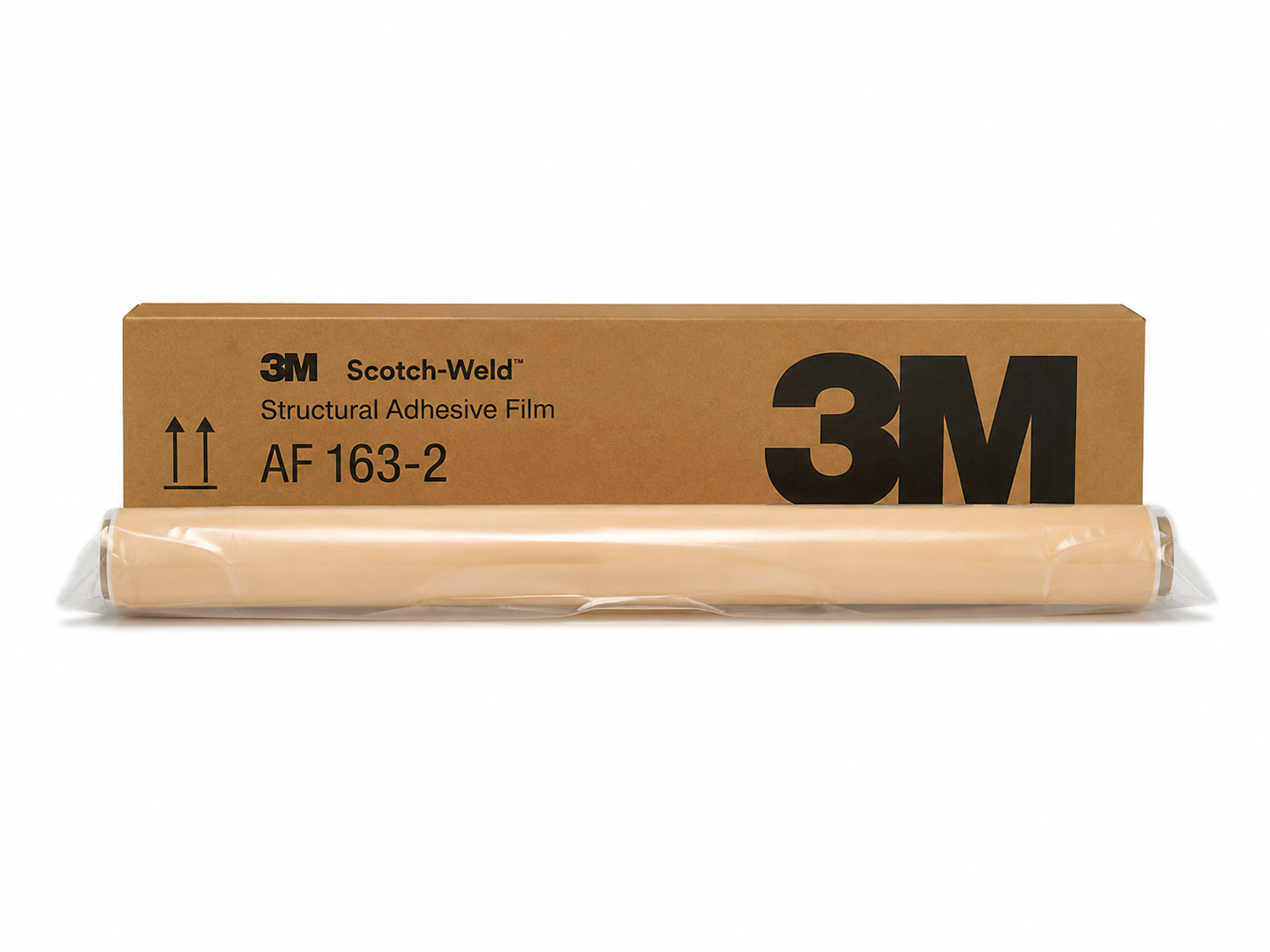
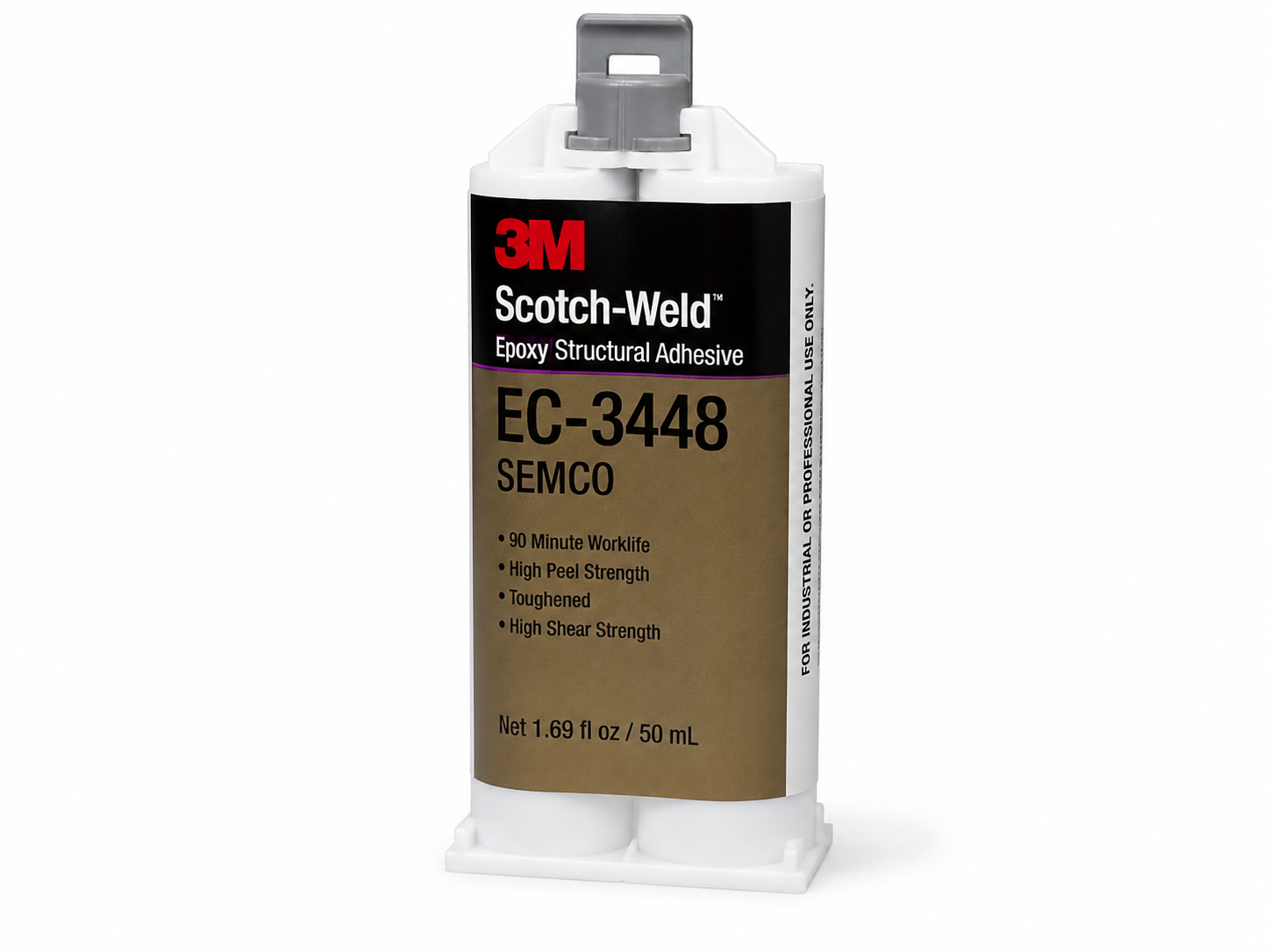
Film adhesives like AF 163-2 give a controlled, uniform bondline thickness across large, relatively flat or gently curved skin panels, which is harder to achieve consistently with a hand-applied paste. Pastes such as EA 9394 AERO or EA 9360 AERO are generally preferred where the joint has gaps to fill, irregular geometry, or is a repair situation where a pre-formed film can't be positioned.
What does "AERO" in a product name typically indicate?
For Henkel LOCTITE EA products, the AERO designation generally indicates a grade formulated and packaged for aerospace structural bonding, as distinct from general industrial EA grades. It doesn't by itself confirm approval to a specific OEM specification; that should be verified against the platform's actual bonding specification.
Is a surfacing film like EA 9845LC AERO a structural adhesive?
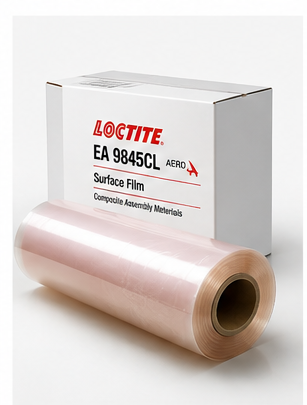
No. Surfacing films are applied to improve the finish quality of a composite skin and, in some configurations, provide compatibility with lightning strike protection screens. They are not intended to carry the structural bond load between parts, which is the role of the structural paste or film adhesive used at the actual joint.
Are these products qualified to a specific OEM specification?
Some, such as the AF 163-2 family, are associated with published popular specs like BMS 5-101 and BMS 5-129 by the manufacturer. Qualification status can vary by specific grade, form factor, and revision, so current approval status should be confirmed against the platform's bonding specification before use. Contact the technical team for documentation.
Do you provide support for structural adhesive selection on a specific joint?
Yes. The Krayden technical team works directly with engineers on adhesive selection, datasheets, and application support for new platform qualification, production, or repair work.
Need Help Selecting a Fuselage or Wing Bonding Adhesive?
Selection depends on the substrate, service temperature, cure method, and any applicable OEM specification. The Krayden technical team provides material selection support, datasheets, and application guidance across structural pastes, films, and surfacing films.
Composite Fuselage & Wing Bonding – Quick Reference