
Control Heat, Ensure Performance
Passive Cooling for Aircraft Systems
-
Home

-
Aerospace
-
Thermal Control
- Power Electronics & Modules
Power Electronics & Modules
Power Electronics & Modules
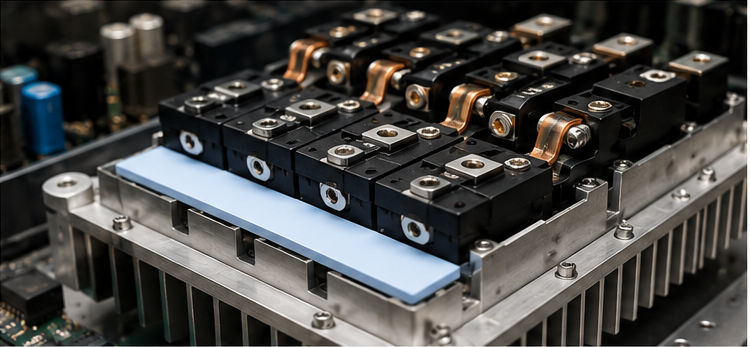
Power converters, inverters, DC/DC stages, motor-control electronics, and high-current switching modules can generate far greater local heat flux than conventional signal electronics. As switching density increases, the thermal path from semiconductor to heat spreader becomes a primary reliability constraint.
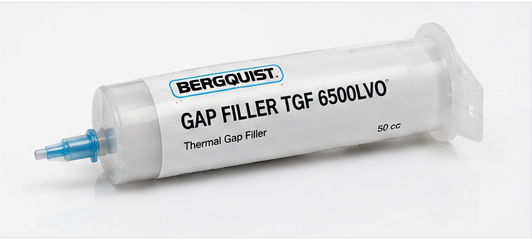
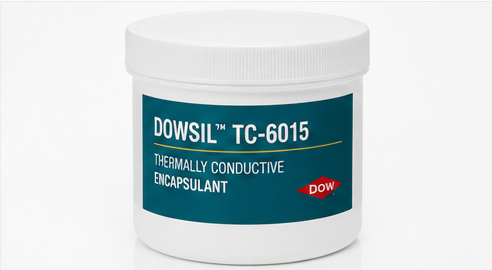
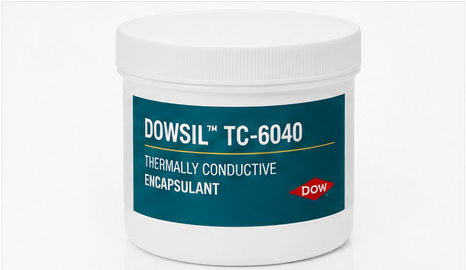
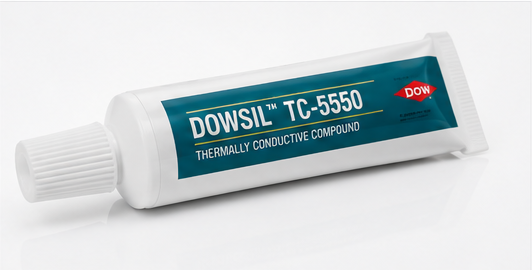
Thermally conductive compounds, gap fillers, encapsulants, gels, and phase-change materials reduce resistance between heat-generating devices and cooling structures while accommodating manufacturing tolerances and thermal expansion.
Where Materials Are Used
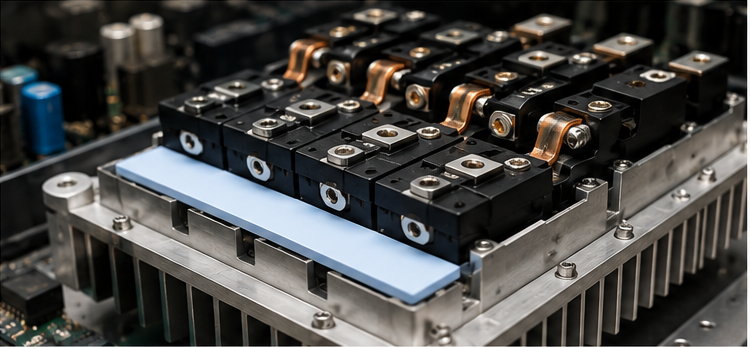
Thin TIMs reduce resistance between module baseplates and heat sinks.
Gap fillers move heat from magnetic components and switching devices into housings.
Thermal encapsulants and gap fillers manage heat around high-voltage switching electronics.
High-current components benefit from thermal paths that reduce localized hot spots.
Compounds and gels manage heat where multiple component heights create uneven interfaces.
Dispensable gels accommodate complex PCB topography and narrow mechanical gaps.
Key Requirements
Critical for high heat-flux components and thin interfaces.
Helps reduce interface resistance between flat power-module surfaces.
Often required between active electronics and grounded heat sinks.
Maintains interface integrity through temperature cycling.
Supports power electronics operating above standard avionics temperatures.
Improves manufacturing consistency for gels and liquid gap fillers.
Featured Products
Frequently Asked Questions
Gap filler vs. gel vs. phase-change material?
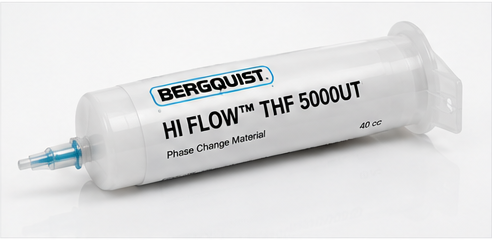
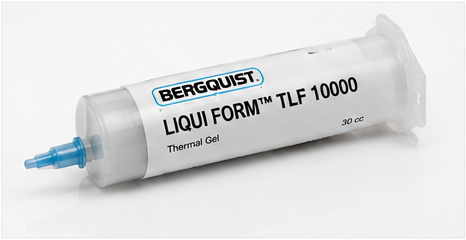
Gap fillers handle large or variable gaps, gels combine dispensability with low stress, and phase-change materials excel at thin, low-impedance interfaces.
Why are encapsulants used around power electronics?
They can combine heat transfer with mechanical support and environmental protection around multiple components.
Why does pump-out matter?
Repeated heating and cooling can displace some interface materials from the contact area, increasing thermal resistance over time.
Can the same TIM be used on every power module?
No. Flatness, gap size, pressure, voltage isolation, heat load, and service temperature all affect material choice.
Need Help Reducing Thermal Resistance in a Power Module?
Krayden can help compare thermal materials around heat load, gap size, electrical isolation, service temperature, vibration, and manufacturing method.
Quick Reference