
Control Heat, Ensure Performance
Passive Cooling for Aircraft Systems
-
Home

-
Aerospace
-
Thermal Control
- Battery & Energy Systems
Battery & Energy Systems
Battery & Energy Systems
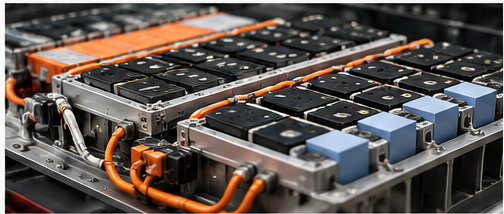
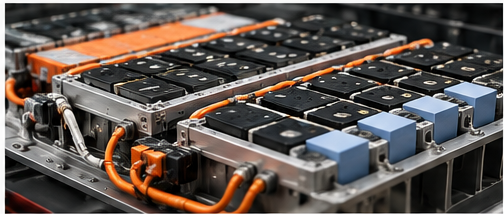
Aircraft batteries, eVTOL energy-storage systems, unmanned platforms, and space battery modules combine high energy density with strict limitations on weight, packaging volume, and allowable temperature variation.
Thermal interface materials help move heat from cells and modules toward cooling structures, reduce local hot spots, and maintain more uniform temperature across the pack. At the same time, the material system may need to provide electrical insulation, tolerate cell expansion, reduce mechanical stress, and support thermal-runaway mitigation strategies.
Where Materials Are Used
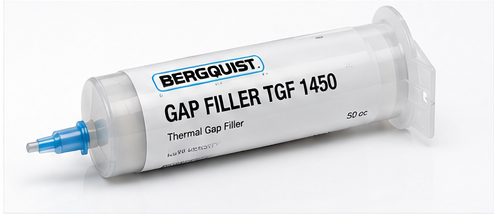
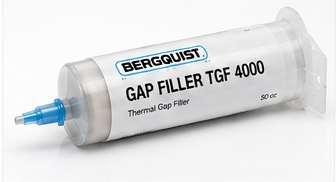
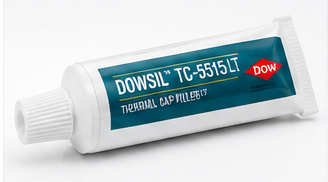
Gap fillers eliminate air gaps and move heat toward cooling structures.
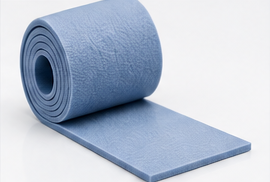
Pads and gels compensate for larger mechanical tolerances between modules and housings.
Thermal interfaces cool battery-management electronics and high-current switching components.
Soft thermal materials can accommodate dimensional change and cell swelling.
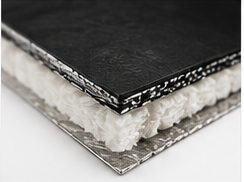
Low-conductivity and fire-resistant materials can help slow heat propagation.
Low-outgassing thermal interfaces support compact battery electronics in space systems.
Key Requirements
Reducing hot spots helps support consistent cell performance and life.
Critical where cells or busbars are close to grounded cooling structures.
Thermal materials can occupy large areas, so density affects total system mass.
Soft materials accommodate cell swelling and manufacturing tolerances.
Dispensable materials must fill complex spaces without excessive pressure.
Barrier strategy must address abnormal heat without compromising normal cooling.
Featured Products
.png)
Frequently Asked Questions
Why is temperature uniformity important in batteries?
Large temperature differences can create uneven cell performance and aging across a pack.
Should a battery TIM always have the highest possible conductivity?
Not necessarily. Density, electrical isolation, compression force, gap size, service temperature, and propagation strategy also matter.
Why use a liquid gap filler?
It can fill irregular module-to-cold-plate gaps and accommodate manufacturing tolerances with relatively low mechanical stress.
How do thermal barriers fit with normal cooling?
Normal-operation TIMs move heat away from cells, while barrier materials are selected to limit abnormal heat propagation. The two functions must be designed together.
Need Help Balancing Battery Cooling, Weight, and Electrical Isolation?
Krayden can help compare thermal materials around heat load, gap size, electrical isolation, service temperature, vibration, and manufacturing method.
Quick Reference