
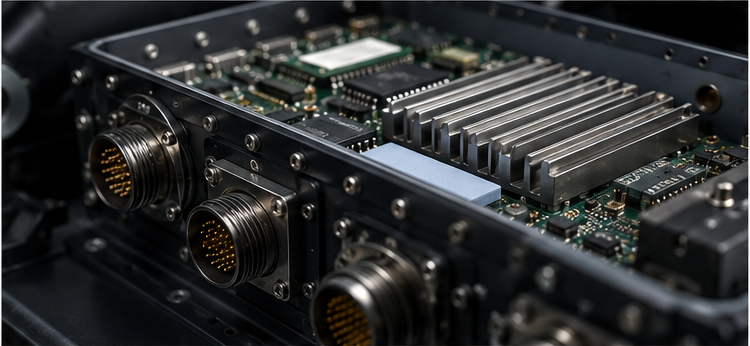
Control Heat, Ensure Performance
Passive Cooling for Aircraft Systems
-
Home

-
Aerospace
-
Thermal Control
- Avionics Enclosures
Avionics Enclosures
Avionics Enclosures
Avionics enclosures do more than protect electronics mechanically. They frequently serve as the primary heat-spreading and heat-rejection structure for processors, power supplies, communication modules, navigation electronics, and flight-control hardware.
Thermal interface materials bridge microscopic surface roughness and larger mechanical gaps between heat-generating devices, circuit boards, heat spreaders, and metal housings. The goal is to reduce interface resistance while limiting mechanical stress and maintaining electrical isolation where required.
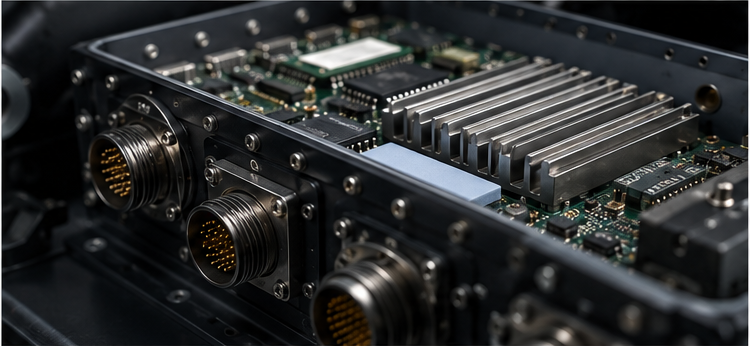
Where Materials Are Used
Pads or gap fillers bridge variable gaps between board-level heat sources and the enclosure.
Thin thermal interfaces move heat from high-power ICs into dedicated heat sinks or enclosure spreaders.
Converters and voltage-regulation hardware generate concentrated heat that must be transferred into the chassis.
Thermal pads can help remove heat from processors and LEDs in cockpit display assemblies.
Low-stress thermal interfaces help control temperature around dense sensor and signal-processing electronics.
Dispensable gap fillers allow thermal contact in mechanically complex sealed housings.
Key Requirements
Supports lower component temperatures at a given heat load.
Protects fragile PCBs, processors, and solder joints.
Maintains dielectric separation where the housing is conductive.
Important for sensitive avionics and space-adjacent electronics.
Interface performance must remain stable during mechanical loading.
Serviceable interfaces simplify inspection and maintenance.
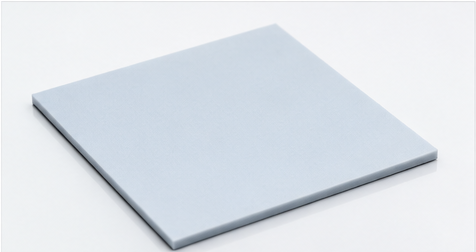
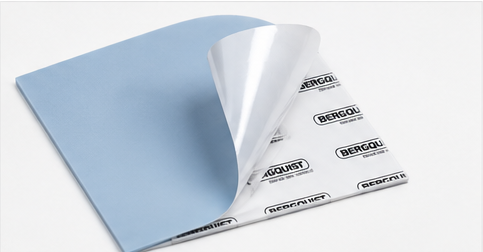
Featured Products
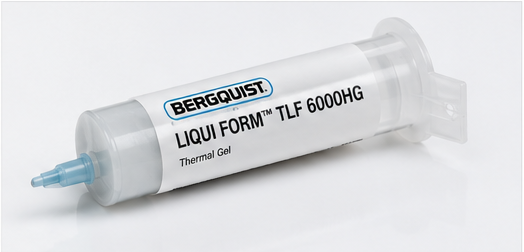
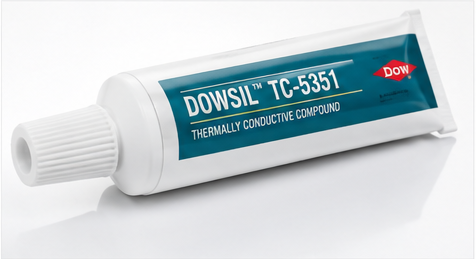
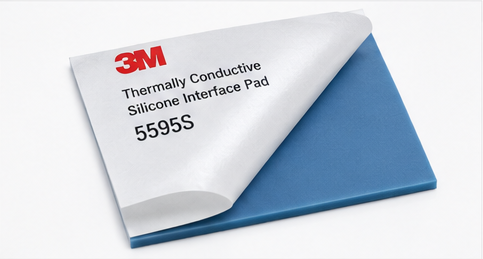
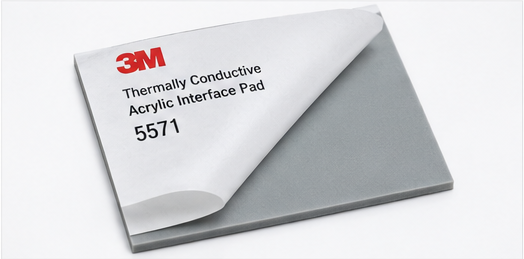
Frequently Asked Questions
Why use a TIM if the enclosure already touches the component?
Even apparently flat surfaces contain microscopic roughness and air gaps. TIMs displace air and create a more effective heat-transfer path.
Pad or liquid gap filler?
Pads provide clean, repeatable assembly. Liquid gap fillers are better for variable geometry and irregular gaps.
Why does compression matter?
Compression improves surface contact, but excessive force can stress components. Low-modulus materials help balance both needs.
Does higher W/m·K always mean better performance?
No. Thermal impedance also depends on bondline thickness, wet-out, pressure, and the full system heat path.
Need Help Managing Heat Inside an Avionics Enclosure?
Krayden can help compare thermal materials around heat load, gap size, electrical isolation, service temperature, vibration, and manufacturing method.
Quick Reference