
Engineered for Thermal Extremes
Reliable Materials for Jet & Rocket Systems
-
Home

-
Aerospace
-
Propulsion Systems
- Fuel & Fluid Sealing
Fuel & Fluid Sealing
Fuel & Fluid Sealing
Integral fuel tanks, fuselage joints, and fluid system fittings need a sealant that stays flexible and adhered after years of continuous contact with jet fuel, aviation gasoline, and hydraulic fluid. A sealant that performs well when new but degrades or loses adhesion after fluid exposure creates a leak path that's difficult and expensive to find and repair once the aircraft is in service.
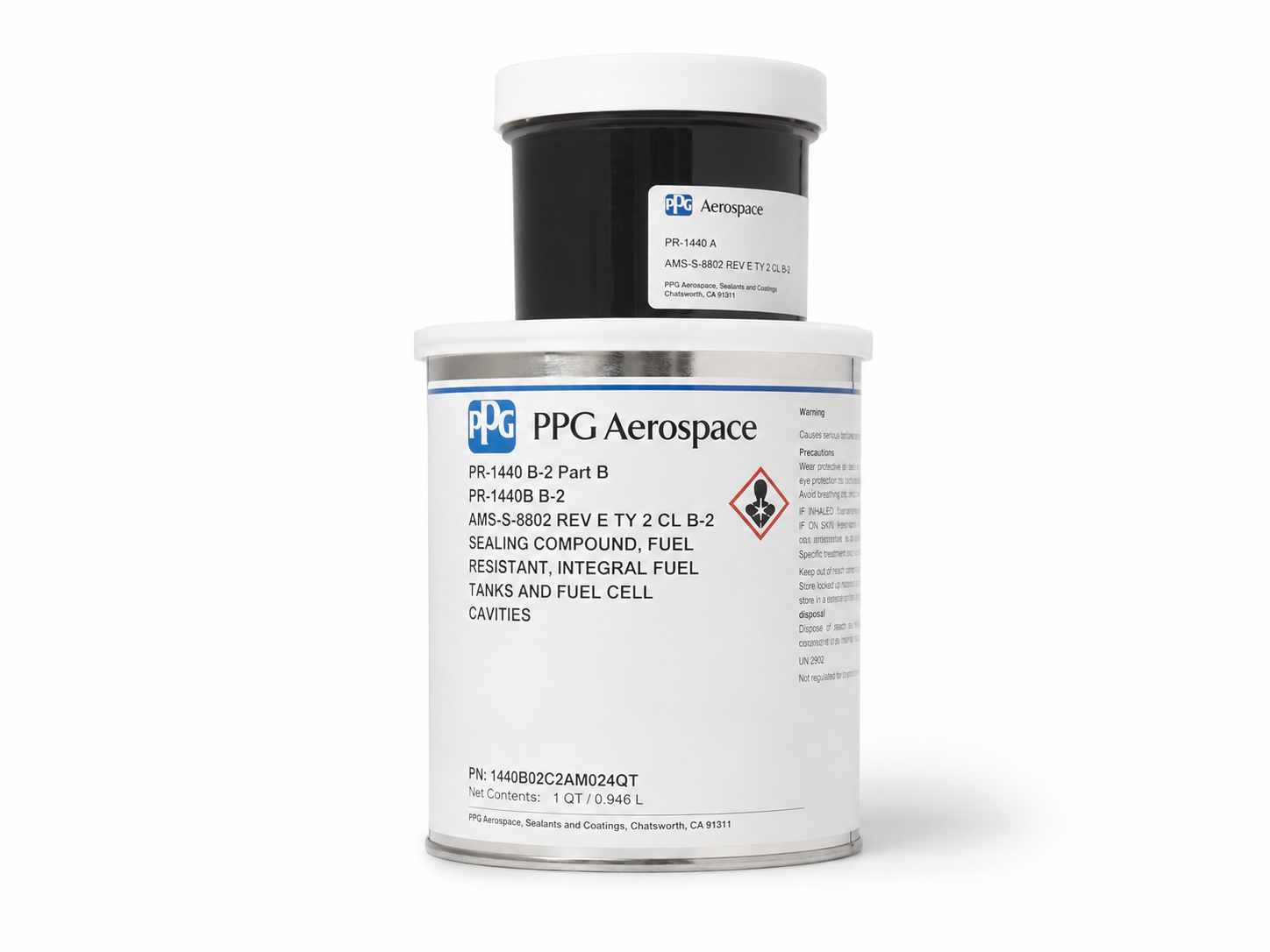
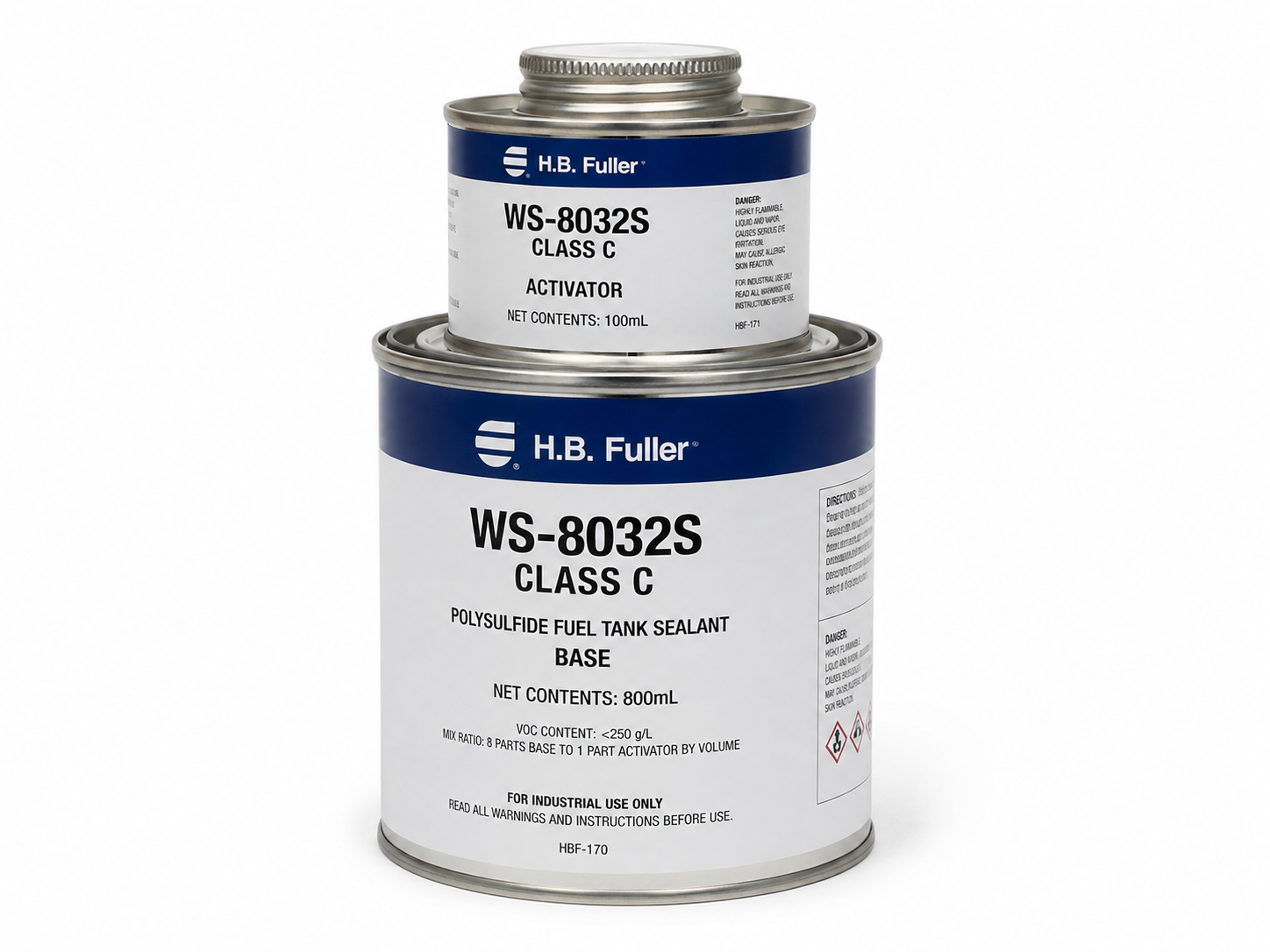
This page covers polysulfide sealants formulated specifically for fuel tank and fuselage sealing, including corrosion-inhibitive grades for dissimilar-metal joints.
Where This Sealing Is Used
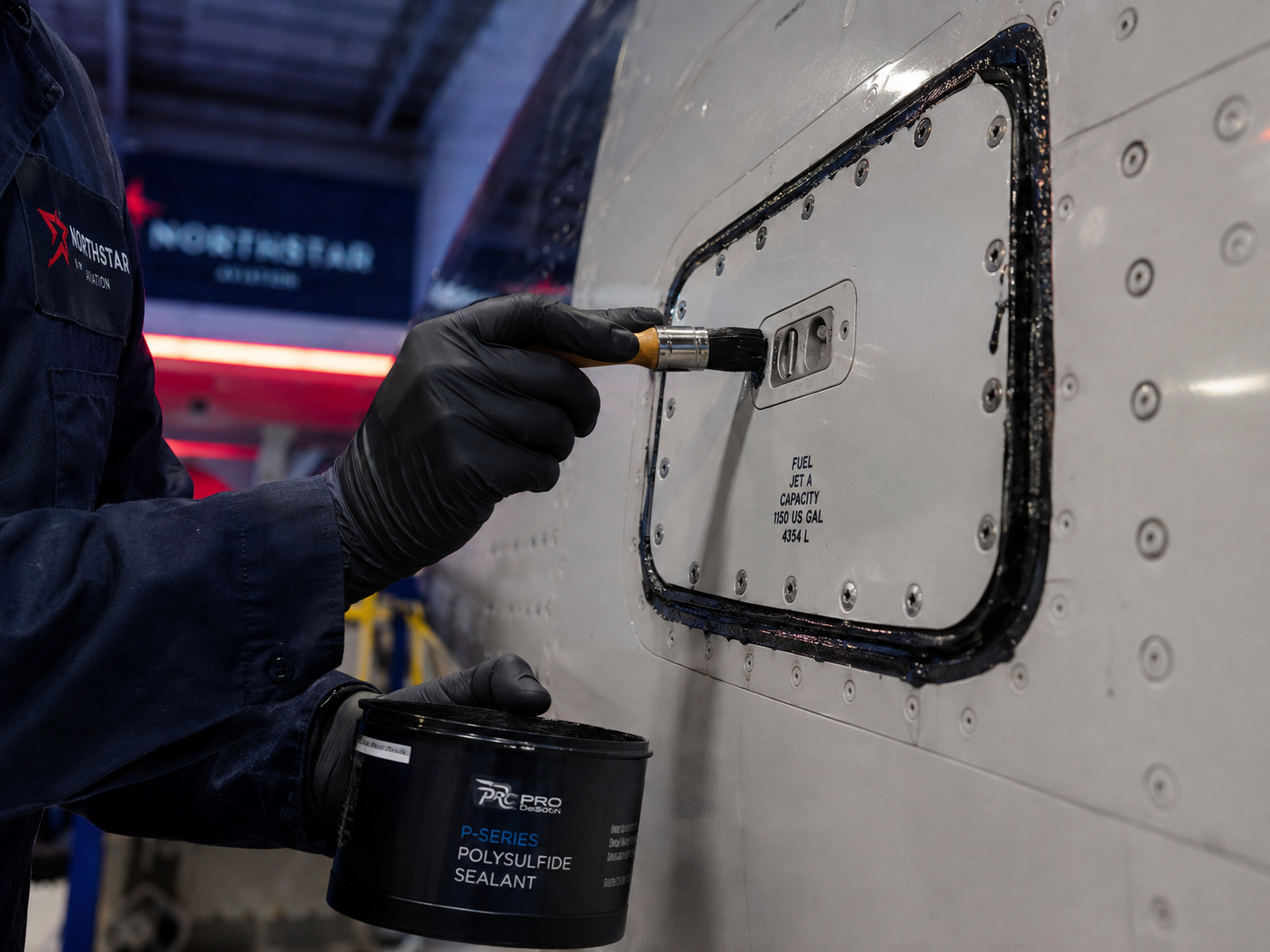
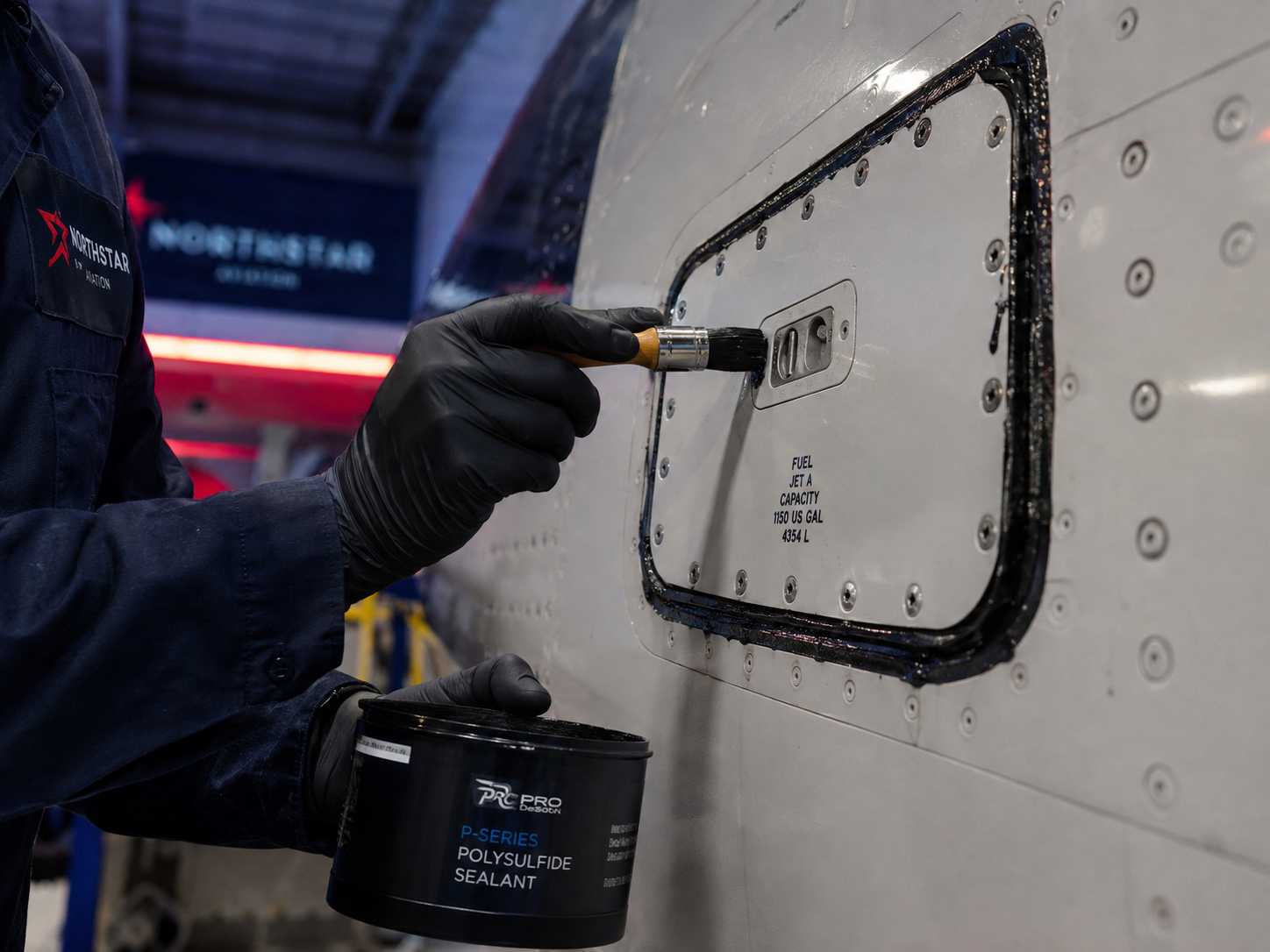
Brush and fillet sealing of fuel tank fasteners, seams, and access panels using fuel-resistant polysulfide sealants.
Sealing of fuselage skin laps and joints where fuel or fluid exposure is a factor alongside general weatherproofing.
Corrosion-inhibitive sealants applied between aluminum and dissimilar metals to block galvanic corrosion at the joint.
Selection Factors
Brushable, extrudable, or sprayable consistency, matched to whether the joint is a large fastener field, a fillet seam, or a full tank fill-and-drain process.
Long-term resistance specifically to the fluid the joint will actually see: jet fuel, aviation gasoline, or petroleum-based hydraulic fluids.
Low-density formulations reduce weight over large sealing areas without giving up fuel resistance.
Working time available for large-area application versus how quickly the joint needs to be back in service.
Whether the sealant needs a corrosion-inhibitive package for dissimilar-metal joints, and whether a chromate-free formulation is required.
Bond strength retention on aluminum, titanium, steel, stainless steel, and coated substrates under temperature and weathering extremes.
Frequently Asked Questions
Why are there so many different brands of polysulfide fuel tank sealant?
3M, PPG (through its PRC-DeSoto brand), and H.B. Fuller (through its Royal Adhesives and Sealants line) each offer their own polysulfide fuel tank sealant families, and platform bonding specifications, OEM approvals, and existing shop qualifications often determine which supplier's product is actually specified on a given program rather than one brand being universally preferred. It's common for an MRO shop to stock more than one brand to match whatever the original build called out.
What do the Class A, B, and C designations mean across these sealants?
Across PPG and similar polysulfide sealant lines, Class A generally denotes a brushable liquid used on fasteners, Class B a thicker thixotropic paste for fillet and injection seals, and Class C a thinner grade suited to faying-surface sealing. An S or M designation sometimes indicates a sprayable or fast-curing variant. The exact class definitions can vary slightly by manufacturer, so the specific product's datasheet should be checked rather than assuming the letter alone tells the full story.
Why are polysulfides the standard chemistry for fuel tank sealing?
Polysulfides combine strong resistance to jet fuel and aviation gasoline with the flexibility to withstand vibration and joint movement over the life of the aircraft, a combination that's harder to achieve with other common sealant chemistries. That's why they remain the default choice for integral fuel tank and fuselage sealing despite newer sealant chemistries being available for other applications.
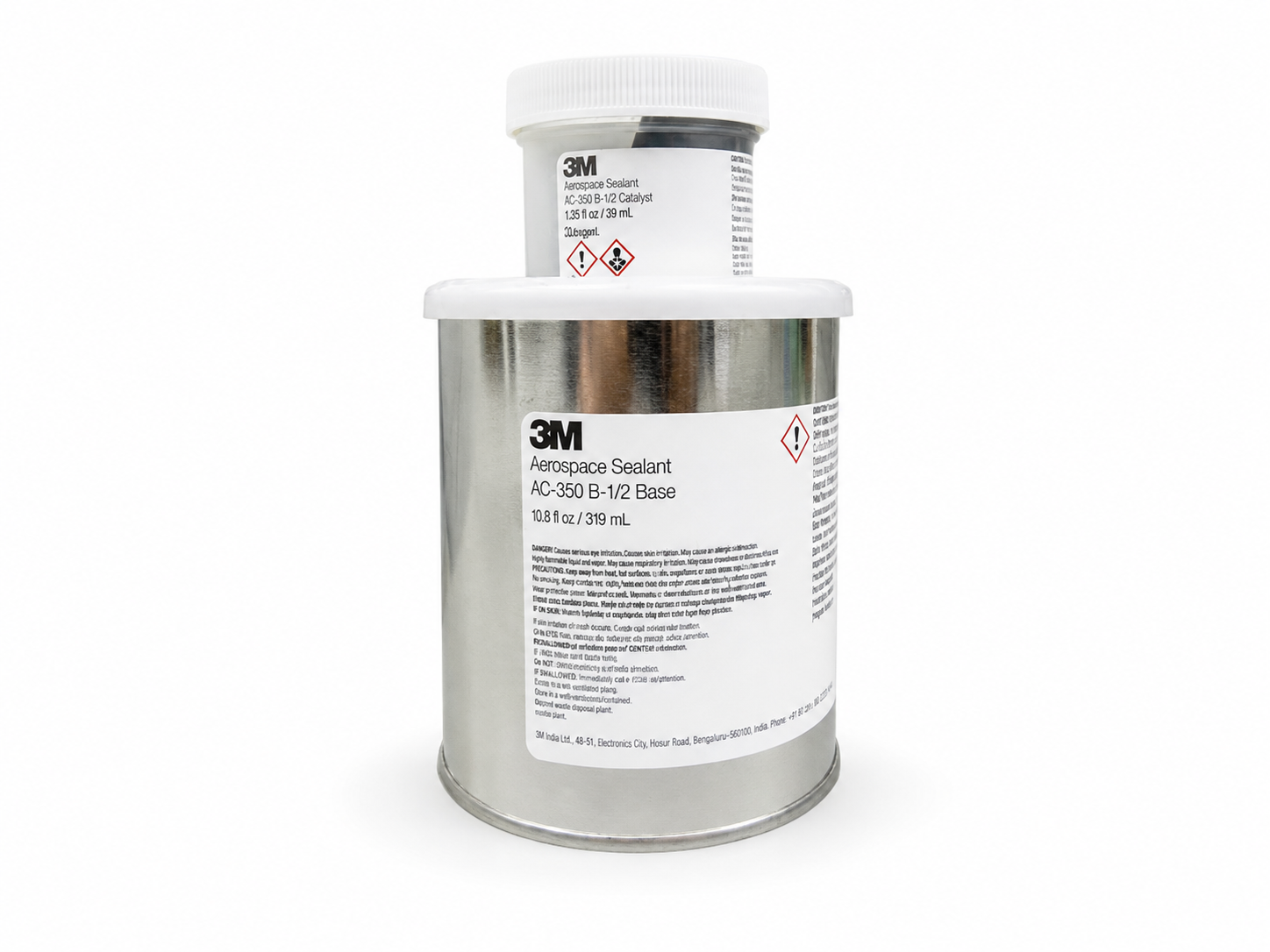
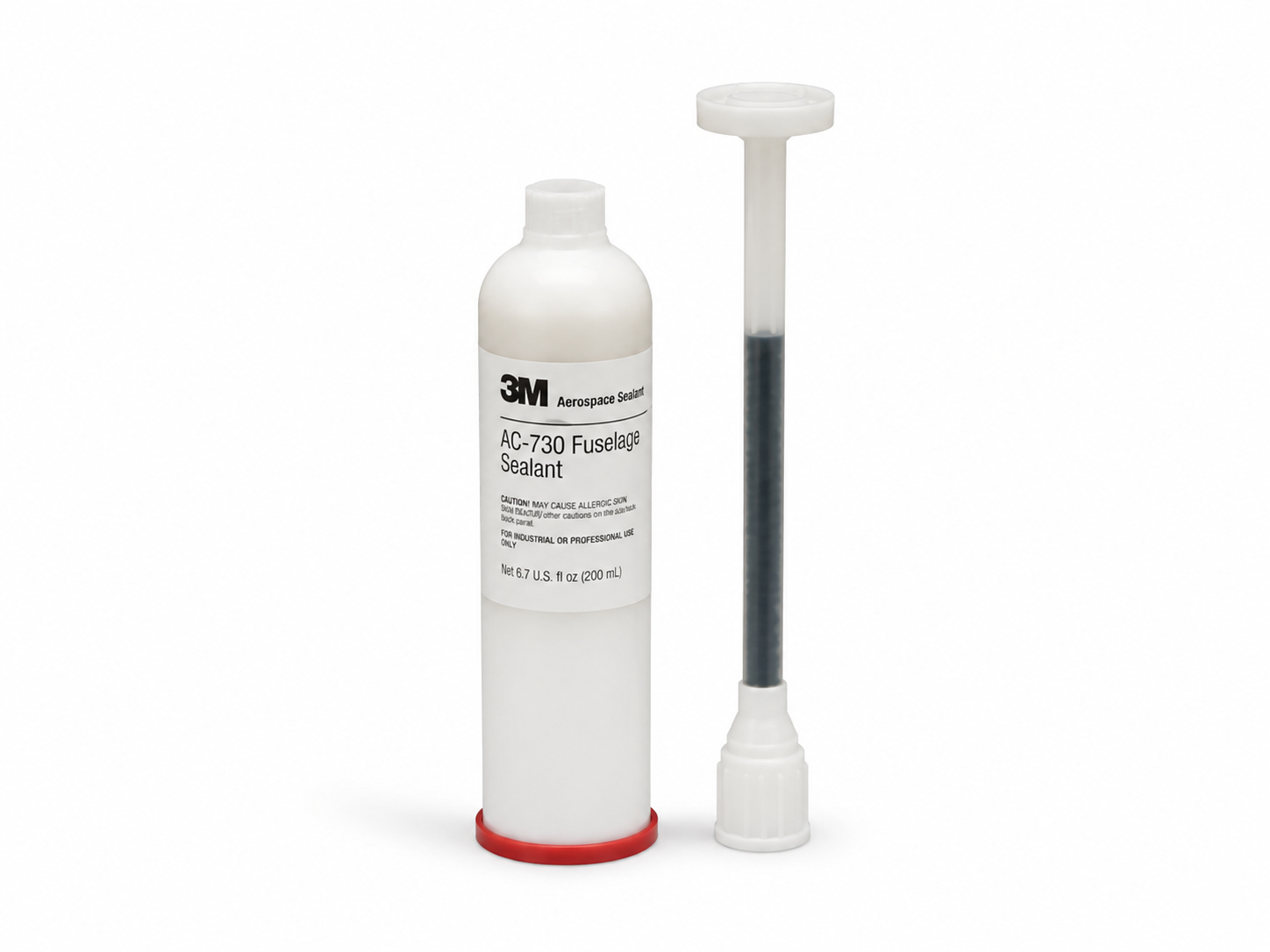
When would I need a corrosion-inhibitive sealant like AC-730 instead of AC-350?
AC-730 was engineered specifically for fuselage applications where dissimilar metals meet, adding a corrosion-inhibitive package on top of the base fuel resistance. If the joint doesn't involve dissimilar-metal contact and general fuel tank sealing is the only requirement, a standard grade like AC-350 may be the more straightforward choice, but the actual joint configuration should drive the decision.
Does "chromate-free" mean the sealant offers less corrosion protection?
Not by default. Chromate-free formulations like AC-730 are designed to deliver corrosion inhibition through alternative additive packages, aimed at helping programs meet chromate reduction initiatives without giving up the corrosion protection function. Performance should still be confirmed against the specific joint's requirements rather than assumed from the chromate-free label alone.
Are these sealants qualified to specific OEM or military specifications?
Qualification varies by product, class, and grade. Current certification status and any customer- or platform-specific specification approvals should be confirmed for the exact grade in question before specifying it on a program. Contact the technical team for documentation.
Do you provide support for fuel system sealant selection?
Yes. The Krayden technical team works directly with engineers and MRO teams on sealant selection, datasheets, and application support for new production and repair work.
Need Help Selecting a Fuel or Fluid Sealant?
Selection depends on the fluid exposure, application method, and whether corrosion inhibition at a dissimilar-metal joint is required. The Krayden technical team provides material selection support, datasheets, and application guidance across fuel tank and fuselage sealing systems.
Fuel & Fluid Sealing – Quick Reference