

Transistors
MOSFETS, TOS and BJTS
- Home

- Semiconductors
- Transistors
- Small Outline Transistors (SOT)
Small Outline Transistors (SOT)
Small Outline Transistors
Small outline transistors (SOTs) are the backbone of modern compact electronics, providing the necessary switching and amplification power in a footprint designed for high-density surface mount technology.
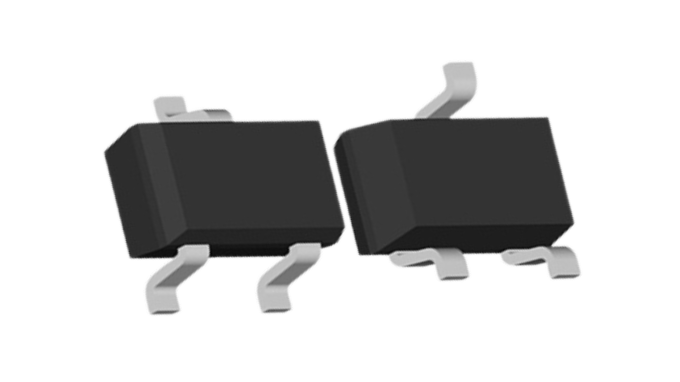
Small outline transistors (SOTs) are leadframe-based packages encapsulated by a semiconductor molding compound. As the surface-mount version of traditional transistors, they are essential for applications with severe space constraints, such as smartphones, laptops, and tablets. SOTs typically feature up to 8 leads and are designed to handle small integrated circuits that do not require high pin counts.
SOT-23 remains the most popular design in this family. These packages are primarily categorized by their pin pitch, which determines the density and spacing of the electrical connections on the PCB.
| Package Type | Pin Pitch (mm) |
|---|---|
| SOT-523 | 0.50 |
| SOT-323 | 0.65 |
| SOT-23 | 0.95 |
| SOT-89 | 1.50 |
| SOT-143 | 1.90 |
| SOT-223 | 2.30 |
Manufacturers use suffixes to denote specific variations. For example, SOT23-5 indicates an SOT-23 footprint with 5 pins. For even slimmer profiles, Thin SOTs (TSOTs) offer a reduced height for ultra-thin device assemblies.
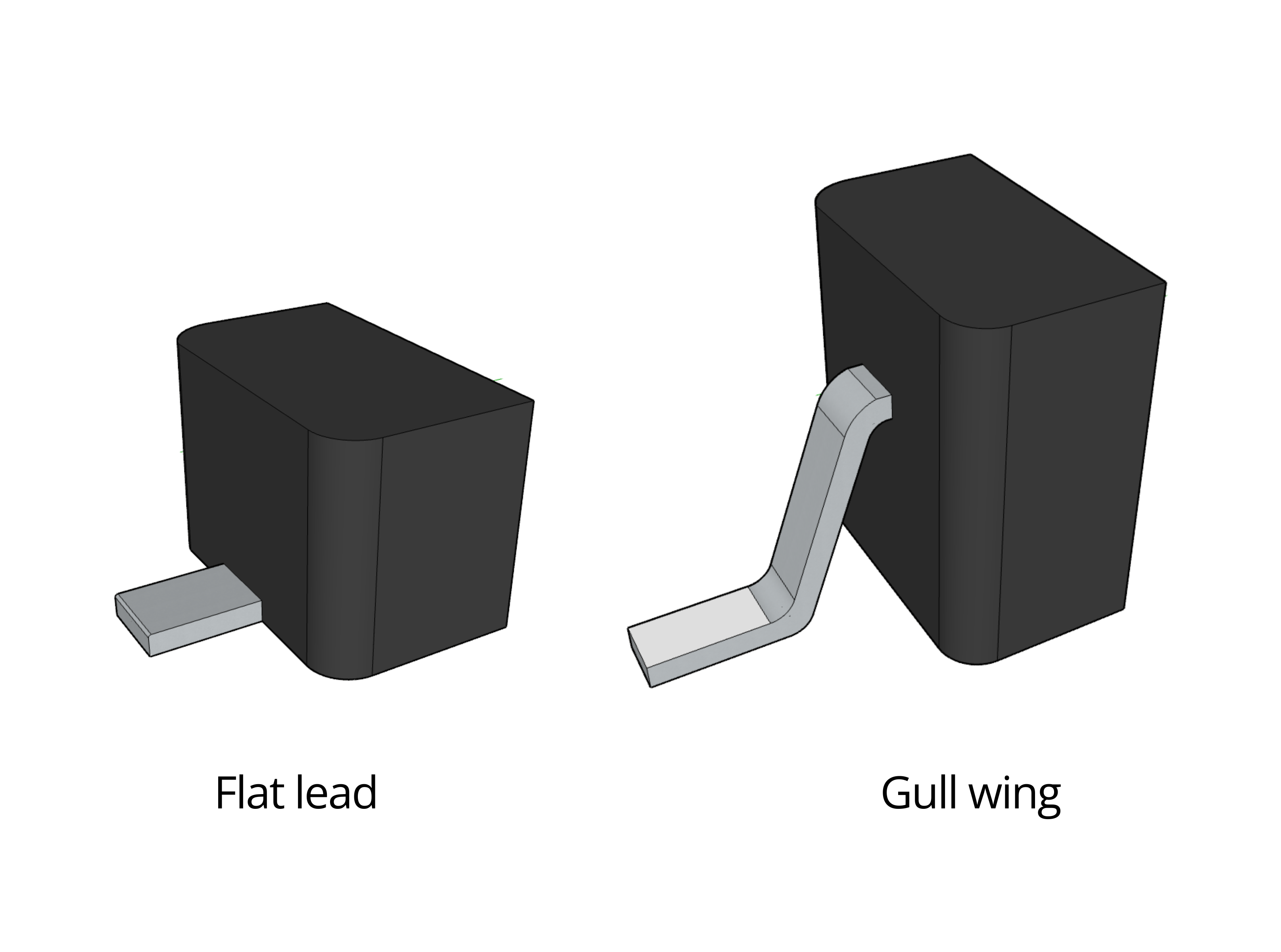
While Gull-wing leads are the industry standard for assembly efficiency, some variations utilize flat leads or leadless (SON) configurations for extreme miniaturization.
Small outline transistors function as either switches or amplifiers, regulating current and voltage while maintaining high signal integrity in a miniature form factor.
Cut-off Region
The depletion layer is large, and no current flows. The transistor acts as an open switch.
Saturation Region
The transistor is biased with maximum base current. The transistor is fully switched on.
Active Region
Relevant for amplification. Small base current changes allow the collector current to rush through the emitter, amplifying the signal.
Applications of SOT Packages
Consumer Electronics
The preferred choice for smartphones and tablets where maximizing internal space is the primary design requirement.
Automotive ADAS
Compact SOT designs allow sensors and microcontrollers to respond up to 20% faster due to reduced trace lengths.
Wearable Tech
SOT-23 devices reduce thermal losses in power management, significantly improving battery life and energy efficiency.
Design Challenges in SOT Packaging
Delamination: Separation of the molding compound from the leadframe. Prevention requires optimized molding pressure and high-wetting compounds.
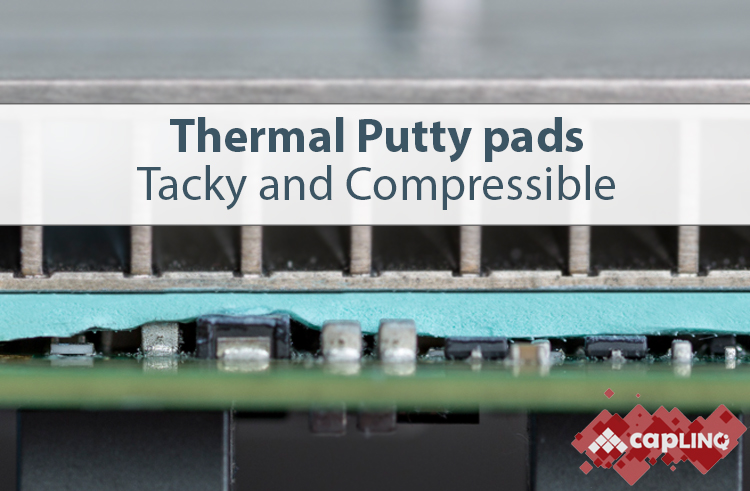
Thermal Management: Miniature sizes have reduced surface areas for heat dissipation, necessitating the use of thermally conductive materials.
Stress & Warpage: CTE mismatches between the die and compound lead to warpage. Selecting compounds with matched CTE values is critical.
CAPLINQ Solutions for SOTs
Green Epoxy Molding Compounds (EMC)
| Product | Key Features |
|---|---|
| Hysol KL 6500S | Low stress; High reliability |
| Hysol GR 646 | Ultra fast cure material |
| Hysol GR 640HV-L1 | MSL1; Cleaning cycle >1000 shots; Eutectic bonding compatible |
| Hysol GR 720 | For die attach paste bonded SOT; Low stress; good delamination performance |
Thermal Interface Materials


Frequently Asked Questions
What is the difference between SOTs and SODs?
The primary difference is function: SOTs (Small Outline Transistors) act as controlled switches or amplifiers (BJTs, MOSFETs), while SODs (Small Outline Diodes) are uncontrolled switches (Rectifiers, Schottky). SOTs typically have 3 to 6 pins, whereas SODs usually only have 2 pins and are smaller in size.
Need help selecting the right SOT encapsulation material?
Contact our technical team to optimize your semiconductor assembly process.