
-
Home

-
Products
-
Adhesives
-
Silicone Adhesives
- DOWSIL™ TC-2022 Thermally Conductive Adhesive
DOWSIL™ TC-2022 Thermally Conductive Adhesive
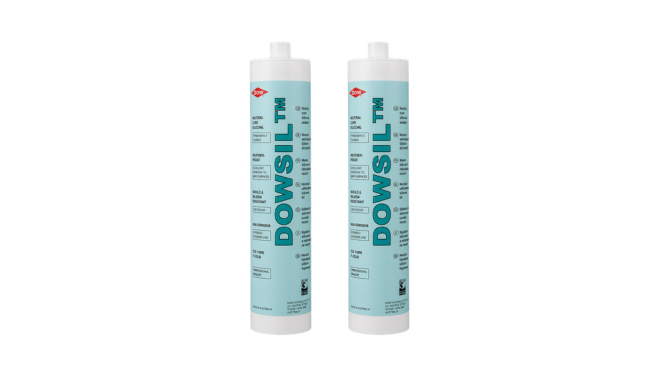
- Heat curable at moderate temperatures
- Cost effective with rapid/low temperature cure
- Applicable on heat-sensitive substrates and components
Product Description
DOWSIL™ TC-2022 Thermally Conductive Adhesive is a one-part, heat-curable silicone adhesive designed for electronic assemblies that require both reliable bonding and efficient heat transfer. With 1.7 W/m·K thermal conductivity, integrated 7 mil glass beads for controlled bondline thickness, and primerless adhesion to many metals, ceramics, laminates, and filled plastics, TC-2022 is well suited for heat sink attachment, integrated circuit substrate bonding, lid attach, housing adhesion, and PCB thermal management applications. Its solvent-free, no-mix formulation supports simplified dispensing and improved processing efficiency, while the silicone chemistry provides dielectric insulation, environmental protection, and stress relief against thermal cycling, shock, and vibration.
Product Key Features
- One-part silicone adhesive
- 1.7 W/m·K thermal conductivity
- Integrated 7 mil glass beads
- Rapid heat cure
- Primerless adhesion
- Solvent-free formulation
- Excellent dielectric insulation
- Stress-relieving silicone chemistry
- Wide operating temperature capability
- Compatible with automated dispensing
Technical Specifications
| General Properties | |||||
|
Color
Color
The color |
Gray | ||||
|
Component System
Component System
Describes the number of components that must be supplied, mixed, or activated before application or cure. |
One Part | ||||
|
Specific Gravity
Specific Gravity
Specific gravity (SG) is the ratio of the density of a substance to the density of a reference substance; equivalently, it is the ratio of the mass of a substance to the mass of a reference substance for the same given volume. For liquids, the reference substance is almost always water (1), while for gases, it is air (1.18) at room temperature. Specific gravity is unitless. |
2.7 (cured) | ||||
| Physical Properties | |||||
|
Thixotropic index
Thixotropic index
Thixotropic Index is a ratio of a material s viscosity at two different speeds in Ambient temperature, generally different by a factor of ten. A thixotropic material s viscosity will decrease as agitation or pressure is increased. It indicates the capability of a material to hold its shape. Mayonnaise is a great example of this. It holds its shape very well, but when a shear stress is applied, the material easily spreads. It helps in choosing a material in accordance to the application, dispense method and viscosity of a material. |
3.7 | ||||
|
Viscosity
Viscosity
Viscosity is a measurement of a fluid’s resistance to flow. Viscosity is commonly measured in centiPoise (cP). One cP is defined as the viscosity of water and all other viscosities are derived from this base. MPa is another common unit with a 1:1 conversion to cP. A product like honey would have a much higher viscosity -around 10,000 cPs- compared to water. As a result, honey would flow much slower out of a tipped glass than water would. The viscosity of a material can be decreased with an increase in temperature in order to better suit an application |
190000 mPa.s | ||||
| Curing Conditions | |||||
|
|||||
| Thermal Properties | |||||
|
Thermal Conductivity
Thermal Conductivity
Thermal conductivity describes the ability of a material to conduct heat. It is required by power packages in order to dissipate heat and maintain stable electrical performance. Thermal conductivity units are [W/(m K)] in the SI system and [Btu/(hr ft °F)] in the Imperial system. |
1.7 W/m.K | ||||
| Mechanical Properties | |||||
|
|||||
|
|||||
Additional Information
DOWSIL™ TC-2022: One-Part Thermally Conductive Silicone Adhesive
DOWSIL™ TC-2022 Thermally Conductive Adhesive is a one-part, gray, heat-curable silicone adhesive designed for electronic assemblies requiring both thermal transfer and reliable structural bonding. With 1.7 W/m·K thermal conductivity, no mixing requirement, and integrated 7 mil glass beads for bondline control, TC-2022 supports efficient heat flow in compact PCB modules, IC packages, heat sink assemblies, lids, and housings.
Thermal bonding without two-part mixing — TC-2022 combines 1.7 W/m·K thermal conductivity, primerless adhesion to many substrates, and moderate-temperature heat cure for electronics manufacturing.
The silicone-based formulation helps transfer heat away from PCB module components while providing durable dielectric insulation, environmental protection, and stress relief across a broad operating temperature range.
Reliable thermal attachment for electronic assemblies — suitable for heat sink attach, IC substrate bonding, lid attach, housing adhesion, and automated or manual dispensing processes.
As electronic modules become smaller and more power-dense, TC-2022 provides a bonded thermal path that helps improve heat dissipation and assembly reliability.
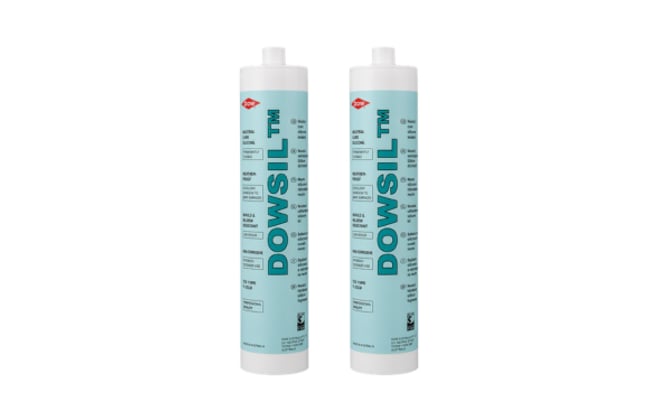
1.7 W/m·K Thermal Conductivity • One-Part System • 7 mil Glass Beads • 15 min Cure at 100 °C
Features & Benefits
- One-part formulation — no separate mixing required.
- Thermal conductivity of 1.7 W/m·K — supports heat transfer from components.
- 7 mil glass beads — helps control bondline thickness.
- Moderate-temperature heat cure — 15 minutes at 100 °C.
- No added solvents — supports cleaner processing.
- Primerless adhesion — bonds to many metals, ceramics, laminates, and plastics.
- Silicone durability — provides stress relief, environmental protection, and dielectric insulation.
Typical Applications
- Heat sink attachment on PCB assemblies.
- Bonding integrated circuit substrates.
- Lid attach for electronic packages.
- Housing and enclosure adhesion.
- Thermal attachment in power electronics and control modules.
- Automated or manual dispensing applications.
Thermal Challenges in Compact Electronic Modules
Modern PCB assemblies, power modules, and semiconductor packages continue to become smaller while carrying higher power loads. This creates a need for thermal interface materials that can move heat away from sensitive components while also supporting mechanical attachment. DOWSIL™ TC-2022 helps address these challenges by combining thermal conductivity, structural adhesion, dielectric protection, and silicone stress relief in a one-part adhesive system.
Engineering Data for DOWSIL™ TC-2022
| Property | DOWSIL™ TC-2022 | Condition / Note |
|---|---|---|
| Chemistry | Polydimethylsiloxane / Aluminum Oxide | Silicone-based adhesive |
| One or Two-Part | One-part | No mixing required |
| Color | Gray | Typical appearance |
| Viscosity | 190,000 cP / 190 Pa·s | Typical value |
| Specific Gravity, Cured | 2.7 | Typical value |
| Thermal Conductivity | 1.7 W/m·K | 0.98 BTU/hr-ft-°F |
| Heat Cure Time | 15 minutes | At 100 °C, time at bondline temperature |
| Durometer | Shore A 90 | Typical cured hardness |
| Lap Shear Adhesion, Aluminum | 600 psi / 4.1 MPa | Unprimed adhesion |
| Linear CTE | 125 ppm/°C | By TMA |
*Typical properties are not intended for specification writing. Verify suitability under actual application and processing conditions.
Where DOWSIL™ TC-2022 Fits
- Power modules
- Control boards
- Industrial electronics
- IC packages
- Semiconductor modules
- Compact PCB assemblies
- Electronic housings
- Module covers
- Chassis thermal paths
Dispensing, Bonding & Cure
Dispensing
TC-2022 can be used with automated or manual dispensing processes. Its one-part format eliminates separate component mixing.
Bondline Control
Integrated 7 mil glass beads help maintain a controlled bondline thickness for consistent thermal and mechanical performance.
Curing
Recommended cure is 15 minutes at 100 °C, measured once the adhesive and bondline reach the target temperature. Cure can be accelerated with additional temperature and time.
How TC-2022 Compares to Other Thermal Interface Options
| Common Limitation | DOWSIL™ TC-2022 Benefit |
|---|---|
| Thermal grease requires mechanical fastening and may not provide structural support. | TC-2022 provides a bonded thermal interface with adhesive strength. |
| Two-part adhesives require mixing and ratio control. | One-part format simplifies processing and reduces mixing-related errors. |
| Rigid adhesives can transfer stress to sensitive components. | Silicone chemistry provides stress relief against shock, vibration, and thermal expansion mismatch. |
| Uncontrolled bondline thickness can create inconsistent thermal performance. | 7 mil glass beads help maintain a controlled adhesive bondline. |
Tips & Troubleshooting
| Issue | Recommended Action |
|---|---|
| Insufficient Adhesion |
|
| Poor Thermal Performance |
|
| Incomplete Cure |
|
| Adhesion to Low-Energy Plastics |
|
Technical Help for Electronics Thermal Management
- Review dispense strategy and bondline requirements.
- Assess heat cure profile and time-at-temperature needs.
- Support process validation for manual or automated dispensing.
- Evaluate heat sink, lid, substrate, or housing bonding requirements.
- Review substrate compatibility and adhesion risk.
- Discuss thermal-management targets for electronic assemblies.
Ready to Evaluate DOWSIL™ TC-2022?
```