
-
Home

-
Products
-
Adhesives
-
Silicone Adhesives
- DOWSIL™ 3-6265 HP Adhesive
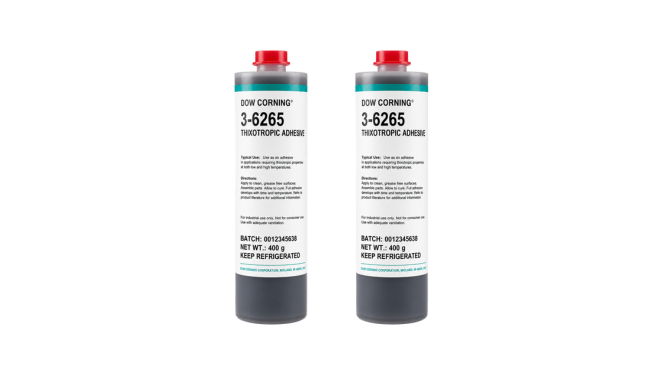
DOWSIL™ 3-6265 HP Adhesive
- One-part
- Versatile heat cure
- Non-flowing rheology
Product Description
DOWSIL™ 3-6265 HP Adhesive is a one-part, black, non-flowing adhesive engineered for high tensile strength. It utilizes a heat-cure system that allows for rapid, versatile cure processing controlled by temperature, alongside low void formation after cure for sensitive substrates. Because it is a one-part adhesive, no mixing is required, simplifying automated or manual needle dispensing.
Product Key Features
- One-Part System - requires no mixing, offering a streamlined application process.
- Versatile Heat Cure - cure rates are rapidly accelerated with heat, achieving cure in 10 minutes at 150°C or 25 minutes at 125°C.
- Non-Flowing Rheology - maintains its position upon dispensing, making it suitable for targeted placement.
- Robust Mechanical Profile - cures to deliver a Shore A hardness of 68, a tensile strength of 5.8 MPa (850 psi), and 275% elongation.
- Low Void Formation - minimizes voiding after cure, enhancing reliability for sensitive electronic assemblies.
Applications
This adhesive is designed to provide unprimed adhesion to many reactive metals, ceramics, and glass, making it highly effective for reliable component sealing and bonding.
- Electronic Control Units: Used for sealing engine controllers, ABS, and transmission controllers.
- Component Assembly: Ideal for sealing lids and housings, attaching baseplates, and general gasketing.
- Power & Connections: Suitable for connector sealing and power supply applications.
Technical Specifications
| General Properties | |||||
|
Color
Color
The color |
Black | ||||
|
Specific Gravity
Specific Gravity
Specific gravity (SG) is the ratio of the density of a substance to the density of a reference substance; equivalently, it is the ratio of the mass of a substance to the mass of a reference substance for the same given volume. For liquids, the reference substance is almost always water (1), while for gases, it is air (1.18) at room temperature. Specific gravity is unitless. |
1.33 | ||||
| Physical Properties | |||||
|
Viscosity
Viscosity
Viscosity is a measurement of a fluid’s resistance to flow. Viscosity is commonly measured in centiPoise (cP). One cP is defined as the viscosity of water and all other viscosities are derived from this base. MPa is another common unit with a 1:1 conversion to cP. A product like honey would have a much higher viscosity -around 10,000 cPs- compared to water. As a result, honey would flow much slower out of a tipped glass than water would. The viscosity of a material can be decreased with an increase in temperature in order to better suit an application |
1,070,000 mPa.s | ||||
| Mechanical Properties | |||||
|
|||||
|
|||||
|
Elongation
Elongation
Elongation is the process of lengthening something. It is a percentage that measures the initial, unstressed, length compared to the length of the material right before it breaks. It is commonly referred to as Ultimate Elongation or Tensile Elongation at break. |
275 % | ||||
|
|||||
| Electrical Properties | |||||
|
Dielectric Strength
Dielectric Strength
Dielectric strength is measured in kV per mm and is calculated by the Breakdown voltage divided by the thickness of the tested material. Those two properties go hand in hand and while Breakdown voltage is always thickness dependent, dielectric strength is a general material property. As an example, the dielectric strength of Polyimide is 236 kV/mm. If we place 1mm of Polyimide between two electrodes, it will act as an insulator until the voltage between the electrodes reaches 236 kV. At this point it will start acting as a good conductor, causing sparks, potential punctures and current flow. |
24 kV/mm | ||||
|
Volume Resistivity
Volume Resistivity
Volume resistivity, also called volume resistance, bulk resistance or bulk resistivity is a thickness dependent measurement of the resistivity of a material perpendicular to the plane of the surface. |
1.0 E+15 Ohms⋅cm | ||||
|
|||||
|
|||||
Additional Information
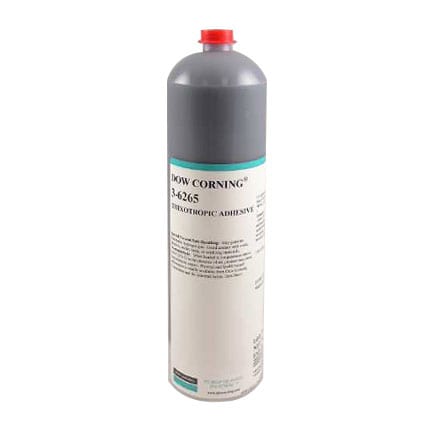
DOWSIL™ 3-6265 HP Adhesive
DOWSIL™ 3-6265 HP Adhesive is a premium, one-part, black, non-flowing addition-cure silicone adhesive engineered for high-performance industrial sealing and structural bonding. This heat-activated system requires no material pre-mixing, offering rapid and versatile cure processing controlled entirely by temperature. Formulated with advanced low-void technology, it delivers exceptional tensile strength and superior electrical insulation stability, enhancing the reliability and service life of highly sensitive electronic and PCB system assemblies under challenging service stress.
Typical engineering values only. Cure schedules are rapidly accelerated by applying elevated thermal profiles.
Key Features
- One-part system requires no mixing equipment or volumetric tracking, eliminating cross-contamination and waste.
- Non-flowing thixotropic paste consistency resists running and slumping on perpendicular or overhead joints.
- Advanced addition-cure formulation generates zero volatile by-products during the complete cross-linking cycle.
- Deep-section and fully confined cures proceed evenly throughout the mass to enable total process consistency.
- Engineered low-void technology minimizes micro-void formation to safeguard fragile structural substrates.
- Outstanding unprimed adhesion profiles to common reactive metals, specialized ceramics, laminates, and glass.
Processing Summary
Process Notes
- Keep in cold storage at all times in tightly sealed original containers to extend shelf life.
- Upon standing for several weeks, some filler settling can occur at the base of containers.
- Thoroughly mix the compound to uniformity prior to industrial application.
- Verify explicit batch temperature constraints and expiration fields tracked on the product label.
- Clean joint faces using Dow OS fluids, naphtha, mineral spirits, or methyl ethyl ketone (MEK).
- Avoid using acetone or isopropyl alcohol (IPA) alone, as they do not remove heavy oils well.
- Execute fine mechanical abrasion to boost bond surface area and maximize clean contact.
- Employ chemical etching or plasma treatments on non-reactive lines like Teflon, PE, or PP.
- Avoid contact with organotin catalysts, sulfur, polysulfides, polysulfones, or flux residues.
- Uncured liquid or tacky material at the substrate boundary layer indicates chemical inhibition.
- Execute vacuum de-airing profiles at >28 inches Hg for 10 minutes if air extraction is needed.
- Automated airless needle dispense machinery can bypass the need for separate vacuum cycles.
Engineering Data for DOWSIL™ 3-6265 HP
Physical & Cured Mechanical Properties
| Physical Property | Typical Engineering Value | Standard / Condition |
|---|---|---|
| Appearance / Color | Non-flowing paste / Black | - |
| Viscosity | 10,700 Poise (1,070 Pa.s) | Viscometer |
| Specific Gravity (Cured) | 1.33 | ASTM D0792 / CTM 0022 |
| Durometer Hardness | 68 Shore A | ASTM 2240 |
| Tensile Strength | 850 psi (5.8 MPa / 59 kg/cm²) | HASTM D412 / CTM 0137A |
| Elongation at Break | 275 % | ASTM D412 / CTM 0137A |
| Tear Strength (Die B) | 80 ppi (54 N/cm) | - |
| Linear CTE by TMA | 215 ppm/°C | - |
| Unprimed Adhesion (Lap Shear) | 825 psi (5.7 MPa / 568 N/cm²) | Aluminum |
Electrical Performance Properties
| Electrical Insulating Parameter | Typical Engineering Value | Test Condition Spec |
|---|---|---|
| Dielectric Strength | 550 volts/mil (24 kV/mm) | - |
| Volume Resistivity | 1.0 E+15 Ohm-cm | - |
| Dielectric Constant at 100 Hz / 100 kHz | 3.20 / 3.15 | - |
| Dissipation Factor at 100 Hz / 100 kHz | 0.0036 / <0.003 | - |
Where DOWSIL™ 3-6265 HP Fits
.png)
Automotive Modules
- Sealing engine controllers and transmission modules.
- Ideal structural adhesive for complex ABS units.
- Resists continuous under-hood vibration and temperature cycles.
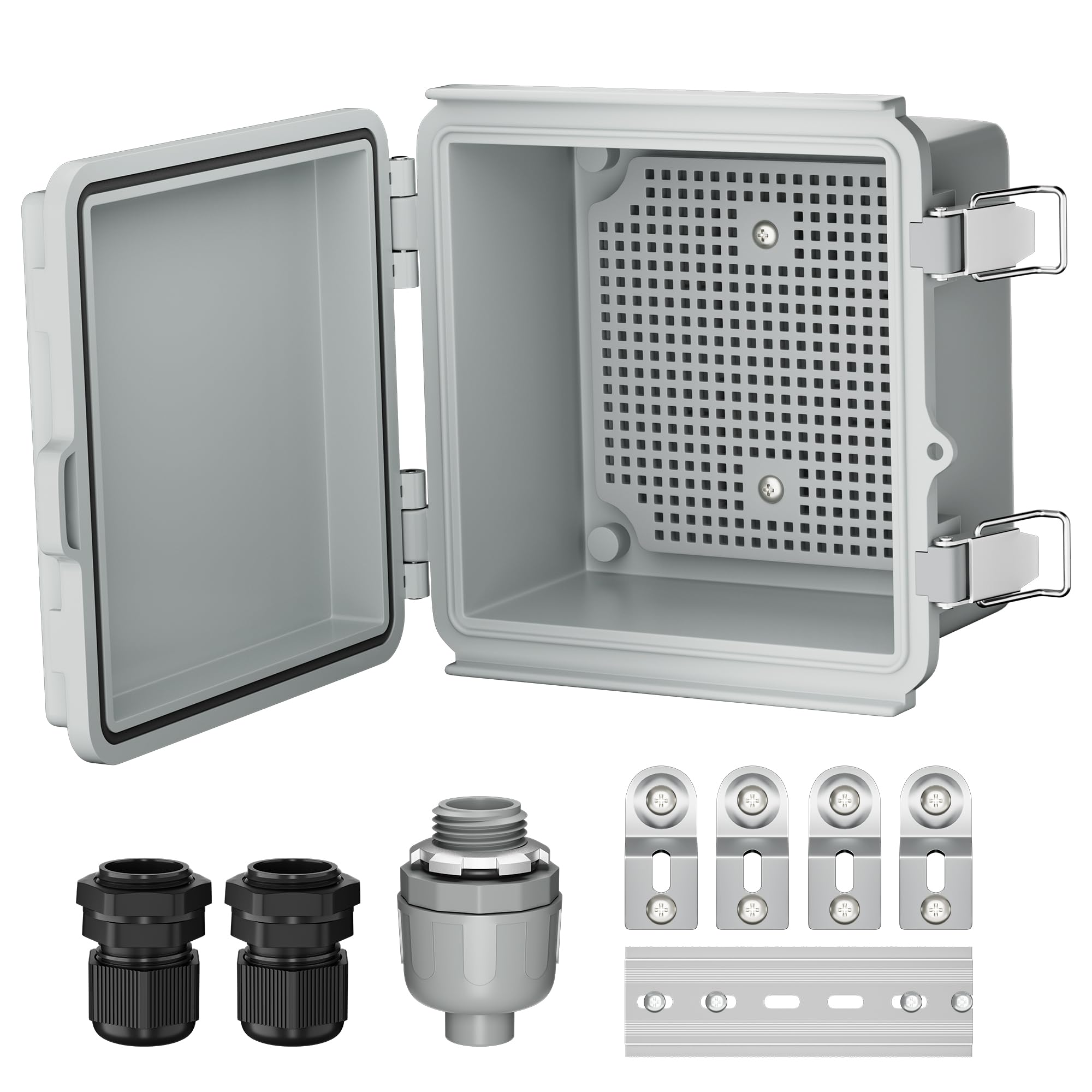
Lids, Housings & Power Supplies
- Sealing industrial lids, protective housings, and casings.
- Structural mounting and attaching of heavy baseplates.
- Maintains high dielectric insulation shielding values.
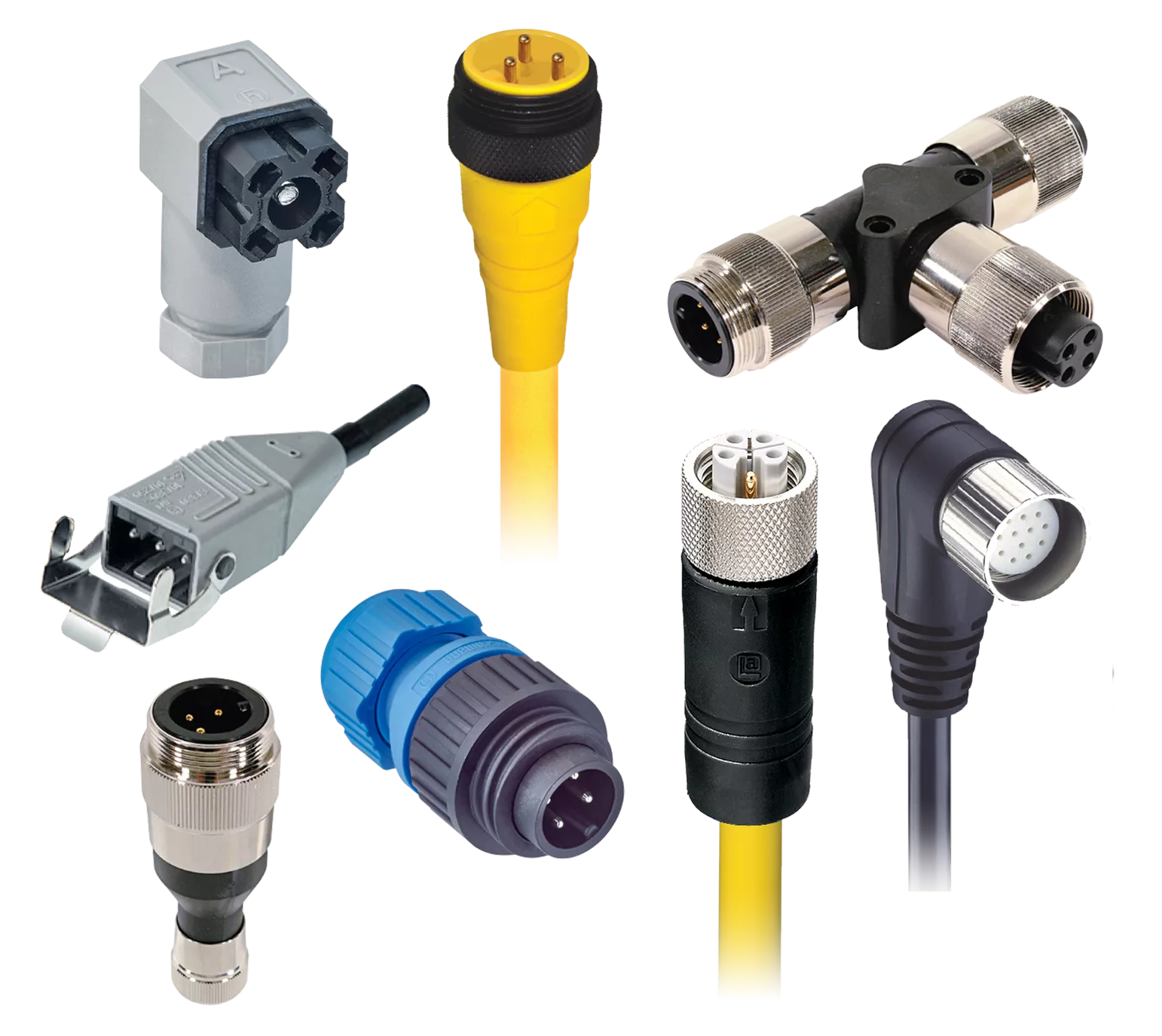
Connectors & Formed Gaskets
- High-reliability precision electrical connector sealing.
- Forms tough Formed-in-Place structural gaskets.
- Intended to successfully survive splash or intermittent solvent exposure.
See One-Part Heat-Cured Silicone Automated Dispensing Methods
Observe the high-precision processing of one-part non-flowing addition-cure silicone compounds utilizing automated needle dispensing machinery. This demonstration emphasizes automated airless line calibration, structural non-sag bead tracking profiles, and in-line oven thermal cure preparation.
Standard Packaging & Technical Help
- Multiple packaging sizes are available for this product to accommodate varied production scales.
- Detailed container and package metrics can be verified directly through your local Dow Sales Office.
- Original packaging must be kept tightly closed and held in cold storage to extend working shelf life.
- Designing optimized thermal heat cure schedules to balance line performance and processing costs.
- Evaluating substrate materials and multi-component layouts to prevent addition-cure chemical inhibition.
- Assisting with automated needle dispense line calibration, matching the specified extrusion rate of 161 g/min.
- Coordinating small-scale laboratory evaluations to verify maximum cohesive lap shear bond strength.
Tips and Troubleshooting
| Issue | Recommended Action |
|---|---|
| Voids or bubble formation inside thick cured sections |
|
| Adhesive remains liquid or tacky at the interface after heating |
|
| Poor unprimed adhesion or bond line failure on plastics/metals |
|