
-
Home

-
Products
-
Coatings, powders & Resins
-
Conformal Coatings
- ABchimie526UV Soft Dual Cure Conformal Coating
ABchimie526UV Soft Dual Cure Conformal Coating
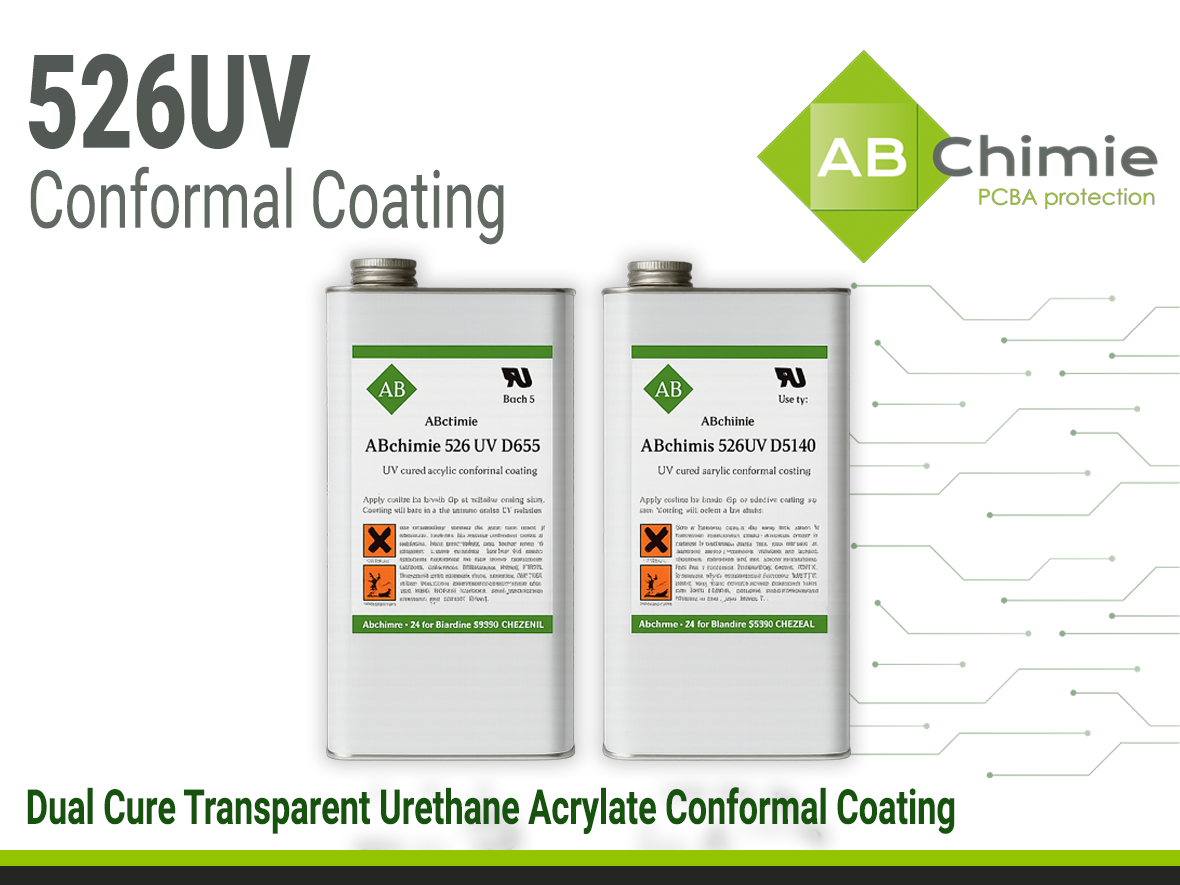
- One Component
- Dual Cure (UV and Humidity)
- Low viscosity
Product Description
ABChimie® 526UV is a transparent urethane acrylate conformal coating designed to provide mechanical and environmental protection to electronic components and assemblies. It features dual-cure technology (UV and humidity), which allows for the complete crosslinking through the entire PCB, even in areas that may be covered by shadow. The coating also allows the PCB to be soldered through without producing toxic gases.
ABChimie 526UV exhibits a low viscosity formulation and can be applied by brush, pad printing, manual spray, and selective coating. The decreased viscosity allows for a very thin thickness of 80-100 microns. The coating cures rapidly under UV light, has no VOCs, and can be applied to high-speed manufacturing processes to increase productivity. ABChimmie 526UV is in full compliance with REACH and RoHS regulations, and has UL94 V0 and UL746E (QMJU2-E308681) certifications.
Product Key Features
- Transparent, thin coverage
- Dual Cure (UV + Humidity)
- Thin film thickness (80 - 100 microns)
- Excellent adhesion to PCBs
- Resists mold growth
- Fast UV cure for high volume production
- No VOCs
- Brush, Spray, Printing, Selective Coating (ideal) applications
- UL94 V0 and UL746E
Applications
- Conformal coating for Printed circuit assemblies
- Protection for plastic casings or covers
- Protection for optically clear applications ex. lenses.
Technical Specifications
| General Properties | |
|
Appearance
Appearance
Appearance at room temperature. |
Transparent yellow liquid |
|
Film Thickness
Film Thickness
Film thickness is the thickness of a backing film without taking into account any coatings or adhesive layers. It is measured in micron and the conversion factor to mil is 0.039. |
30 - 130 µm |
| Electrical Properties | |
|
Breakdown Voltage
Breakdown Voltage
Breakdown voltage is the minimum voltage necessary to force an insulator to conduct some amount of electricity. It is the point at which a material ceases to be an insulator and becomes a resistor that conducts electricity at some proportion of the total current. After dielectric breakdown, the material may or may not behave as an insulator any more because of the molecular structure alteration. The current flow tend to create a localised puncture that totally alters the dielectric properties of the material. This electrical property is thickness dependent and is the maximum amount of voltage that a dielectric material can withstand before breaking down. The breakdown voltage is calculated by multiplying the dielectric strength of the material times the thickness of the film. |
1500 V |
|
Dielectric Strength
Dielectric Strength
Dielectric strength is measured in kV per mm and is calculated by the Breakdown voltage divided by the thickness of the tested material. Those two properties go hand in hand and while Breakdown voltage is always thickness dependent, dielectric strength is a general material property. As an example, the dielectric strength of Polyimide is 236 kV/mm. If we place 1mm of Polyimide between two electrodes, it will act as an insulator until the voltage between the electrodes reaches 236 kV. At this point it will start acting as a good conductor, causing sparks, potential punctures and current flow. |
60 kV/mm |
| Thermal Properties | |
|
Coefficient of Thermal Expansion (CTE), α1
Coefficient of Thermal Expansion (CTE), α1
CTE α1 (alpha 1) is the slope of the Coefficient of thermal expansion in a temperature range below the Glass transition temperature (Tg). It explains how much a material will expand until it reaches Tg. |
528 ppm/°C |
|
Glass Transition Temperature (Tg)
Glass Transition Temperature (Tg)
The glass transition temperature for organic adhesives is a temperature region where the polymers change from glassy and brittle to soft and rubbery. Increasing the temperature further continues the softening process as the viscosity drops too. Temperatures between the glass transition temperature and below the decomposition point of the adhesive are the best region for bonding. The glass-transition temperature Tg of a material characterizes the range of temperatures over which this glass transition occurs. |
50 °C |
| Operating Temperature | -50 - +150 °C |
| Physical Properties | |
|
Viscosity
Viscosity
Viscosity is a measurement of a fluid’s resistance to flow. Viscosity is commonly measured in centiPoise (cP). One cP is defined as the viscosity of water and all other viscosities are derived from this base. MPa is another common unit with a 1:1 conversion to cP. A product like honey would have a much higher viscosity -around 10,000 cPs- compared to water. As a result, honey would flow much slower out of a tipped glass than water would. The viscosity of a material can be decreased with an increase in temperature in order to better suit an application |
68.5 - 137 mPa.s |
Additional Information
Frequently Asked Questions About ABChimie® 526 UV
What are typical applications for ABChimie® 526 UV?
ABChimie® 526 UV is a UV-curable conformal coating designed to protect printed circuit board assemblies (PCBs) and components in demanding manufacturing environments, including:
- Automotive electronics (e.g., control units, sensors)
- Industrial automation (e.g., motor drives, PLCs)
- Consumer electronics (e.g., smart devices, wearables)
- Other high-reliability electronic assemblies
Should I control the application environment?
ABChimie® 526 UV should be applied at a minimum temperature of 16°C and a minimum relative humidity of 50% are recommended for coating application. The relative humidity of at least 50% is recommended for the second ABchimie TDS ABchimie 526 UV and UV LED polymerization mechanism. Before applying, the printed circuit board must be clean, dry, and free of moisture. A stage in an oven at 80 °C for 4 hours is usually sufficient.
Learn More About ABChimie® 526 UV
ABChimie® 526 UV is a proven solution for engineers seeking fast, reliable protection of electronic assemblies in demanding manufacturing environments. This UV-curable conformal coating delivers rapid curing, excellent electrical insulation, and strong environmental resistance—ideal for applications in automotive electronics, industrial automation, consumer electronics, and other high-reliability assemblies.
Main Advantages of ABChimie 526 UV
ABchimie® 526 UV cures through a dual mechanism: UV exposure initiates rapid surface curing, while moisture ensures complete curing throughout the coating. This combination provides a uniform, durable protective layer with optimal adhesion and performance.
ABChimie® 526 UV provides excellent mechanical protection. This hardness helps resist scratches, abrasion, and minor impacts, ensuring long-term stability of encapsulated components.
ABchimie® 526 UV can be soldered through without generating highly toxic gases, ensuring safe processing. The coating maintains its integrity during soldering, allowing reliable connections while protecting the underlying components.
ABchimie® 526 UV provides excellent adhesion even in harsh environments. The coating forms a durable, long-lasting protective layer that resists moisture, chemicals, and temperature variations, ensuring reliable performance under demanding conditions.
How to Choose a Conformal Coating
Selecting the most suitable resin requires consideration of key factors:
- ✔ Norms & Compliance
- ✔ Environment / Exposure Conditions
- ✔ Repairability
- ✔ Electrical Performance
- ✔ Application Method
- ✔ Operating Temperature
Compliance You Can Trust ✅
ABChimie® 526 UV meets stringent industry standards, ensuring reliability and regulatory adherence for OEMs and contract manufacturers:
- REACH Compliant
- RoHS 2011/65/EU Compliant
UL94 V0
UL746E (QMJU2-E308681)
Curing Tip: ABChimie 526 UV cures with UV rays. It is crucial to use the appropriate equipment, as well as the recommended settings, to achieve the best properties of the resin.
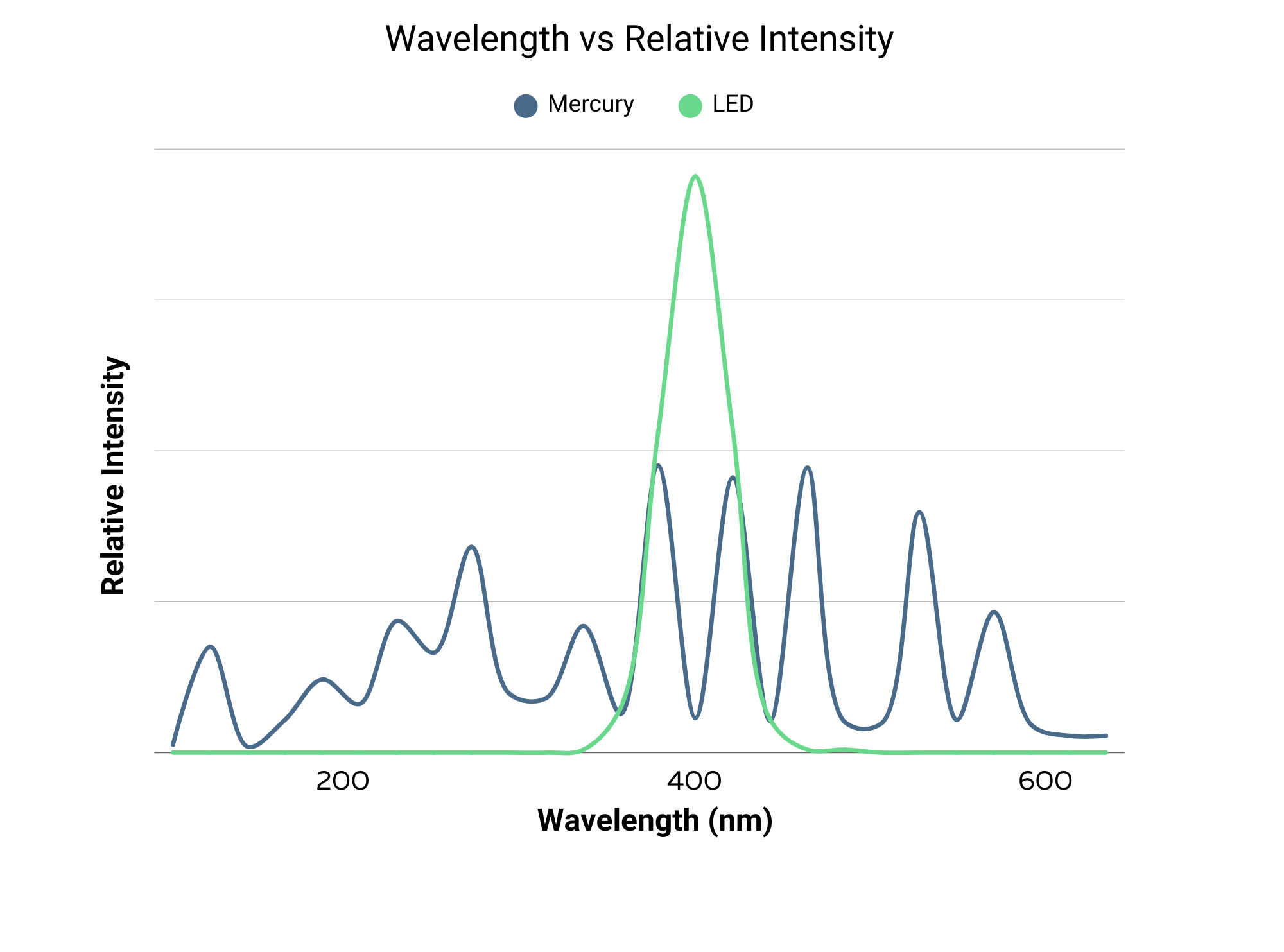 Ref. Leistung / ref power ln % over wavelength in nm
Key Curing Properties (DS55MS / DS
Mercury (arc lamp)
200-400 nm IR up to 800 nm
3000 mJ/cm2
Coating Thickness
100 μm
Distance UV lamp - PCB
1 - 10 cm
Minimum UVA Power
150 mW/cm2
Typical property values shown for reference only and should not be used as specifications.
How to Optimise for the Best Results
PCBs must be completely dry and thoroughly clean, with no dust, grease, wax, or other contaminants. Coating adhesion depends directly on the quality of the substrate. All flux residues must be fully removed, as they can become corrosive and lead to circuit malfunctions.
For cleaning equipment or removing uncured ABchimie 526 UV or UV LED varnish, we recommend using SND or ABclean solvent.
It is essential to use the correct UV equipment (UV or LED) and follow the recommended settings to achieve the optimal properties of the cured conformal coating. These parameters influence both the coating’s reactivity and surface quality. ABchimie526UV and UV LED cure through UV exposure, with moisture contributing to a secondary curing mechanism.
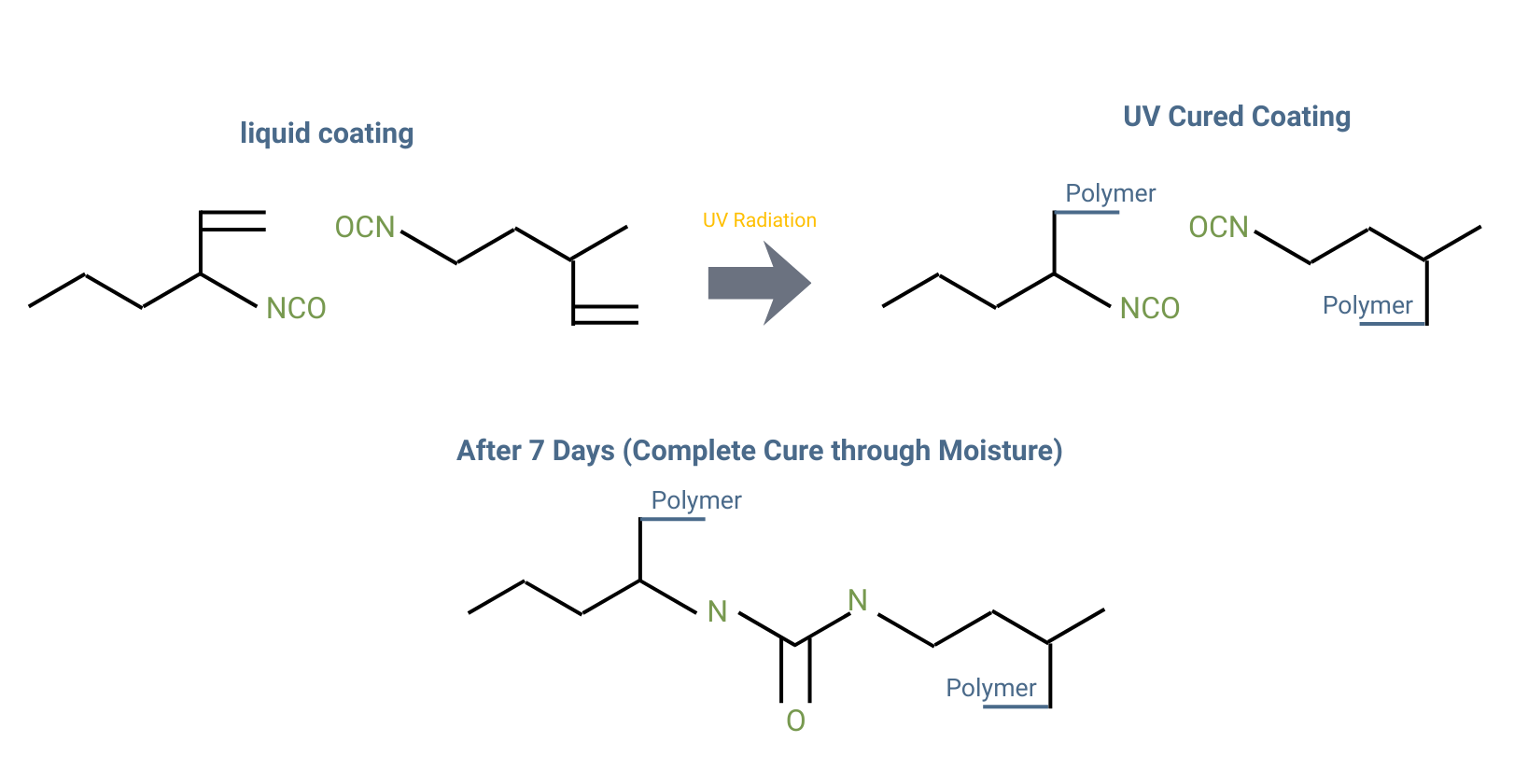
Curing Mechanism: UV light creates the first cure, and after 7 days the moisture from the environment completes the curing process.
How does Moisture Cure Work?
During UV curing, exposure to UV light activates the photoinitiators in the conformal coating, triggering rapid polymerization of the resin. This results in an immediate surface cure and fast development of handling strength. UV curing provides precise, on-demand curing in exposed areas, enabling high-throughput processing while maintaining coating uniformity.
ABchimie526UV and ABchimie526UV LED use the same dual curing mechanism to ensure complete curing, including in shadowed or hard-to-reach areas. Initial curing is achieved by UV exposure, while a secondary moisture-activated cure completes the process at ambient temperature. For full curing in shaded areas, a minimum relative humidity of 50% is required for at least 7 days.
ABChimie 526 UV is also available in the LED lamp version, which cures with an LED lamp.
ABChimie 526 UV LED [Go to 526 UV LED Product Page↗]
- Conformal Coating
- Fluorescent under UV light
- Excellent adhesion to flexible substrates
- Dual curing with UV LED exposure and moisture curing
Best suited for: High-speed process looking to use LED light for curing