
-
Home

-
Products
-
Surface Treatments
-
Adhesion Primers & Promoters
- ABchimie CIPEX50 Aqueous Base for PCB Cleaners
ABchimie CIPEX50 Aqueous Base for PCB Cleaners
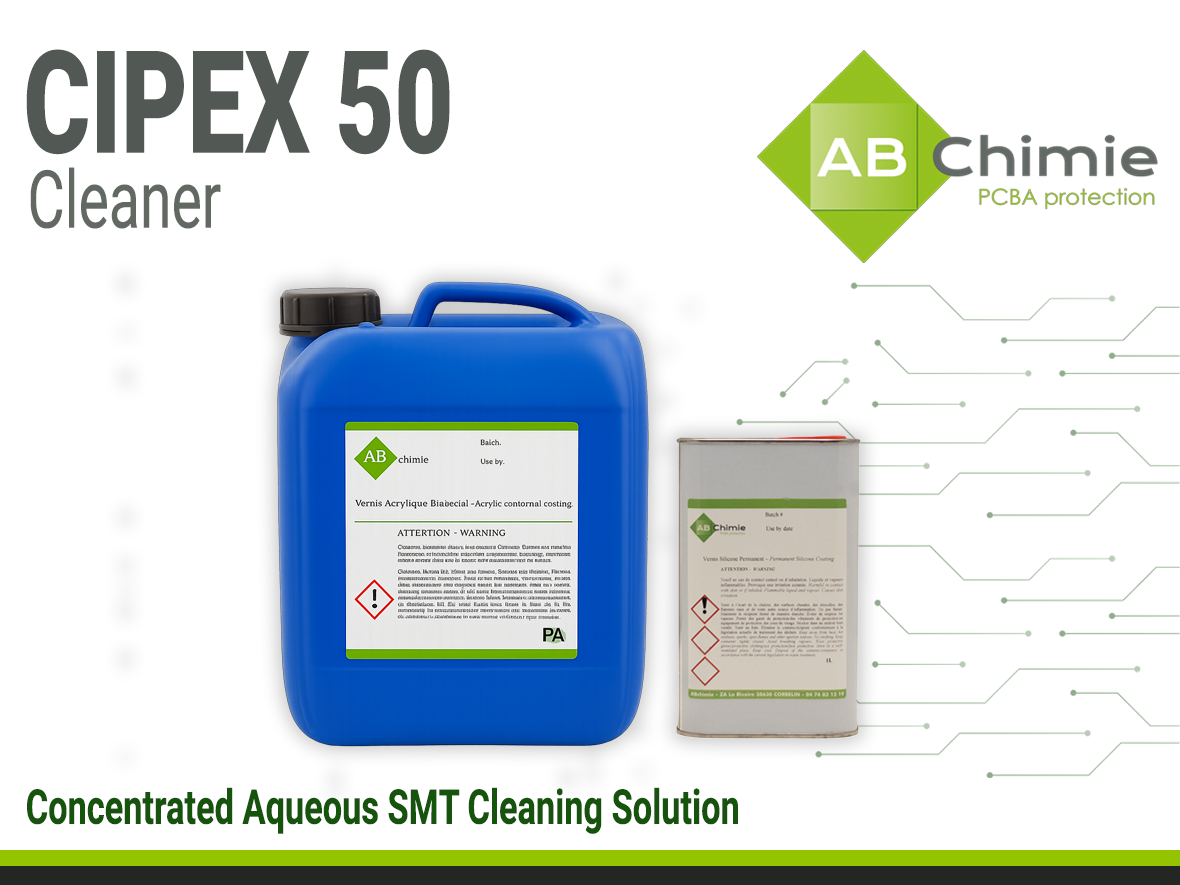
- Highly concentrated aqueous cleaning formulation
- Low‑foaming formula
- High cleaning efficiency
Product Description
ABchimie CIPEX 50 is a concentrated version of the CIPEX cleaning chemistry, formulated for dilution and high‑performance removal of flux residues and solder pastes on PCBs after reflow. It is designed for use in both ultrasonic cleaning systems and pressure spray wash equipment, making it suitable for a wide range of SMT cleaning operations.
CIPEX 50 allows for concentration adjustments according to contamination level, equipment type, and process requirements, providing excellent flexibility and cost‑efficiency.
Product Key Features
- Highly concentrated aqueous cleaning formulation
- Designed for dilution according to process needs
- Low‑foaming formula suitable for ultrasonic and spray systems
- High cleaning efficiency for reflowed solder pastes and flux residues
Applications
- Post‑reflow PCB cleaning
- Ultrasonic tank cleaning
- Pressure spray washing (batch or in‑line systems)
Technical Specifications
| Thermal Properties | |
|
Boiling Point
Boiling Point
The amount of degree’s needed to reach in order to make the substance boil. |
100 °C |
|
Flash Point
Flash Point
The flashpoint of a solvent is the lowest possible temperature at which it can vaporize to form an ignitable vapor. Flashpoint is often confused with “autoignition temperature”, which is the temperature at which a solvent ignites without an ignition source. |
115 °C |
| General Properties | |
|
Appearance
Appearance
Appearance at room temperature. |
Yellow Liquid |
|
Specific Gravity
Specific Gravity
Specific gravity (SG) is the ratio of the density of a substance to the density of a reference substance; equivalently, it is the ratio of the mass of a substance to the mass of a reference substance for the same given volume. For liquids, the reference substance is almost always water (1), while for gases, it is air (1.18) at room temperature. Specific gravity is unitless. |
1.01 |
| Physical Properties | |
|
Viscosity
Viscosity
Viscosity is a measurement of a fluid’s resistance to flow. Viscosity is commonly measured in centiPoise (cP). One cP is defined as the viscosity of water and all other viscosities are derived from this base. MPa is another common unit with a 1:1 conversion to cP. A product like honey would have a much higher viscosity -around 10,000 cPs- compared to water. As a result, honey would flow much slower out of a tipped glass than water would. The viscosity of a material can be decreased with an increase in temperature in order to better suit an application |
15-25 mPa.s |
Additional Information
Reflow is a process in electronics manufacturing where solder paste is heated to melt and form reliable electrical connections between components and the printed circuit board (PCB). After heating, the solder cools and solidifies, securing the components in place.
During reflow, flux from the solder paste leaves behind residues on the PCB. These residues can affect electrical performance, cause corrosion, or impact reliability over time. Cleaning removes these contaminants, ensuring optimal functionality, long-term reliability, and a clean final product.
Types of Cleaning
Why is PCB Cleaning Required?
After reflow soldering, the PCB (printed circuit board) is cleaned to remove any leftover flux and solder paste residues.
Even though the solder is solidified and the components are attached, flux residues can be sticky or corrosive, and over time they can:
- Causes electrical leakage or short circuits
- Promote corrosion on metal surfaces
- Affect the board’s reliability and appearance
Using a cleaner like CIPEX 40 or 50, the PCB is washed to remove all residues and leave the board clean and ready for use or further assembly.
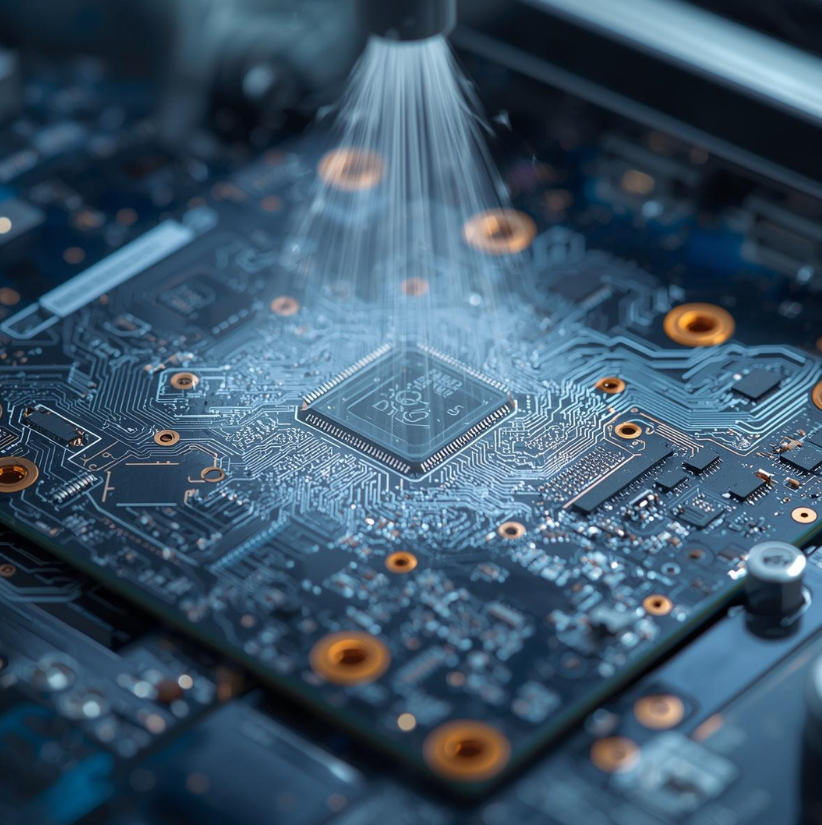
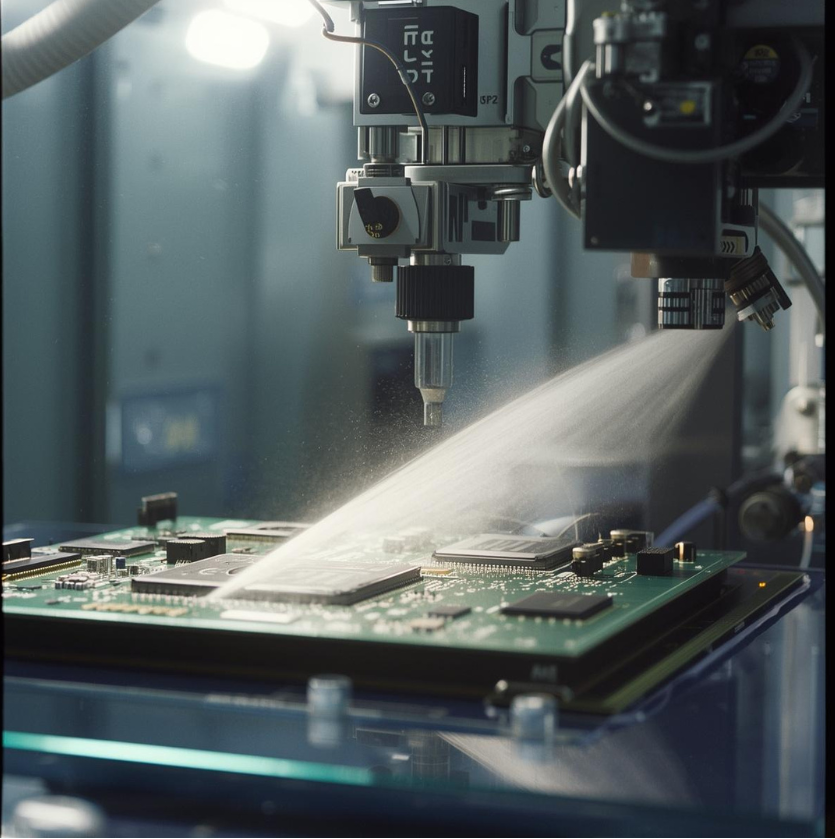
Uses pressurized jets of cleaning fluid to remove residues from surfaces and components. Effective for fast, uniform cleaning of larger areas and external parts.
Cleaning is performed directly within the equipment without disassembly, allowing the system to remain in operation or quickly return to service. Ideal for minimizing downtime in continuous production environments.
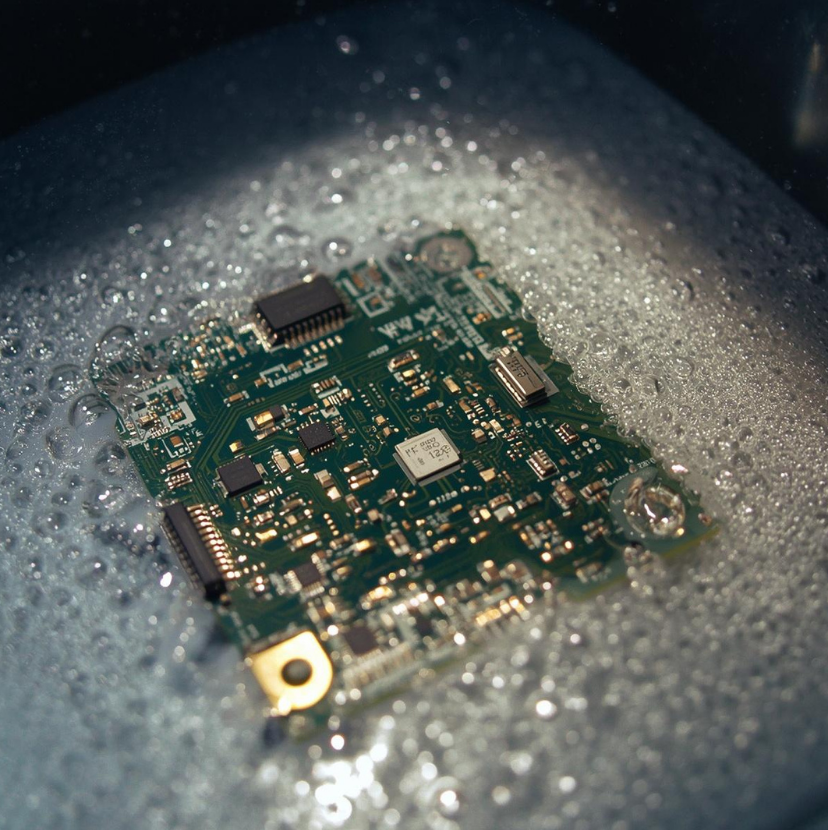
Employs high-frequency sound waves in a liquid bath to create microscopic cavitation bubbles that dislodge contaminants. Perfect for precision cleaning of small or complex components with hard-to-reach areas.
Cleaning Instructions for CIPEX 50
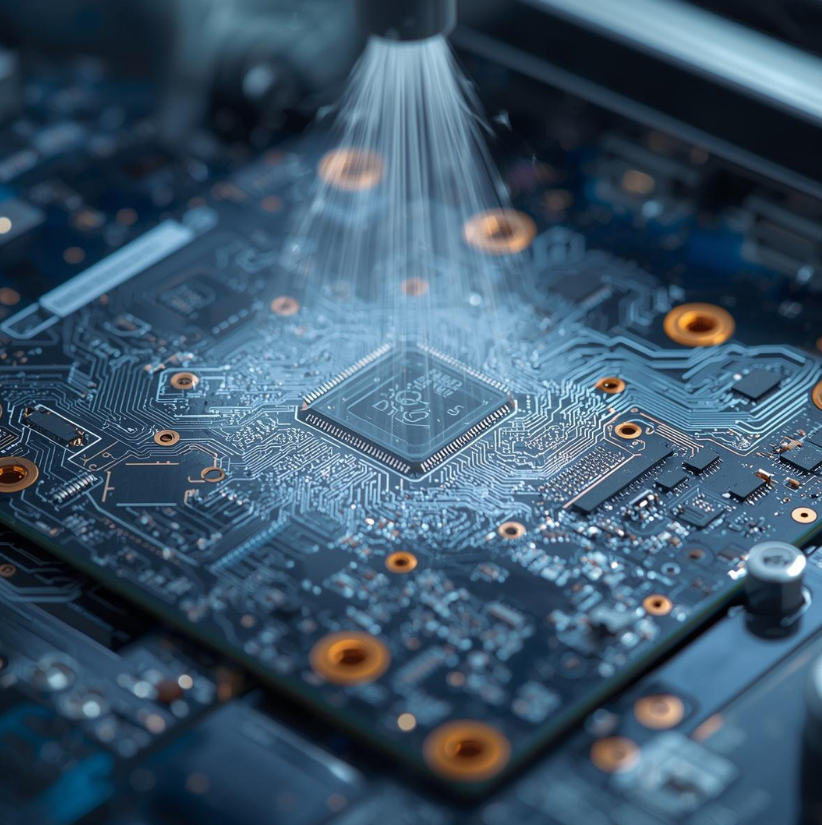
These cycles are given as indicative and will be optimized based equipment and types of streams to be processed.