
-
Home

-
Products
-
Sealants
-
Gasketing Sealants (CIPG & FIPG)
- DOWSIL™ 3-8259 RF Silicone Foam
DOWSIL™ 3-8259 RF Silicone Foam
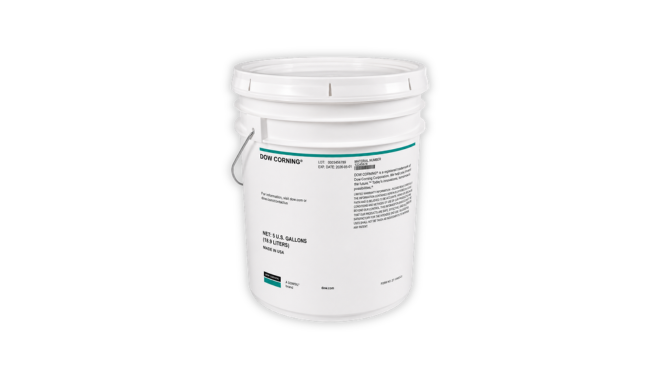
- Two-part
- Fast room temperature cure
- Reduced flow rheology
Product Description
DOWSIL™ 3-8259 RF Silicone Foam Dark Grey is a two-part, room temperature curing silicone foam system designed to be dispensed and cured directly on parts to form an integrated compression gasket It features a medium hardness and a reduced-flow formulation that aids application to inclined surfaces. With an easy-to-handle 1:1 mix ratio and stable flexibility over a wide temperature range of -60°C to 220°C, it provides a fast, efficient sealing solution without the use of CFCs.
Product Key Features
- Two-Part System - user-friendly and designed with an easy-to-handle 1:1 mix ratio by volume to suit robotic dispensing.
- Fast Room Temperature Cure - offers a snap time of 150-220 seconds and becomes tack-free in a maximum of 10 minutes, avoiding the need for temporary storage of equipped parts.
- Reduced Flow Rheology - limits flow to a maximum of 20 cm, which facilitates dispensing on inclined surfaces or contoured parts.
- Mechanical & Thermal Profile - delivers a Shore 00 hardness of 50 and features a low compression set that is retained at high service temperatures.
- Eco-Friendly Expansion - expands into a fine cell structure without containing or employing ozone-depleting chlorofluorocarbons (CFCs).
Applications
This foam is primarily developed as a dispensed "foamed-in-place" gasket material for the automotive and industrial assembly sectors where long service life and good weatherability are required.
- Automotive & Industrial Assemblies: Ideal for sealing automotive parts, exterior lighting, and domestic appliance components.
- Electric Devices: Suitable for sealing housings for electric devices to protect internal components.
- Integrated Compression Gaskets: Dispensed directly into grooves on flat or contoured surfaces to form a durable seal for applications requiring medium clamping pressure.
Technical Specifications
| General Properties | |||||
|
Color
Color
The color |
Dark gray/ Transclucent | ||||
|
Density
Density
Volumetric mass per unit |
300 - 360 kg/m3 | ||||
|
Specific Gravity
Specific Gravity
Specific gravity (SG) is the ratio of the density of a substance to the density of a reference substance; equivalently, it is the ratio of the mass of a substance to the mass of a reference substance for the same given volume. For liquids, the reference substance is almost always water (1), while for gases, it is air (1.18) at room temperature. Specific gravity is unitless. |
A/B: 1.10/ 0.99 | ||||
| Physical Properties | |||||
| Tack-Free Time | <10 minutes | ||||
|
Viscosity
Viscosity
Viscosity is a measurement of a fluid’s resistance to flow. Viscosity is commonly measured in centiPoise (cP). One cP is defined as the viscosity of water and all other viscosities are derived from this base. MPa is another common unit with a 1:1 conversion to cP. A product like honey would have a much higher viscosity -around 10,000 cPs- compared to water. As a result, honey would flow much slower out of a tipped glass than water would. The viscosity of a material can be decreased with an increase in temperature in order to better suit an application |
A/B: 35,000–75,000/ 20,000–70,000 mPa.s | ||||
| Mechanical Properties | |||||
|
|||||
Additional Information
DOWSIL™ 3-8259 RF Silicone Foam
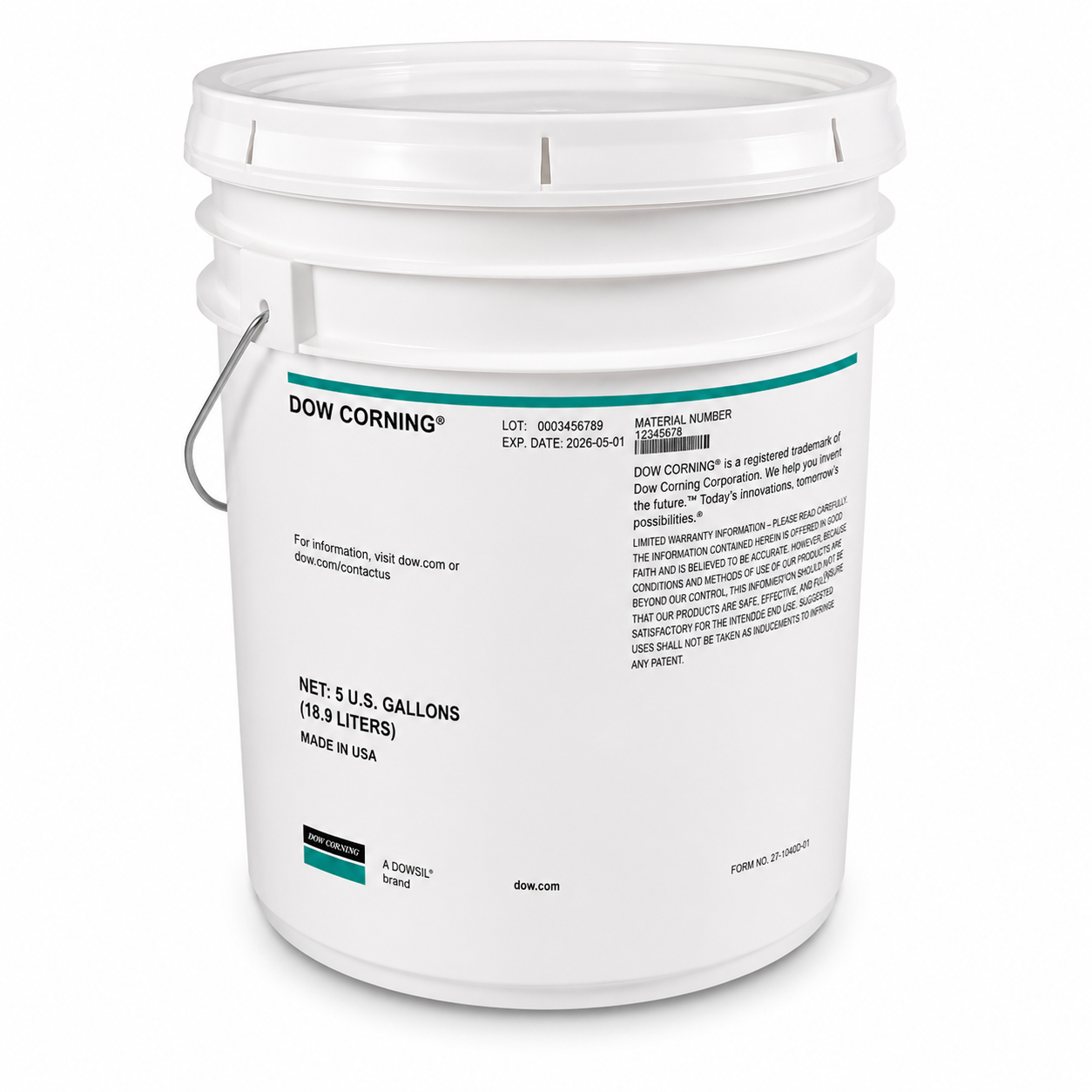
DOWSIL™ 3-8259 RF Silicone Foam Dark Grey is a two-part, reduced-flow silicone foam system engineered to be dispensed and cured directly on parts to form an integrated compression gasket. Featuring a user-friendly 1:1 mix ratio by volume, this fast-reacting material expands and cures to a medium hardness (Shore 00) elastomer in approximately 10 minutes at room temperature. It delivers a fine cell structure that acts as an exceptional seal or gasket where long service life, chemical resistance, low compression set, and extreme temperature stability are required.
Typical values only. Working times and cell structures depend significantly on the type and degree of mechanical mixing.
Key Features
- Favorable 1:1 mix ratio by volume is specifically tailored for robotic automated meter/mix dispense loops.
- Reduced-flow properties limit material slump, aiding precise bead application to inclined and vertical surfaces.
- Fast room-temperature reaction avoids temporary holding areas or oven storage requirements for equipped parts.
- Maintains consistent physical flexibility and long service life across a broad operational profile from -60°C to 220°C.
- Low compression set is structurally retained at high temperatures, ensuring dependable sealing under load.
- Formulated as an environmentally conscious system expanding cleanly without the use of chlorofluorocarbons (CFCs).
Processing Summary
Process Notes
- Realizes a 12-month usable shelf life from production date when stored at or below 30°C.
- Keep containers securely closed after application cycles to prevent content contamination.
- Part B exhibits a thixotropic nature; its wide viscosity scope settles normally after shear thinning.
- Condition bulk quantities or large cured foam components for 24 hours at room temperature before exposing to high-heat post-cures.
- Joint surfaces must be clean, dry, and free of processing oils, plasticizers, or dust.
- Exhibits slight inherent adhesion over common substrates like glass, steel, and selection plastics.
- For maximum structural gasket anchoring, apply a thin coat of DOWSIL™ 1200 OS Primer.
- Bonds will not normally establish over non-reactive substrates like PTFE, PE, or PP.
- Susceptible to chemical cure inhibition when contacting reactive industrial substances.
- Avoid trace contact with strong inhibitors including amines, sulfur, and organotin salts.
- Some epoxies and amides may trigger incomplete curing or surface tackiness.
- Ensure all fluid dispensing hoses, tubes, and pump seals are built from PTFE rather than typical rubbers.
- Mixing Part A and B immediately initiates a chemical reaction evolving flammable hydrogen gas.
- Maintain adequate local exhaust ventilation to prevent hydrogen concentrations from accumulating.
- Keep application loops clear of open flames, high heat, or electrical sparks.
- Do not seal reactive waste foam inside plastic bags; avoid large waste mass accumulations due to exotherm heat.
APPROPRIATE CAUTION SHOULD BE EXERCISED!
Engineering Data for DOWSIL™ 3-8259 RF
Uncured Component Properties (As Supplied)
| Property | Part A | Part B | Test Method Standard |
|---|---|---|---|
| Appearance | Dark grey | Translucent | CTM 0176 |
| Viscosity at 23°C | 35,000 - 75,000 mPa·s | 20,000 - 70,000 mPa·s | CTM 0050 (Part B is thixotropic) |
| Specific Gravity at 23°C | 1.10 | 0.99 | CTM 0001 |
Mixed & Cured Elastomer Performance Characteristics
Physical structures evaluated after curing at 23°C and testing post 24-hour stabilization intervals.
| Property Parameter | Typical Engineering Value | Test Standard Basis |
|---|---|---|
| Snap Time (Mixed 1:1 at 23°C) | 150 - 220 sec | CTM 0092 |
| Tack-Free Time | Maximum 10 minutes | CTM 0095 |
| Flow Rate Measurement | Maximum 20 cm | CTM 1149 |
| Cured Foam Density | 300 - 360 kg/m³ | Measured on 2 mm Sheets / CTM 0016 |
| Hardness (Shore 00) | 50 | Medium hardness range / CTM 0099 |
| Compression Set (22h @ 70°C) — Non-Post-Cured | 15 % | 50% compression / CTM 0085 |
| Compression Set (22h @ 70°C) — Post-Cured | 4 % | Post-cured 1 hour @ 100°C / CTM 0085 |
| Stress-Strain Characteristics | 160 kPa | Evaluated at 50% compression |
Where DOWSIL™ 3-8259 RF Fits
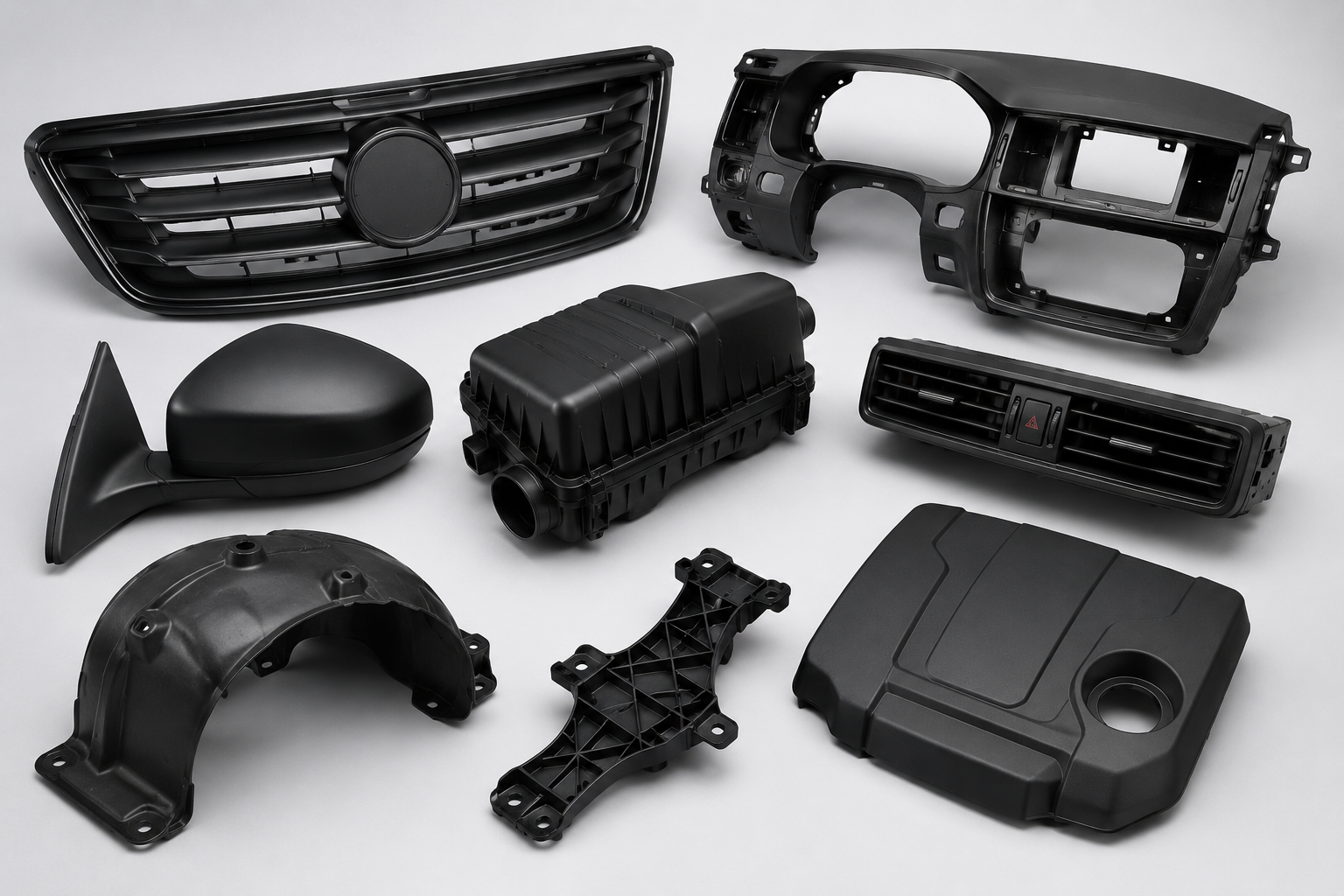
- Dispensed directly on contoured parts or flat surfaces.
- Medium hardness handles typical joint clamping pressures.
- Low compression set protects components from fluid leak paths.
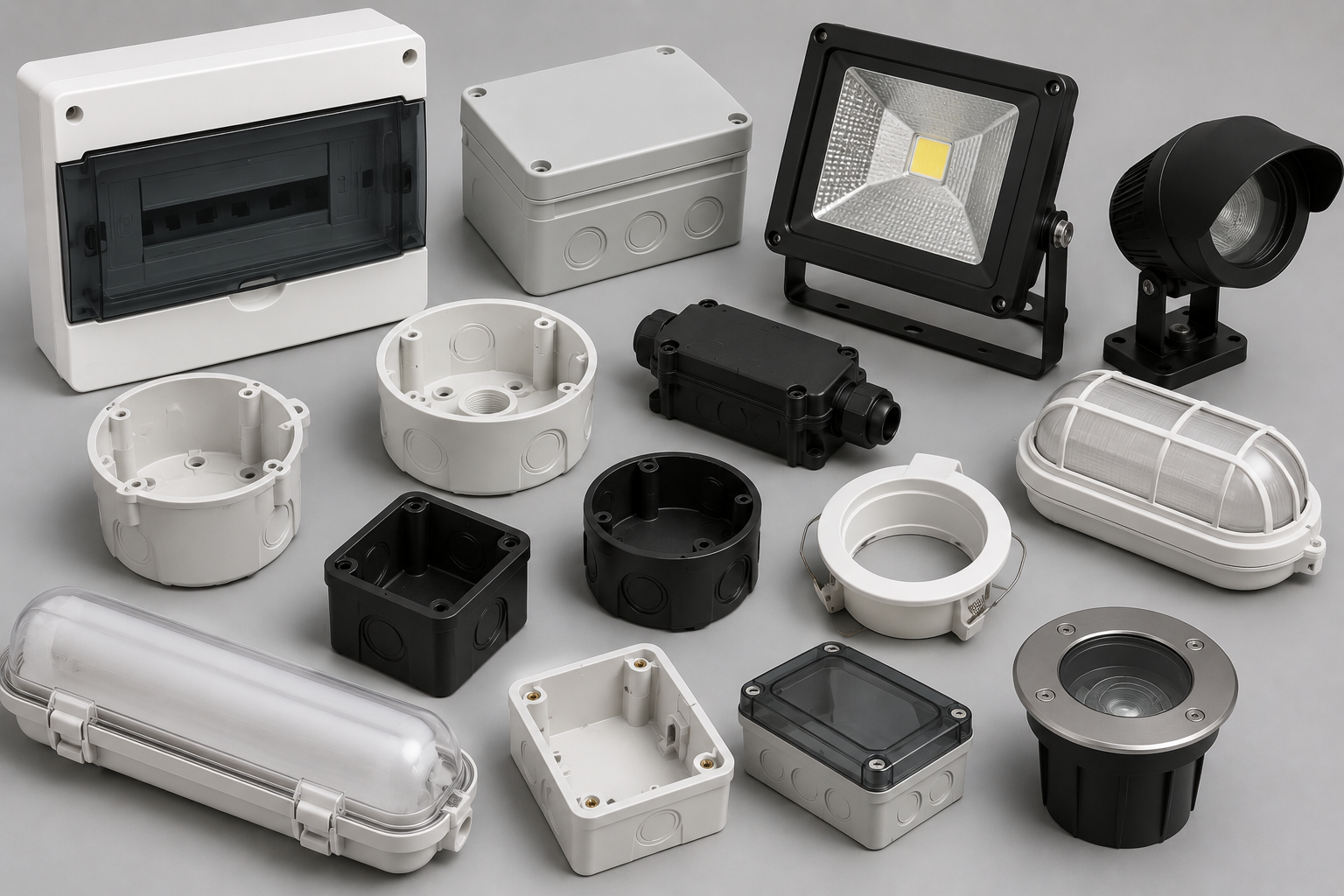
- Protects internals from moisture and weathering.
- Reduced flow allows neat extrusion into specific grooves.
- Remains stable and flexible from -60°C up to 220°C.

- Speeds up inline assembly steps via fast ambient cures.
- Reduced flow supports application to inclined or angled surfaces.
- Integrated compression profiles seal out fluid spills cleanly.
See Foamed-in-Place Automated Silicone Dispensing in Action
Observe the precision application of two-part thixotropic silicone foam systems via automated robotic meter/mix dispense arms. This visual layout showcases clean groove distribution, uniform material expansion, low-slump profile control on inclined sections, and inline tactile parts handling.
Standard Packaging & Technical Help
- Supplied as structured fluid kits packaged inside standard industrial container sizes.
- Perfectly matched for seamless extraction via standard commercial meter/mix machinery.
- Tightly sealed logistics minimize raw element degradation before execution.
- Assisting engineers with inline automated configuration profiles to hit density targets.
- Auditing compound transfer equipment to identify and block potential chemical cure inhibitors.
- Calibrating robotic motion rates to achieve consistent 1:1 volumetric dispensing.
- Advising on brief thermal post-bake cycles to eliminate surface tack or drop compression set to 4%.
Tips and Troubleshooting
| Issue | Recommended Action |
|---|---|
| Foam remains wet, sticky, or fails to reach full hardness benchmarks |
|
| Irregular foam cell distribution, inconsistent density, or shifting snap times |
|
| Persistent slight surface tackiness or desire to optimize compression set below 15% |
|
Ready to Qualify DOWSIL™ 3-8259 RF?
```