
-
Home

-
Products
-
Sealants
-
Flat Gaskets
- DOWSIL™ 3145 RTV Mil-A-46146 Adhesive/Sealant
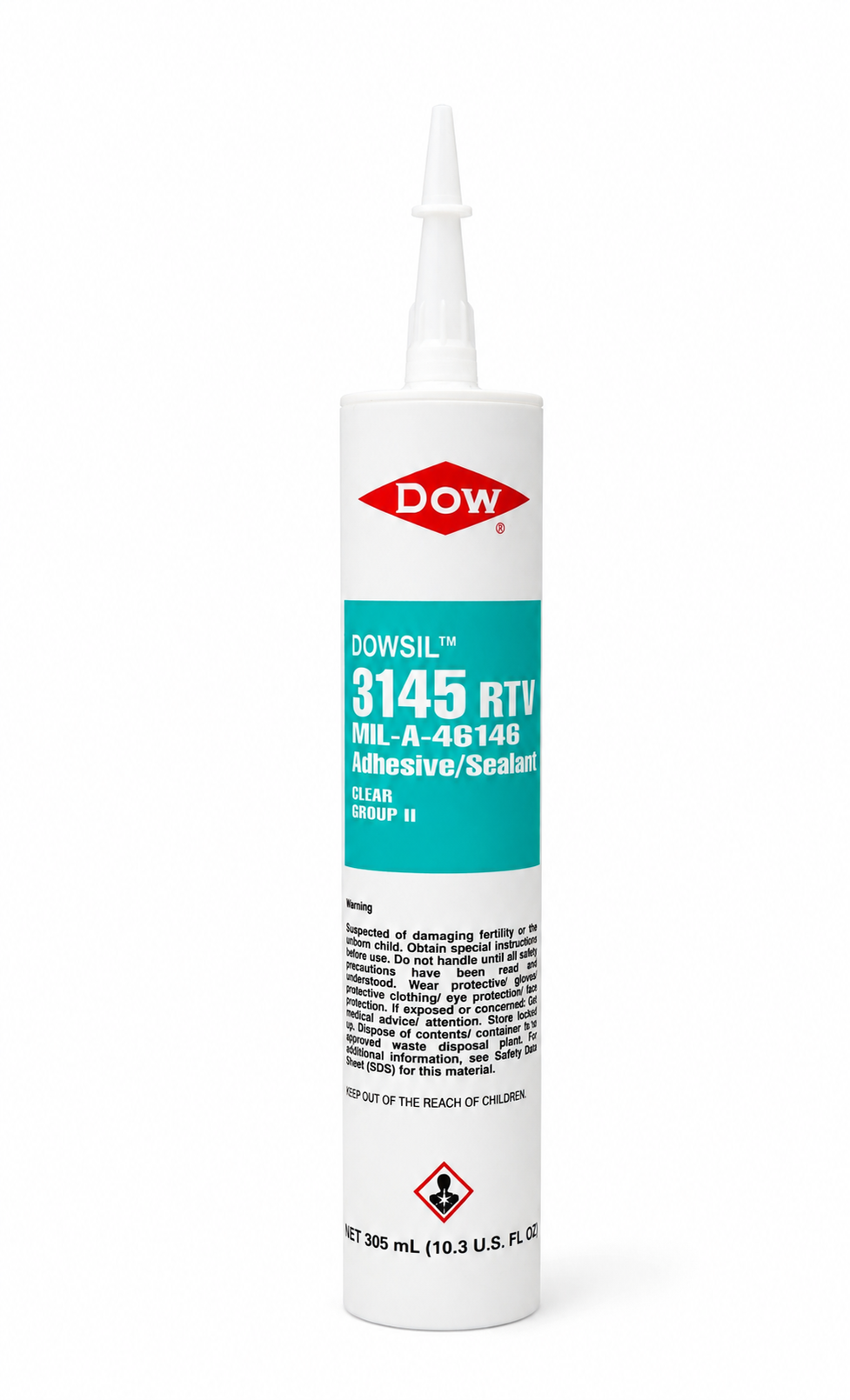
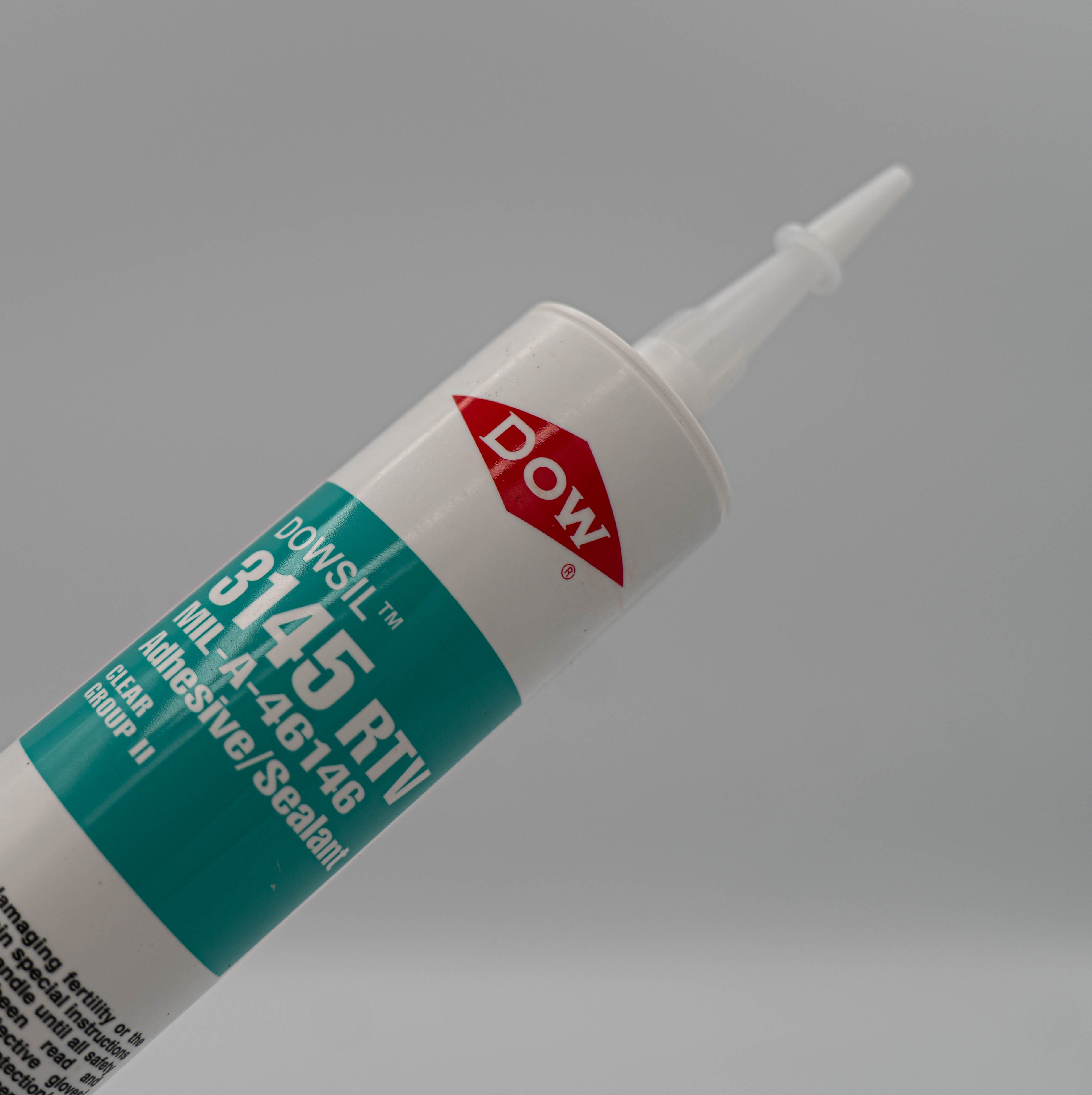
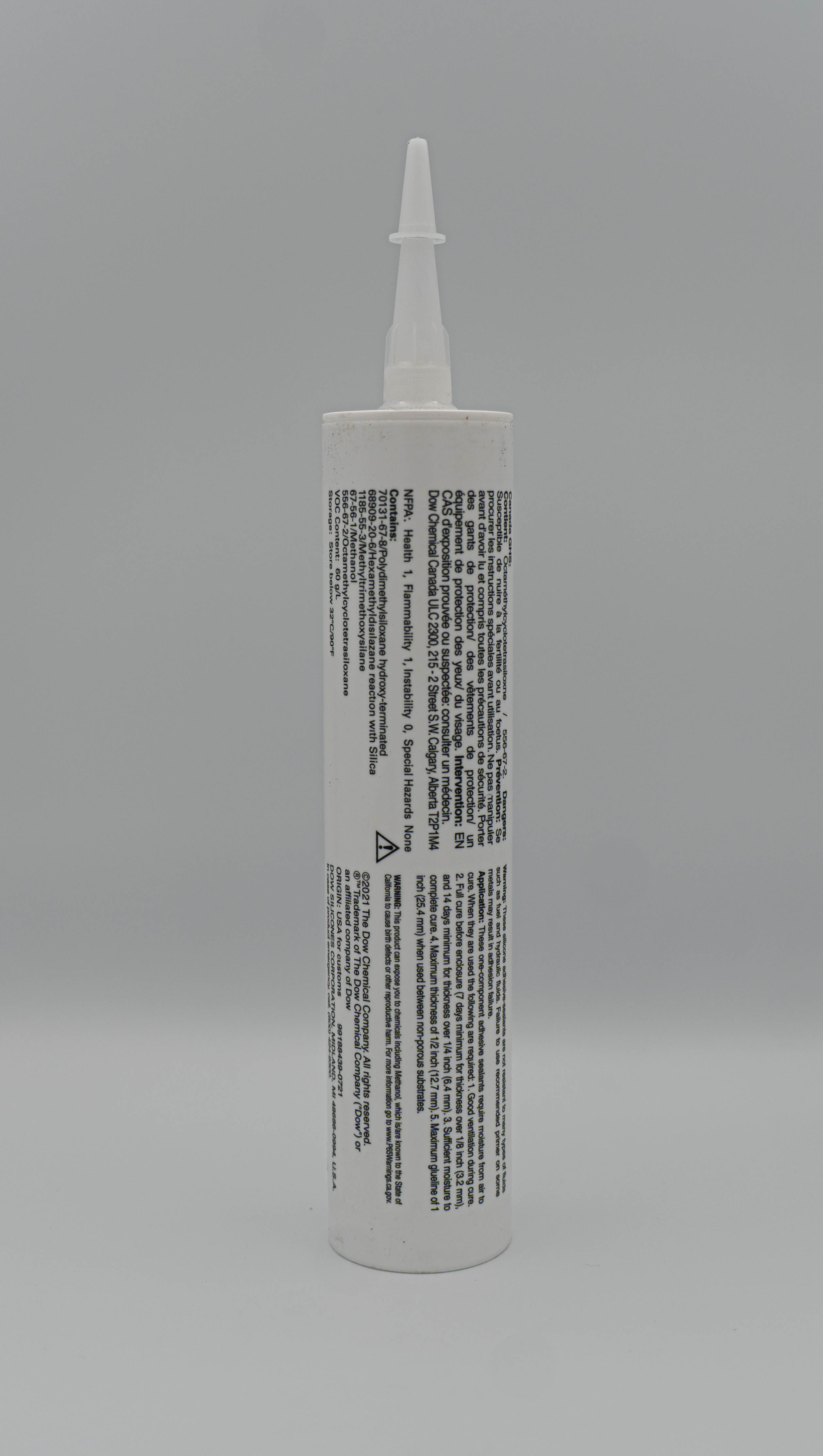
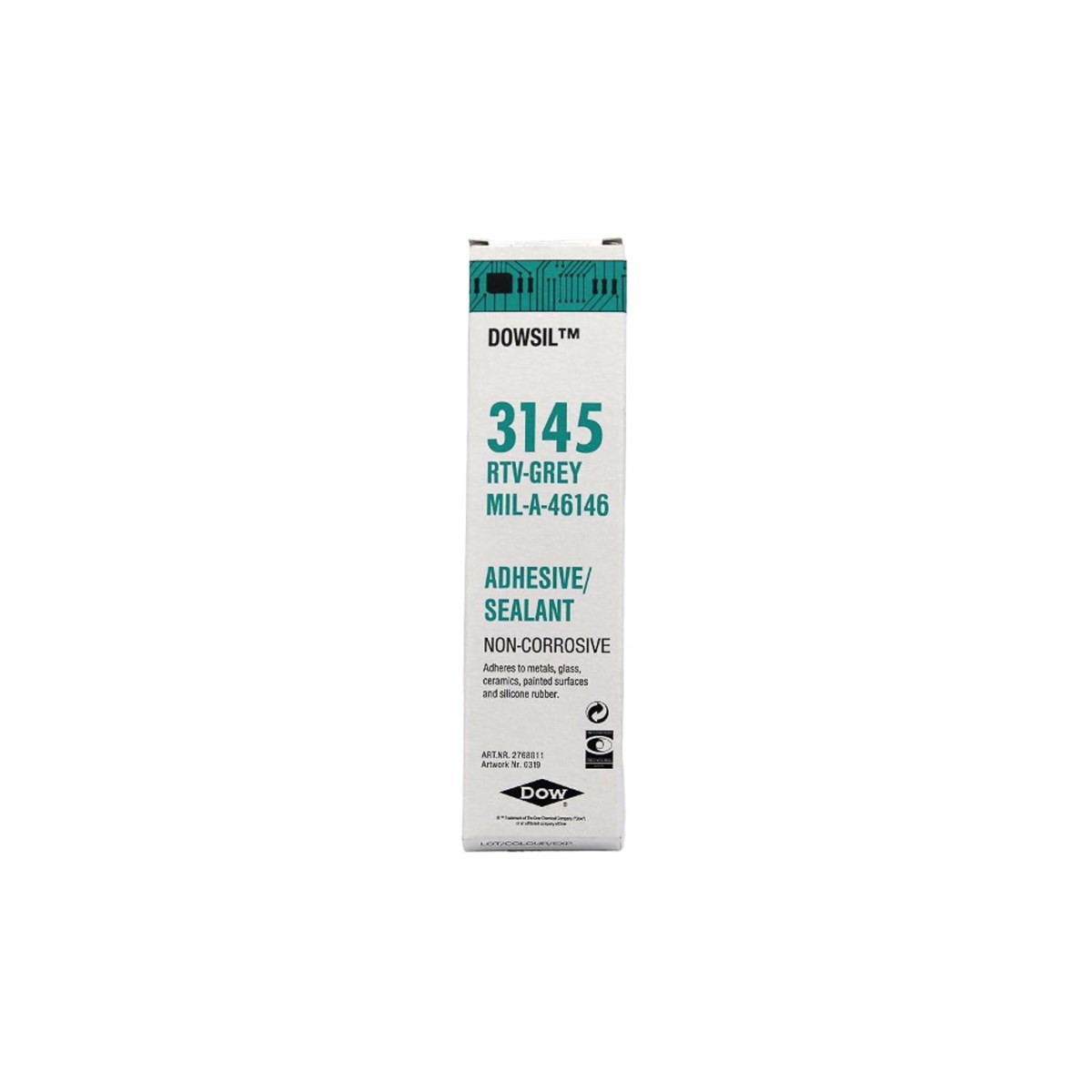
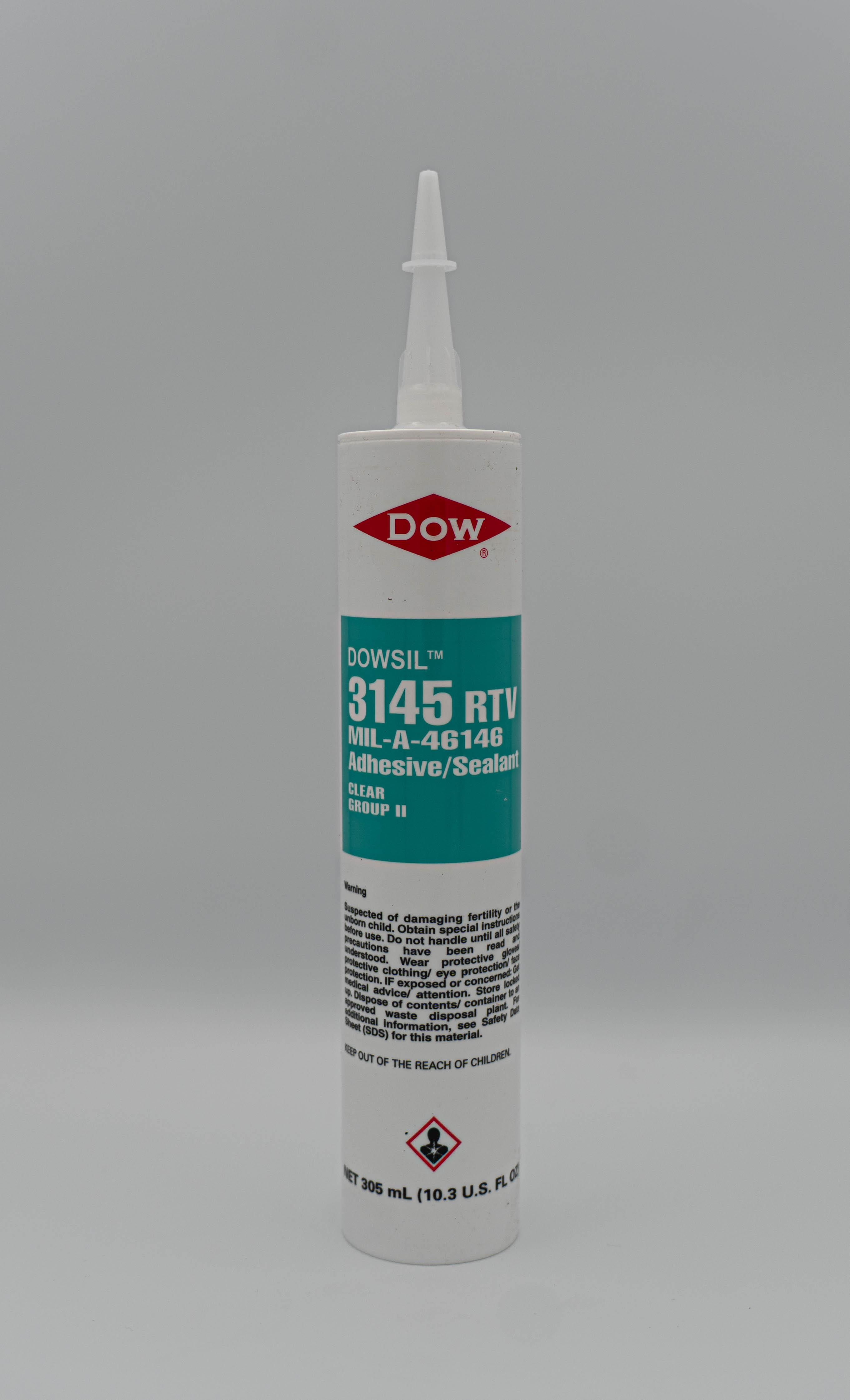
DOWSIL™ 3145 RTV Mil-A-46146 Adhesive/Sealant



.jpg "DOWSIL™ 3145 RTV Mil-A-46146 Adhesive/Sealant")
.jpg "DOWSIL™ 3145 RTV Mil-A-46146 Adhesive/Sealant")
- Military-grade
- High strength
- Non-flowing paste
Product Description
DOWSIL™ 3145 RTV MIL-A-46146 Adhesive Sealant is a high-strength, one-part silicone solution available in clear and gray, specifically engineered for the rigorous demands of military and aerospace electronics. This non-flowing (non-sag) paste cures at room temperature upon exposure to atmospheric moisture, eliminating the need for curing ovens. Designed to provide long-term bonding and protection against mechanical shock, vibration, and thermal cycling, it maintains exceptional stability across a broad temperature range of -50°C to +200°C.
Product Key Features
- Military Grade: fully meets the requirements of MIL-A-46146 Group II/III, Type I specifications.
- High Strength: delivers exceptional tensile strength (up to 1,035 psi) and high elongation (up to 670%) for durable structural bonds.
- Non-Flowing Paste: non-sag consistency allows for precise application on vertical or overhead surfaces without slumping.
- Thermal Stability: remains flexible and stable from -50°C up to +200°C, with the gray version offering even higher thermal limits.
- Excellent Dielectric Properties: provides reliable electrical insulation for sensitive electronic sub-assemblies.
- Easy Processing: one-part moisture cure system requires no mixing and features a tack-free time of approximately 60–90 minutes.
- Primerless Adhesion: formulated to bond well to many reactive metals, glass, ceramics, and silicone rubber.
Key Applications
- Sealing openings in modules, housings, and aircraft panels.
- Adding mechanical stability to individual components on Printed Wiring Boards (PWBs).
- Sealing in and around wired leads and electrical connectors to prevent environmental contamination.
- Aviation MRO and AOG repairs requiring rapid, high-strength sealing.
Technical Specifications
| General Properties | |||||
|
Color
Color
The color |
Clear/ Gay | ||||
|
Specific Gravity
Specific Gravity
Specific gravity (SG) is the ratio of the density of a substance to the density of a reference substance; equivalently, it is the ratio of the mass of a substance to the mass of a reference substance for the same given volume. For liquids, the reference substance is almost always water (1), while for gases, it is air (1.18) at room temperature. Specific gravity is unitless. |
1.1 - 1.12 | ||||
|
|||||
| Physical Properties | |||||
|
Viscosity
Viscosity
Viscosity is a measurement of a fluid’s resistance to flow. Viscosity is commonly measured in centiPoise (cP). One cP is defined as the viscosity of water and all other viscosities are derived from this base. MPa is another common unit with a 1:1 conversion to cP. A product like honey would have a much higher viscosity -around 10,000 cPs- compared to water. As a result, honey would flow much slower out of a tipped glass than water would. The viscosity of a material can be decreased with an increase in temperature in order to better suit an application |
862000 (Low Shear - 1/s) mPa.s | ||||
| Mechanical Properties | |||||
|
|||||
|
Elongation
Elongation
Elongation is the process of lengthening something. It is a percentage that measures the initial, unstressed, length compared to the length of the material right before it breaks. It is commonly referred to as Ultimate Elongation or Tensile Elongation at break. |
626 - 670 % | ||||
|
|||||
|
|||||
| Electrical Properties | |||||
|
Dielectric Strength
Dielectric Strength
Dielectric strength is measured in kV per mm and is calculated by the Breakdown voltage divided by the thickness of the tested material. Those two properties go hand in hand and while Breakdown voltage is always thickness dependent, dielectric strength is a general material property. As an example, the dielectric strength of Polyimide is 236 kV/mm. If we place 1mm of Polyimide between two electrodes, it will act as an insulator until the voltage between the electrodes reaches 236 kV. At this point it will start acting as a good conductor, causing sparks, potential punctures and current flow. |
19.09 kV/mm | ||||
|
Volume Resistivity
Volume Resistivity
Volume resistivity, also called volume resistance, bulk resistance or bulk resistivity is a thickness dependent measurement of the resistivity of a material perpendicular to the plane of the surface. |
4.4x10¹⁴ Ohms⋅cm | ||||
|
|||||
|
|||||
| Thermal Properties | |||||
|
Glass Transition Temperature (Tg)
Glass Transition Temperature (Tg)
The glass transition temperature for organic adhesives is a temperature region where the polymers change from glassy and brittle to soft and rubbery. Increasing the temperature further continues the softening process as the viscosity drops too. Temperatures between the glass transition temperature and below the decomposition point of the adhesive are the best region for bonding. The glass-transition temperature Tg of a material characterizes the range of temperatures over which this glass transition occurs. |
-42 °C | ||||
Additional Information
DOWSIL™ 3145 RTV MIL-A-46146: High-Strength Aerospace Adhesive Sealant
DOWSIL™ 3145 RTV is a premium one-part, non-sag silicone adhesive available in Clear or Gray. It is specifically designed to protect sensitive electronic components from moisture, environmental attack, and mechanical shock. Meeting MIL-A-46146 standards, it provides a high-tensile, stress-relieving bond that maintains integrity under extreme thermal cycling.
Room Temperature Moisture Cure — This adhesive cures from the surface inward using atmospheric moisture. It achieves a tack-free state in about 1 to 1.5 hours and reaches full physical properties within 24 to 72 hours, eliminating the need for energy-intensive curing ovens.
The stable chemistry allows the material to remain flexible from -50°C to +200°C. Its non-flowing paste consistency is ideal for "needle" dispensing or manual application on vertical surfaces.
Military Specification Compliance — Tested to MIL-A-46146 Group II/III standards, it is a trusted choice for aviation, aerospace, and defense applications requiring high tear strength and environmental resistance.
The clear version allows for visual inspection of joints, while the gray version offers enhanced thermal stability for high-heat zones.
MIL-A-46146 Certified • Non-Sag Paste • -50°C to +200°C Stability • High Tensile/Tear Strength
Preparation, Application & Curing
Surface Prep
Clean and degrease all surfaces using DOWSIL™ OS fluids, naphtha, or MEK; avoid using only acetone or IPA initially, as they do not effectively remove oils. For the best bond, lightly abrade the surface to increase surface area, then wipe it down with acetone or IPA. Always test and determine the best cleaning method for your specific application
Applying
Automated or manual needle dispense.
Extrude directly from the tube or cartridge. Complete any tooling before the skin forms (approx. 25–50 minutes).
Curing Process
DOWSIL™ 3145 RTV adhesives cure at room temperature (30-80% relative humidity).Curing from the surface inward at approx. 0.25 inch per 7 days, which is dependent on the moisture. A surface skin forms within minutes to an hour, but full physical properties should be attained within 24 to 72 hours. Mild heat (below 60°C) can be used to speed up processing
Process Note: These adhesives are not recommended for highly confined spaces or deep-section cures, as they require access to atmospheric moisture to solidify.
Tips & Troubleshooting
| Issue | Recommended Action |
|---|---|
| Slow Cure Rate |
|
| Adhesion Failure |
|
| Voiding or Bubbling |
|
Standard Packaging & Storage
Multiple packaging sizes are available for this product. DOWSIL™ RTV adhesives are typically packaged in 100 ml syringes and 330 ml cartridges, 1 kg tubs and pails (18–25 kg), 0.45, 3.6, 18, and 200 kg containers. Store at or below 30°C (86°F) in tightly sealed containers to prevent moisture contact and maintain a 12-month shelf life.
Need Military-Spec Verification?
Contact our technical team for formal certificates of compliance for MIL-A-46146 requirements or to discuss automated dispensing options for high-volume PWB assembly lines.