
- Home

- Products
- Molding Compounds
- Semiconductor Epoxy Mold Compounds
- Hysol GR750 X1 | Black Epoxy Mold Compound
Hysol GR750 X1 | Black Epoxy Mold Compound
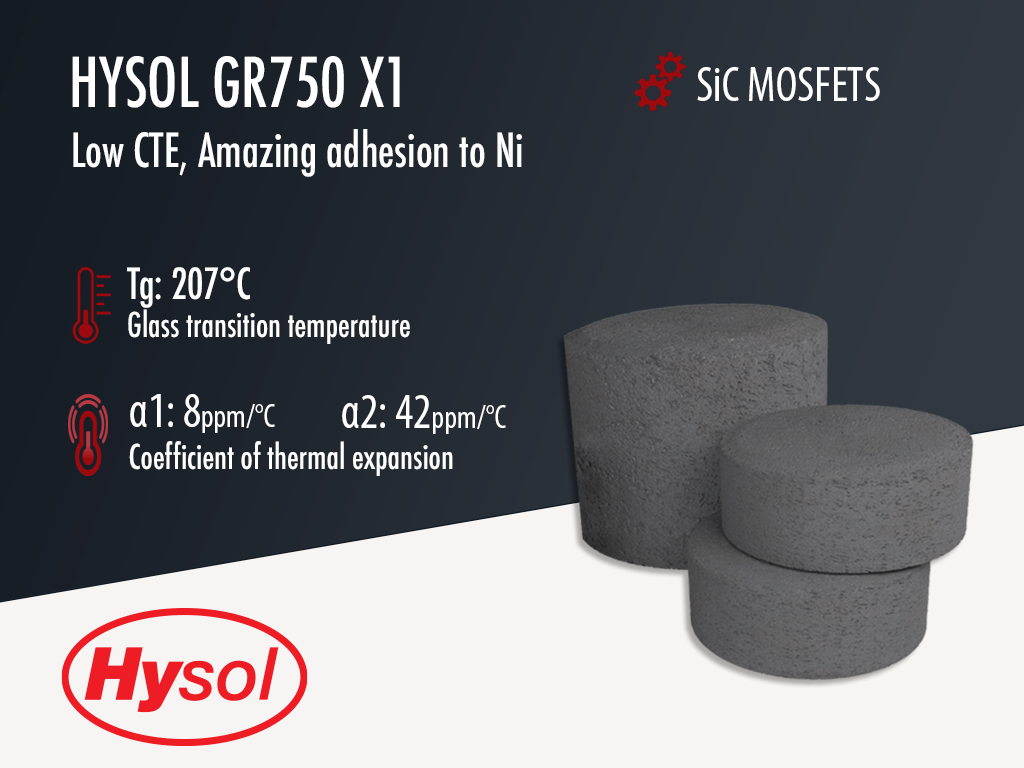
- Halogen free
- Low CTE: 8 ppm/°C
- Amazing adhesion to Nickel (Ni) leadframes
Product Description
Hysol GR750 X1 is a halogen free, black, silica filled (150um cut size) semiconductor grade epoxy molding compound. It has amazing pull tab adhesion on Nickel (194 N) and on Cu (380 N after PMC and 350N after MSL3)) and very low CTE (10 ppm/°C). It's a very all around product that balances High Tg with low CTE and amazing adhesion. The entire GR75XX product line is alterations to the same formulation to the fit everybody's needs and X1 hits a balanced sweet spot. Its comparative tracking index (CTI) is 600V. The product is still in active development so some properties might end up higher or lower depending on the state of the final formulation. There is also a Low CTE (6 ppm/°C) lab version lurking around. Contact us if you're interested.
Hysol GR750 X1 is a technologically advanced, non anhydride, green epoxy molding compound with excellent electrical performance, designed for high power devices especially for high temperature application with low moisture absorption requirements. It has achieved MSL 3 but we haven't been able to achieve MSL 1, yet. Typical packages can be Silicon Carbide SiC MOSFETS packages in TO 247 and TO 263 among (us) others. HYSOL GR750 X1 has been formulated to provide the best possible moldability and as wide as molding latitude as possible. Renewable energy, EV battery chargers, High voltage DC/DC converters and Switch Mode Power Supplies are only some of the applications where these packages can be used. GR750 X1 delivers outstanding performance and ease of use. It meets UL 94 V-0 flammability at 1/8 inch thickness.
Key features
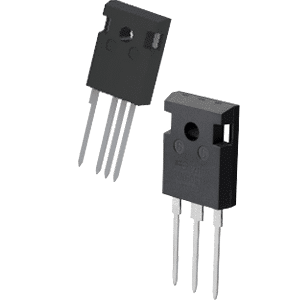
- Designed for high-power device packages - candidate for TO247, TO263, SiC MOSFET, and related high-power package evaluation.
- Low CTE below Tg - STD TDS lists 9 ppm/°C by TMA, with supplied GR750X1 variant data showing 6 to 10 ppm/°C depending on version.
- Interface and electrical evaluation support - Version STD data list Cu tab-pull adhesion of 409/315 N after PMC/MSL3 and CTI of 600 V.
Applications / Suitable for
- TO247 packages: high-power device package evaluation using Cu/Ni leadframe data as a reference point.
- TO263 packages: candidate for evaluation where low CTE, Tg, and molding process fit are selection drivers.
- SiC MOSFET packages: suitable for review in high-temperature, high-voltage package designs subject to qualification.
- High-voltage power electronics packages: candidate for evaluation where CTI, moisture absorption, ionics, and thermal cycling data are part of the screening gate.
Technical Specifications
| General Properties | |||||||||
| Color Color The color | Black | ||||||||
| Filler Content | 83-85 % | ||||||||
| Specific Gravity Specific Gravity Specific gravity (SG) is the ratio of the density of a substance to the density of a reference substance; equivalently, it is the ratio of the mass of a substance to the mass of a reference substance for the same given volume. For liquids, the reference substance is almost always water (1), while for gases, it is air (1.18) at room temperature. Specific gravity is unitless. | 1.92 | ||||||||
| |||||||||
| Electrical Properties | |||||||||
| Volume Resistivity Volume Resistivity Volume resistivity, also called volume resistance, bulk resistance or bulk resistivity is a thickness dependent measurement of the resistivity of a material perpendicular to the plane of the surface. | 1.1x10¹⁶ Ohms⋅cm | ||||||||
| |||||||||
| Chemical Properties | |||||||||
| Moisture absorption | 0.3 % | ||||||||
| |||||||||
| Physical Properties | |||||||||
| Spiral Flow @ 175°C | 92 cm | ||||||||
| Thermal Properties | |||||||||
| Glass Transition Temperature (Tg) Glass Transition Temperature (Tg) The glass transition temperature for organic adhesives is a temperature region where the polymers change from glassy and brittle to soft and rubbery. Increasing the temperature further continues the softening process as the viscosity drops too. Temperatures between the glass transition temperature and below the decomposition point of the adhesive are the best region for bonding. The glass-transition temperature Tg of a material characterizes the range of temperatures over which this glass transition occurs. | 199 °C | ||||||||
| Thermal Conductivity Thermal Conductivity Thermal conductivity describes the ability of a material to conduct heat. It is required by power packages in order to dissipate heat and maintain stable electrical performance. Thermal conductivity units are [W/(m K)] in the SI system and [Btu/(hr ft °F)] in the Imperial system. | 0.8 W/m.K | ||||||||
| UL 94 Rating UL 94 Rating Flammability rating classification. It determines how fast a material burns or extinguishes once it is ignited. HB: slow burning on a horizontal specimen; burning rate less than 76 mm/min for thickness less than 3 mm or burning stops before 100 mm V-2: burning stops within 30 seconds on a vertical specimen; drips of flaming particles are allowed. V-1: burning stops within 30 seconds on a vertical specimen; drips of particles allowed as long as they are not inflamed. V-0: burning stops within 10 seconds on a vertical specimen; drips of particles allowed as long as they are not inflamed. 5VB: burning stops within 60 seconds on a vertical specimen; no drips allowed; plaque specimens may develop a hole. 5VA: burning stops within 60 seconds on a vertical specimen; no drips allowed; plaque specimens may not develop a hole | V0 | ||||||||
| |||||||||
| |||||||||
| Mechanical Properties | |||||||||
| |||||||||
| |||||||||
| |||||||||
| |||||||||
| Curing Conditions | |||||||||
| Transfer Time | 6-18 s | ||||||||
| |||||||||
| |||||||||
Additional Information
HYSOL GR750X1 for High-Power Packages
HYSOL GR750X1 is positioned for high-power device packages where Tg, low CTE, moisture resistance, electrical insulation, moldability, and leadframe interface behavior must be reviewed together. GR750X1 data support evaluation in high-power package designs, while the broader GR750X1 variant set provides formulation options with different filler ratio, spiral flow, Tg, CTE, modulus, shrinkage, moisture absorption, and ionics profiles.
Final selection should be based on the current TDS revision, selected GR750X1 variant, package geometry, leadframe finish, die attach, wire type, molding process, post-mold cure, and package-level reliability results.
180°C, Version STD
600 V
9 ppm/°C
0.30%, PCT 24 h
GR750X1 STD Profile
The values below summarize GR750X1 STD data. These values are typical reference data and should not be treated as final product specifications.
Thermal stability
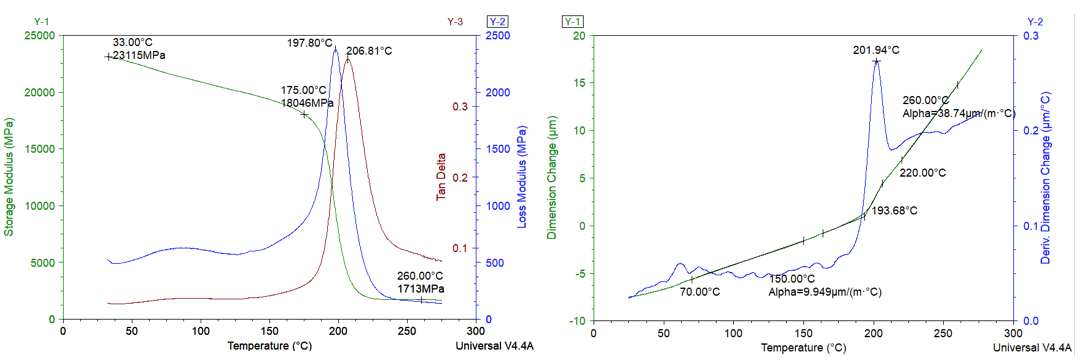
Tg by TMA: 180°C. Tg by DMA: 200°C. These values support screening for high-temperature package requirements subject to package-level validation.
Low CTE and stress control
CTE below Tg: 9 ppm/°C. CTE above Tg: 40 ppm/°C. This is relevant for stress-sensitive high-power packages and leadframe interface review.
Electrical insulation
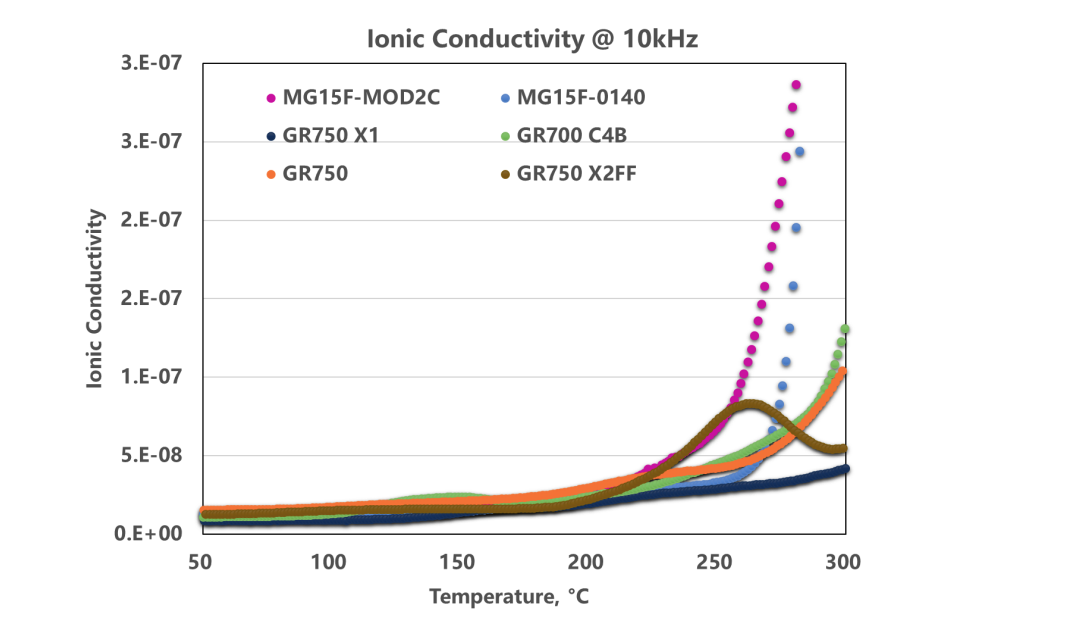
CTI: 600 V. Volume resistance at 25°C: 5 × 10¹⁵ Ω·cm at 500 V. Electrical fit must be confirmed against device voltage and creepage design.
Moisture and ionics
Moisture absorption: 0.30% after PCT 24 h. Extractable ionics: Cl- 12 ppm, Na+ 7 ppm, Br- 0 ppm after 20 h extraction.
Moldability and process window
Gel time at 175°C: 25 s. Spiral flow at 175°C: 35 in / 90 cm. Molding temperature range: 175 to 200°C.
Adhesion and interface
Tab-pull adhesion on Cu: 409 N after PMC and 315 N after MSL3. Interface fit should be reviewed with the actual leadframe finish and package stack.
| Property | Typical value |
|---|---|
| Technology | Epoxy |
| Appearance | Black |
| Cure | Heat cure |
| Filler type | Silica |
| Filler weight | 84±1% |
| Gel time | 25 s |
| Spiral flow | 35 in / 90 cm |
| Specific gravity | 1.95 |
| Shelf life | 183 days |
| CTE below Tg | 9 ppm/°C |
| CTE above Tg | 40 ppm/°C |
| Glass transition temperature (TMA) | 180°C |
| Glass transition temperature (DMA) | 200°C |
| Thermal conductivity | 0.9 W/m·K |
| Storage modulus | 26,248 MPa |
| Storage modulus | 16,931 MPa |
| Storage modulus | 1,282 MPa |
| Flexural strength | 140 MPa |
| Flexural modulus | 21,075 MPa |
| Moisture absorption | 0.30% |
| Tab-pull adhesion on Cu | 409 / 315 N |
| Cl- | 12 ppm |
| Na+ | 7 ppm |
| Br- | 0 ppm |
| Electronic conductivity | 30 µS/cm |
| Volume resistance | 5 × 10¹⁵ Ω·cm |
| Volume resistance | 0.002 × 10¹⁵ Ω·cm |
| Comparative tracking index | 600 V |
GR750X1 with Tg above 200°C
T31, T35, and T37 are the GR750X1 variants with Tg above 200°C by both TMA and DMA tanδ peak.
GR750X1 T31
Tg by TMA: 204°C
Tg by DMA Tanδ peak: 234°C
CTE 1 / CTE 2: 9 / 25 ppm/°C
Filler ratio: 84±1%
Filler cut size: 75 µm
May support evaluation where higher Tg and lower above-Tg expansion are required, subject to package qualification.
GR750X1 T35
Tg by TMA: 207°C
Tg by DMA Tanδ peak: 236°C
CTE 1 / CTE 2: 6 / 14 ppm/°C
Filler ratio: 87±1%
Filler cut size: 75 µm
May support evaluation where high Tg and very low CTE are key screening drivers, subject to current version confirmation.
GR750X1 T37
Tg by TMA: 206°C
Tg by DMA Tanδ peak: 236°C
CTE 1 / CTE 2: 10 / 46 ppm/°C
Spiral flow: 53 inches
Filler ratio: 80±1%
May support evaluation where high Tg and higher flow are required, subject to stress and reliability validation.
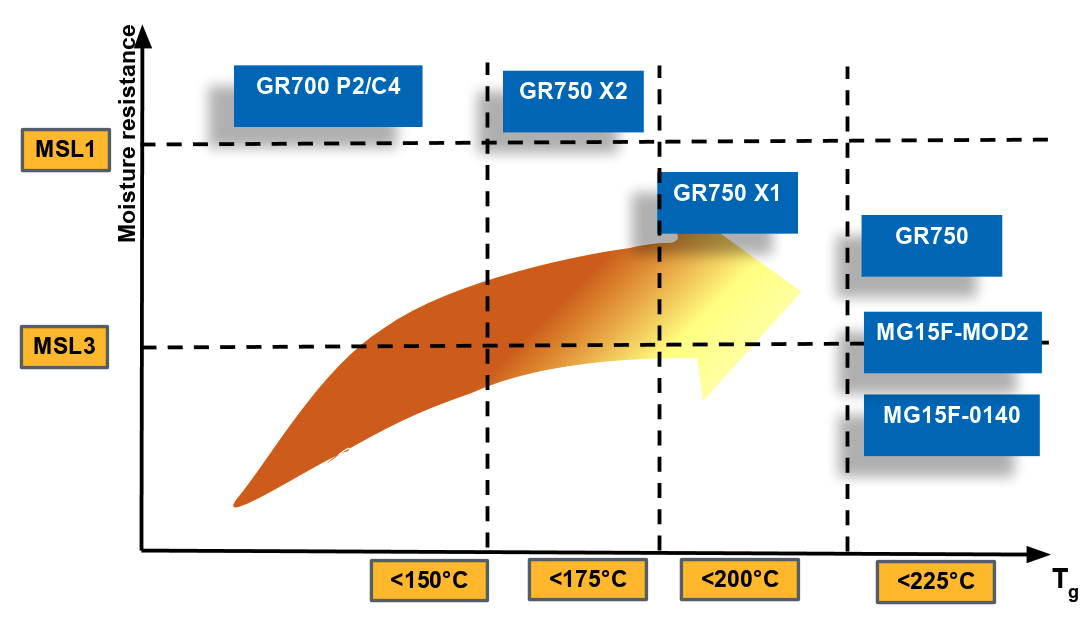
Note: The older GR7XXX series comparison table also includes grades with Tg above 200°C, including MG15F-MOD2, GR750 Std, and the legacy GR750 X1 Std entry. Those values are retained in the full series table below, but the highlighted GR750X1 high-Tg cards above use the supplied updated GR750X1 variant table.
GR750X1 variant data table
| Property | Unit | 18A5 | MD1 | M37A7B1 | T31 | T35 | T37 |
|---|---|---|---|---|---|---|---|
| Filler cut size | µm | 150 | 75 | 75 | 75 | 75 | 75 |
| Filler ratio | % | 83±1 | 86±1 | 86±1 | 84±1 | 87±1 | 80±1 |
| Spiral flow | inches | 31 | 58 | 30 | 26 | 25 | 53 |
| Gel time | sec | 26 | 44 | 40 | 32 | 29 | 29 |
| Flammability | UL-94 | V-0 | Not listed | Not listed | Not listed | Not listed | Not listed |
| Shrinkage after PMC | % | 0.23 | 0.18 | 0.19 | 0.20 | 0.13 | 0.15 |
| Storage modulus at RT | MPa | 20,700 | 22,122 | 18,000 | 18,042 | 23,481 | 16,290 |
| Storage modulus at 175°C | MPa | 12,600 | 9,487 | 9,100 | 11,908 | 17,191 | 11,346 |
| Storage modulus at 260°C | MPa | 1,200 | 1,526 | 1,300 | 1,476 | 2,870 | 2,405 |
| Tg by DMA Tanδ peak | °C | 197 | 195 | 199 | 234 | 236 | 236 |
| Tg by TMA | °C | 181 | 181 | 181 | 204 | 207 | 206 |
| CTE 1 / CTE 2 | ppm/°C | 7 / 32 | 8 / 45 | 8 / 48 | 9 / 25 | 6 / 14 | 10 / 46 |
| Flexural modulus RT | MPa | 17,147 | 17,314 | 16,400 | 15,734 | 20,544 | 14,103 |
| Flexural strength RT | MPa | 130 | 103 | 110 | 120 | 140 | 143 |
| Moisture absorption PCT 24 h | % | 0.38 | 0.46 | 0.45 | 0.46 | 0.36 | 0.55 |
| Cl- / Na+ | ppm | 13 / 4 | 7 / 4 | 8 / 3 | 12 / 3 | 10 / 4 | 15 / 3 |
| CTI | V | 600 | 600 | 600 | 600 | 600 | 600 |
Development note: The GR750 series is continuously developed based on customer feedback, package performance, raw-material optimization, and qualification results. Some variants may have been revised, improved, renamed, limited to specific customers, or made obsolete. Confirm the current variant, TDS revision, pellet or granule format, and qualification data before recommendation and sampling.
Legacy GR7XXX series comparison
The existing GR7XXX product series image and table are retained below showing how GR750X1 sits beside related high-power EMC grades. Use these values as legacy comparison data unless the current TDS and current product data confirm the active version.
| Property | Unit | MG15F-MOD2 | MG15F-0140 | GR750 Std | GR750 X1 Std | GR750X1 low CTE | GR720X2 Std | GR750 X2FF fine filler | GR720X2 high CTE |
|---|---|---|---|---|---|---|---|---|---|
| Epoxy type | - | OCN/BisA/DCPD | OCN/BisA | MFN | MFN/L.W.A. | MFN/L.W.A. | MFN/L.W.A. | MAR | MAR/L.Vis. |
| Hardener type | - | Anhydride | Anhydride | New | New | New | New | New | New |
| Filler cut size | µm | 106 | 150 | 75 | 75 | 75 | 75 | 45 | 75 |
| Flammability | UL-94 | V-0 at 1/4 in | V-0 at 1/8 in | V-0 at 1/8 in | V-0 at 1/8 in | V-0 at 1/8 in | V-0 at 1/8 in | V-0 at 1/8 in | V-0 at 1/8 in |
| Spiral flow | inches | 36 | 20 | 42 | 36 | 26 | 45 | 40 | 41 |
| Gel time | sec | 32 | 17 | 26 | 24 | 29 | 30 | 30 | 35 |
| Viscosity at 175°C | Pa·s | 20 | 28 | 10 | 13 | 43 | 25 | 20 | 15 |
| Tg by TMA | °C | 242 | 195 | 225 | 202 | 197 | 170 | 182 | 170 |
| CTE 1 | ppm/°C | 16 | 21 | 10 | 8 | 6 | 9 | 9 | 14 |
| CTE 2 | ppm/°C | 49 | 70 | 40 | 42 | 31 | 35 | 32 | 40 |
| DMA storage modulus at RT | MPa | 18,246 | 14,078 | 20,560 | 23,155 | 29,241 | 21,631 | 23,391 | 20,971 |
| DMA storage modulus at 260°C | MPa | 6,491 | 1,883 | 1,658 | 1,713 | 1,711 | 907 | 1,007 | 961 |
| Tg by DMA Tanδ peak | °C | 270 | 217 | 235 | 207 | 200 | 177 | 182 | 177 |
| Flexural modulus | MPa | 16,312 | 12,449 | 16,880 | 18,042 | 21,469 | 17,470 | 17,549 | 16,900 |
| Flexural strength | MPa | 120 | 126 | 138 | 136 | 134 | 152 | 169 | 150 |
| Moisture absorption PCT 24 h | % | 0.55 | 0.65 | 0.35 | 0.30 | 0.20 | 0.20 | 0.20 | 0.20 |
| Cl- / Na+ | ppm | <10 | <10 | <15 | <15 | <15 | <15 | <15 | <15 |
| pH | - | 4 to 6 | 4 to 6 | 5 to 7 | 5 to 7 | 5 to 7 | 5 to 7 | 5 to 7 | 5 to 7 |
| Volume resistivity at 21°C and 500 V | Ω·cm | 2.4E+16 | 6.3E+16 | 3.3E+16 | 1.1E+16 | 1.0E+16 | 1.6E+16 | 1.8E+16 | 1.0E+16 |
| Dielectric constant at 21°C and 1 MHz | - | 3.6 | 3.7 | 3.7 | 3.7 | 3.7 | 3.8 | 3.8 | 3.9 |
| Adhesion after MSL3 on Cu | N | 344 | 136 | 365 | 380 | 307 | 360 | 407 | 331 |
| Adhesion after MSL3 on Ag | N | 235 | NA | 345 | 363 | 269 | 234 | 348 | 415 |
| Adhesion after MSL3 on Ni | N | 84 | 111 | 170 | 194 | 130 | 104 | 102 | 110 |
| Comparative tracking index | V | 600 | 400 | 600 | 600 | 600 | 600 | 600 | 600 |
| Recommended molding condition | - | 190°C 110 s | 180°C 100 s | 180°C 90 s | 180°C 90 s | 180°C 90 s | 180°C 90 s | 180°C 90 s | 180°C 90 s |
| Recommended PMC condition | - | 190°C 3 to 6 h | 190°C 3 to 6 h | 190°C 10 h | 190°C 10 h | 190°C 10 h | 190°C 10 h | 190°C 10 h | 190°C 10 h |
Reliability, PMC, and DETA evidence
GR750X1 reliability testing on TO247 packages with Cu/Ni leadframes. These results support evaluation for similar package requirements, but package-level confirmation is still required for each device design.
| Test item | Parameters | Sample quantity | Test period | Criteria | Result |
|---|---|---|---|---|---|
| HTRB | TA = 175°C at 80% of Max VR | 77 pcs | 168 / 500 / 1000 h | JESD22-A108D | PASS |
| TC | -55°C, 15 min; 150°C, 15 min | 77 pcs | 200 / 500 / 1000 cycles | JESD22-A104D | PASS |
| AC | TA = 121°C ± 2°C, RH = 100%, P = 15 PSIG | 77 pcs | 96 h | JESD22-A102D | PASS |
| HAST | 130°C, 85% RH at 80% of Max VR up to 42 V | 77 pcs | 96 h | JESD22-A110D | PASS |
| H3TRB | 85°C, 85% RH at 80% of Max VR up to 100 V | 77 pcs | 1000 h | JESD22-A101C | PASS |
Post-mold cure condition and final property response
| PMC condition | Tg by TMA, °C | CTE 1, ppm/°C | CTE 2, ppm/°C | Storage modulus RT, MPa | Storage modulus 175°C, MPa | Storage modulus 260°C, MPa | Tg by loss modulus peak, °C | Tg by tanδ peak, °C |
|---|---|---|---|---|---|---|---|---|
| 175°C × 4 h | 176 | 11 | 39 | 21,784 | 11,671 | 1,507 | 180 | 199 |
| 190°C × 10 h | 192 | 10 | 33 | 22,596 | 17,002 | 1,608 | 199 | 210 |
| 175°C × 24 h | 192 | 11 | 36 | 23,843 | 18,427 | 1,655 | 197 | 205 |
Process Window and Material Handling
Actual molding and curing conditions should be optimized for package thickness, mold design, transfer equipment, leadframe layout, and target reliability.
| Parameter | Typical value or starting range |
|---|---|
| Gel time at 175°C | 25 s |
| Spiral flow at 175°C | 35 in / 90 cm |
| Specific gravity | 1.95 g/cm3 |
| Shelf life at 5°C | 183 days |
| Preheat temperature | 80 to 100°C |
| Molding temperature | 175 to 200°C |
| Transfer pressure | 40 to 100 kgf/cm2 |
| Transfer time | 6 to 20 s |
| Curing time, 3 mm section, at 190°C | 90 to 120 s |
| Post Mold Cure condition | 175 to 190°C, 4 to 12 h |
Storage note: Keep the product in unopened containers in a dry location at 5°C or below. After removal from cold storage, allow the sealed container to reach room temperature before opening to reduce moisture contamination risk. The supplied TDS notes a suggested waiting time of 24 hours for a standard 15 kg pail. Material removed from containers may be contaminated during use and should not be returned to the original container.
GR750X1 should be screened by package architecture first, then by current variant data, thermal target, CTE target, molding flow requirement, leadframe finish, moisture and bias reliability requirement, and post-mold cure condition.
TO247, TO263, SiC MOSFET, leadframe finish, package thickness, and device voltage.
STD, 18A5, MD1, M37A7B1, T31, T35, T37, or other current version.
Spiral flow, gel time, molding temperature, transfer pressure, cure time, and PMC.
HTRB, HAST, H3TRB, thermal cycle, MSL, SAT, delamination, and electrical performance.
Need help matching GR750X1 to your package?
Contact CAPLINQ to review the current GR750X1 variant, TDS data, molding conditions, leadframe finish, reliability target, sampling plan, and qualification path.