
-
Home

-
Products
-
Adhesives
-
Silicone Adhesives
- DOWSIL™ TC-4525 CV Thermally Conductive Gap Filler
DOWSIL™ TC-4525 CV Thermally Conductive Gap Filler
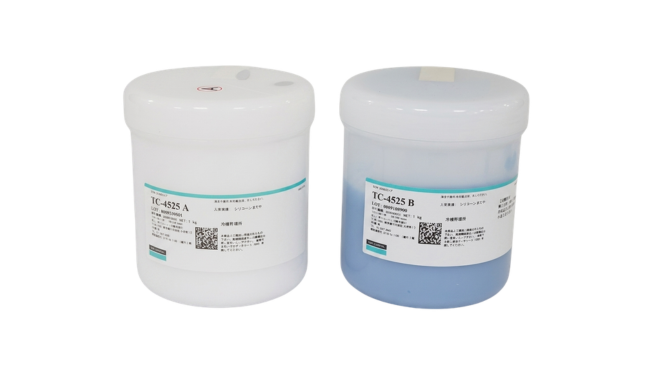
- Controlled silicone volatility (CV)
- 2.5 W/m-K Thermal Conductivity
- Applicable for Vertical Position
Product Description
DOWSIL™ TC-4525 CV Thermally Conductive Gap Filler is a two-part, room-temperature-curing silicone gap filler specifically engineered for automotive electronic modules requiring reliable heat dissipation, low mechanical stress, and long-term environmental stability. Delivering 2.5 W/m·K thermal conductivity, TC-4525 CV forms a soft, compressible thermal interface between PCB-mounted components and heat sinks or aluminum housings, helping improve thermal performance while accommodating component height variation and assembly tolerances. Its controlled silicone volatility, low compression stress, and stable performance during temperature cycling up to 150°C make it particularly well suited for engine control units (ECUs), transmission control units (TCUs), power electronics, and other automotive control modules. Designed for automated meter-mix dispensing, the silicone gel matrix provides durable dielectric insulation, environmental protection, and stress relief against shock, vibration, and thermal expansion mismatch throughout the lifetime of the assembly.
Key Features
-
2.5 W/m·K thermal conductivity for effective heat transfer.
-
Soft, compressible silicone gap filler for low mechanical stress on sensitive electronics.
-
Room-temperature cure in 120 minutes at 25°C.
-
Fast heat-accelerated cure in 10 minutes at 80°C.
-
Controlled silicone volatility (CV) for improved automotive reliability.
-
Low compression stress to protect PCB-mounted components.
-
Holds vertical position in both cured and uncured states.
-
Long-term thermal cycling stability up to 150°C.
-
Short-term temperature exposure up to 200°C.
-
Excellent dielectric insulation with 12 kV/mm dielectric strength.
-
High electrical resistivity of 2.6 × 10¹⁴ Ω·cm.
-
Automated meter-mix dispensing compatible for high-volume manufacturing.
-
Suitable for ECU, TCU, power electronics, automotive control modules, PCB-to-housing thermal interfaces, and component-to-heat-sink cooling applications.
Technical Specifications
| General Properties | |||||||
|
Color
Color
The color |
Part A: White | Part B: Blue | ||||||
|
Component System
Component System
Describes the number of components that must be supplied, mixed, or activated before application or cure. |
Two Part | ||||||
|
Density
Density
Volumetric mass per unit |
Cure at 25°C 2900 kg/m3 | ||||||
|
Mix Ratio
Mix Ratio
The amount of a constituent divided by the total amount of all other constituents in a mixture |
1:1 | ||||||
| Physical Properties | |||||||
|
Thixotropic index
Thixotropic index
Thixotropic Index is a ratio of a material s viscosity at two different speeds in Ambient temperature, generally different by a factor of ten. A thixotropic material s viscosity will decrease as agitation or pressure is increased. It indicates the capability of a material to hold its shape. Mayonnaise is a great example of this. It holds its shape very well, but when a shear stress is applied, the material easily spreads. It helps in choosing a material in accordance to the application, dispense method and viscosity of a material. |
4.0 | ||||||
| Viscosity (Part A) | 223000 mPa.s | ||||||
| Viscosity (Part B) | 216000 mPa.s | ||||||
|
|||||||
| Curing Conditions | |||||||
|
|||||||
| Thermal Properties | |||||||
|
Thermal Conductivity
Thermal Conductivity
Thermal conductivity describes the ability of a material to conduct heat. It is required by power packages in order to dissipate heat and maintain stable electrical performance. Thermal conductivity units are [W/(m K)] in the SI system and [Btu/(hr ft °F)] in the Imperial system. |
2.5 W/m.K | ||||||
| Mechanical Properties | |||||||
|
|||||||
| Electrical Properties | |||||||
|
Dielectric Strength
Dielectric Strength
Dielectric strength is measured in kV per mm and is calculated by the Breakdown voltage divided by the thickness of the tested material. Those two properties go hand in hand and while Breakdown voltage is always thickness dependent, dielectric strength is a general material property. As an example, the dielectric strength of Polyimide is 236 kV/mm. If we place 1mm of Polyimide between two electrodes, it will act as an insulator until the voltage between the electrodes reaches 236 kV. At this point it will start acting as a good conductor, causing sparks, potential punctures and current flow. |
12 kV/mm | ||||||
|
Volume Resistivity
Volume Resistivity
Volume resistivity, also called volume resistance, bulk resistance or bulk resistivity is a thickness dependent measurement of the resistivity of a material perpendicular to the plane of the surface. |
2.6x10¹⁴ Ohms⋅cm | ||||||
|
|||||||
|
|||||||
Additional Information
DOWSIL™ TC-4525 CV: Thermally Conductive Gap Filler for Automotive Electronics
DOWSIL™ TC-4525 CV Thermally Conductive Gap Filler is a two-part, room-temperature-curing silicone gap filler designed for automotive electronic modules requiring reliable heat transfer, low compression stress, and long-term stability. With 2.5 W/m·K thermal conductivity, controlled silicone volatility, and a soft compressible cured form, TC-4525 CV helps dissipate heat from PCB-mounted components to aluminum housings or heat sinks in applications such as engine control units, transmission control units, and other automotive electronic modules.
Soft thermal gap filling for automotive reliability — TC-4525 CV combines 2.5 W/m·K thermal conductivity, low compression stress, vertical stability, and controlled silicone volatility for reliable module cooling.
The cured silicone gel matrix provides dielectric insulation, environmental protection, and stress relief against shock, vibration, and thermal cycling while supporting smooth automated meter-mix dispensing.
Designed for PCB-to-housing heat transfer — suitable for automotive modules where components mounted on printed circuit boards must transfer heat to an aluminum housing or heat sink.
TC-4525 CV is soft and compressible after cure, helping accommodate component height variation while reducing mechanical stress on sensitive electronics.
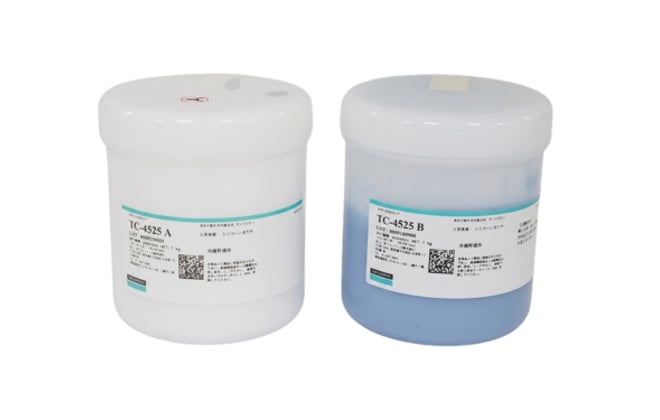
2.5 W/m·K Thermal Conductivity • Room-Temperature Cure • Low Compression Stress • Stable up to 150 °C
Features & Benefits
- 2.5 W/m·K thermal conductivity — supports heat transfer from PCB components to heat sinks or housings.
- Room-temperature cure — cures in 120 minutes at 25 °C.
- Heat-accelerated cure — cures in 10 minutes at 80 °C.
- Low compression stress — helps protect sensitive components.
- Vertical stability — holds position in cured and uncured states.
- Controlled silicone volatility — designed for automotive electronics reliability.
- Soft silicone gel matrix — provides stress relief and long-term reliability.
- Automated dispensing compatible — designed for meter-mix equipment.
Typical Applications
- Engine control units, or ECUs.
- Transmission control units.
- Automotive electronic modules.
- PCB-to-aluminum housing thermal interfaces.
- Component-to-heat-sink gap filling.
- Power electronics and control modules.
- Automated meter-mix dispensing applications.
Thermal Challenges in Automotive Control Modules
Automotive electronic modules require gap fillers that can dissipate heat while accommodating component height variation, vibration, and thermal cycling. DOWSIL™ TC-4525 CV helps address these challenges by forming a soft, compressible thermal interface between PCB-mounted heat sources and the cold source, typically an aluminum housing acting as a heat sink.
Engineering Data for DOWSIL™ TC-4525 CV
| Property | DOWSIL™ TC-4525 CV | Condition / Note |
|---|---|---|
| Chemistry / Type | Two-part silicone gap filler | Silicone gel matrix |
| Mix Ratio | 1:1 | By weight or volume |
| Color | Part A: White Part B: Blue |
Typical appearance |
| Mixed Viscosity | 217 Pa·s | Typical value |
| Thixotropic Index | 4.0 | 1 s-1 / 10 s-1 |
| Density, Cured | 2.9 g/cm³ | At 25 °C |
| Working Time | 40 minutes | At 25 °C |
| Cure Time | 120 minutes | At 25 °C |
| Heat-Accelerated Cure | 10 minutes | At 80 °C |
| Thermal Conductivity | 2.5 W/m·K | Transient method |
| Hardness | Shore 00 40 / Asker C 32 | Soft cured material |
| Volume Resistivity | 2.6E14 | Electrical insulation |
| Dielectric Strength | 12 kV/mm | Typical value |
| Operating Temperature | -45 to 150 °C | After cure completion |
*Typical properties are not intended for specification writing. Verify performance under actual application, substrate, assembly, and reliability conditions.
Where DOWSIL™ TC-4525 CV Fits
- Engine control units
- Transmission control units
- Automotive electronic housings
- Board-level thermal interfaces
- Power components
- Electronic modules
- Meter-mix dispense
- High-volume automotive assembly
- Vertical dispensing applications
Mixing, Dispensing & Cure
Mixing
Mix Part A and Part B at a 1:1 ratio by weight or volume. Streaks or marbling indicate inadequate mixing.
Dispensing
Use automated airless meter-mix dispensing to reduce voids and support smooth production line integration.
Curing
Cures in 120 minutes at 25 °C or can be heat accelerated to 10 minutes at 80 °C. No post-cure is required.
How TC-4525 CV Supports Automotive Module Design
| Design Challenge | DOWSIL™ TC-4525 CV Benefit |
|---|---|
| Heat must be transferred from PCB components to aluminum housings. | 2.5 W/m·K thermal conductivity supports reliable heat dissipation. |
| Automotive modules experience vibration and thermal cycling. | Soft silicone gel absorbs shock, vibration, and thermal expansion stress. |
| Sensitive components may be damaged by high compression force. | Low compression stress helps protect board-mounted electronics. |
| Production lines need stable dispensing and vertical placement. | Thixotropic material holds position before and after cure. |
Ready to Evaluate DOWSIL™ TC-4525 CV?
```