


ADAS and Autonomous Driving
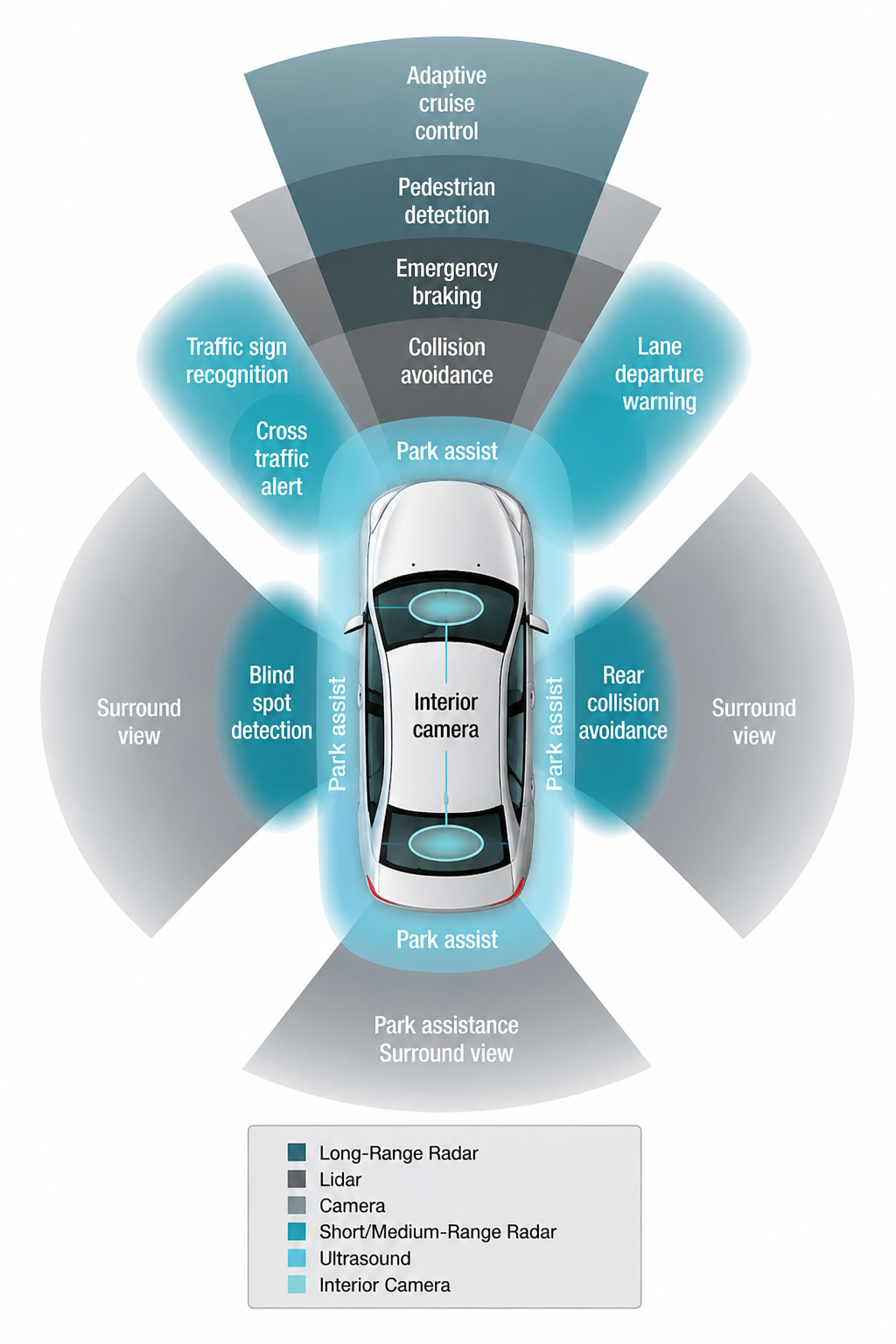
ADAS System Architecture
Sensor Fusion, High-Performance Computing, and Vehicle Control
ADAS platforms collect data from multiple sensors positioned around the vehicle. Camera modules, radar sensors, LiDAR units, and ultrasonic sensors detect objects, road markings, pedestrians, and surrounding vehicles. This information is transmitted to an ADAS domain controller, where processors and AI accelerators analyze the environment and support safety functions such as adaptive cruise control, lane keeping assistance, automatic emergency braking, blind spot detection, and autonomous navigation.
As ADAS systems become more advanced, electronics must handle higher power density, greater data processing loads, and tighter packaging constraints. Thermal interface materials, adhesives, encapsulants, underfills, conformal coatings, and EMI shielding materials help protect these assemblies from heat, vibration, moisture, and harsh automotive exposure.
System-level interaction of sensing, computing, decision-making, and vehicle control in ADAS platforms
Key ADAS Components and Material Challenges
ADAS electronics are distributed across multiple vehicle zones, from front-facing cameras and radar modules to centralized domain controllers. Each component introduces different material requirements for thermal management, environmental protection, optical alignment, mechanical bonding, and electrical reliability.
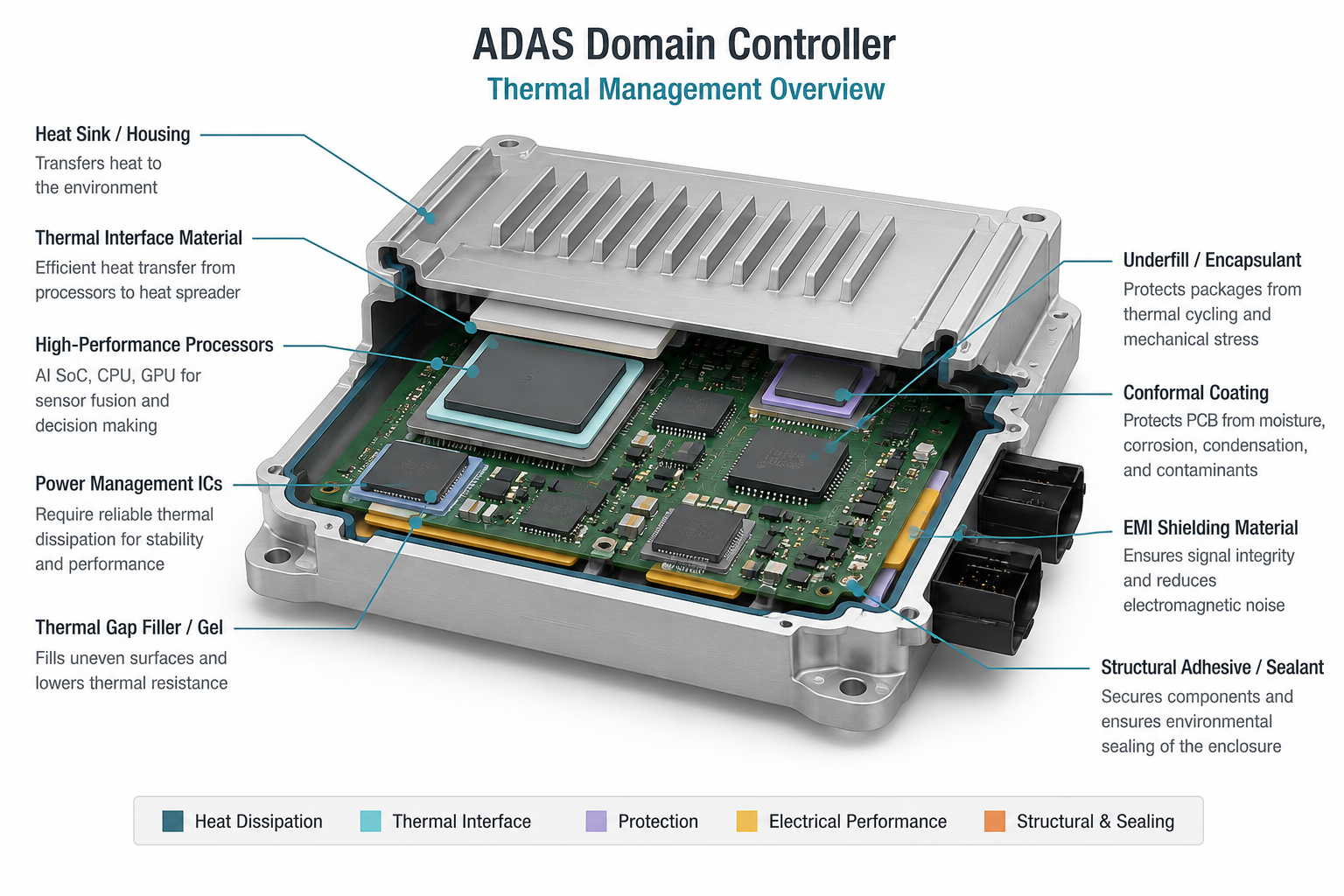
ADAS Domain Controllers
ADAS domain controllers act as the central computing platform for sensor fusion and decision-making. These assemblies contain high-performance processors, memory, power management ICs, and complex printed circuit boards that generate significant heat during operation.
Thermal interface materials are used to transfer heat from processors, ASICs, GPUs, and AI accelerators to heat spreaders, housings, or cold plates. Underfills, coatings, and encapsulants help protect semiconductor packages and PCB assemblies from thermal cycling, vibration, and moisture.
High-performance processor cooling, PCB protection, and package-level reliability.
High heat flux, thin bondline requirements, vibration, moisture, and thermal cycling.
Phase change TIMs, thermal gels, underfills, encapsulants, and conformal coatings.
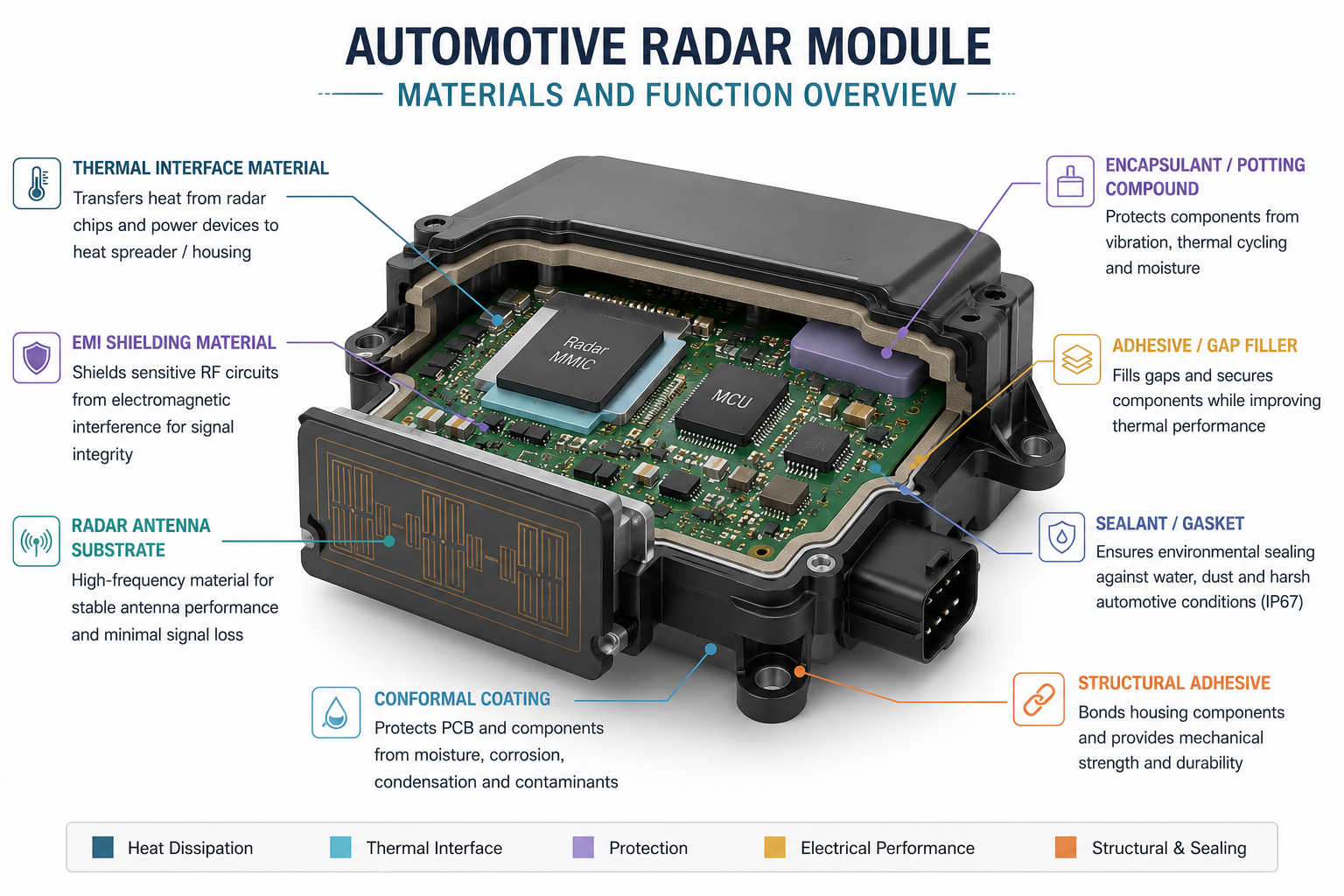
Radar Modules
Automotive radar modules are used for adaptive cruise control, collision avoidance, blind spot monitoring, and cross-traffic detection. These compact modules contain RF components, antenna structures, power devices, and control electronics.
Materials used in radar modules must support stable thermal performance, low mechanical stress, environmental protection, and signal integrity. EMI shielding and absorber materials may also be required to manage electromagnetic interference.
Thermal control, signal integrity, and protection against moisture and contamination.
Compact package design, RF sensitivity, environmental exposure, and vibration.
TIMs, EMI shielding materials, conformal coatings, sealants, and adhesives.
LiDAR Systems
LiDAR systems use laser-based sensing to create high-resolution three-dimensional maps of the vehicle surroundings. These assemblies require thermal stability, optical alignment, low outgassing, and environmental sealing.
Typical materials: Thermally conductive adhesives, optical adhesives, encapsulants, sealants, and low-outgassing materials.
Camera Modules
Camera modules support lane detection, parking assistance, surround view, driver monitoring, and object recognition. These systems must maintain image quality despite vibration, humidity, and temperature changes.
Typical materials: Die attach materials, optically clear adhesives, thermal interface materials, coatings, and encapsulants.
ADAS Assembly Process and Material Integration
ADAS module reliability depends not only on component selection, but also on how materials are integrated throughout the assembly process. Each stage introduces critical interfaces that influence heat transfer, electrical insulation, optical stability, sealing performance, and long-term durability.
PCB and Component Assembly
Electronic components are mounted on control boards for sensor processing, power management, and communication.
Materials: Underfills, conformal coatings, solder materials, encapsulants
Sensor and Optical Assembly
Cameras, LiDAR optics, radar electronics, and ultrasonic sensors are positioned and bonded into module structures.
Materials: Optical adhesives, structural adhesives, sealants, low-outgassing materials
Thermal Interface Application
Thermal materials are applied between heat-generating devices and heat spreaders, housings, or cooling structures.
Materials: Phase change TIMs, thermal gels, greases, pads, thermally conductive adhesives
Environmental Protection
Sensitive electronics are protected from humidity, condensation, dust, corrosion, and automotive contaminants.
Materials: Conformal coatings, potting compounds, encapsulants, protective gels
Housing Bonding and Sealing
Sensor modules and control units are sealed to protect against moisture, dust, vibration, and mechanical shock.
Materials: RTV sealants, gaskets, structural adhesives, potting compounds
Reliability Testing
Final assemblies are validated under thermal cycling, vibration, humidity, shock, and automotive environmental testing.
Why it matters: Confirms long-term reliability under demanding vehicle conditions
Functional Materials Used in ADAS and Autonomous Driving Electronics
From thermal interface materials that dissipate heat to conformal coatings that protect electronic circuits, each material category plays a specific role in maintaining ADAS system reliability, safety, and long-term performance.
Thermal Interface Materials
TIMs transfer heat from processors, ASICs, radar chips, power ICs, and memory packages to heat spreaders, housings, or cold plates.
Typical materials
Phase change materials, thermal gels, thermal pads, greases, and thermally conductive adhesives
Where they are used
Domain controllers, radar modules, camera processors, LiDAR electronics, and power management devices
Conformal Coatings
Conformal coatings protect ADAS PCBs from moisture, condensation, corrosion, dust, and contamination.
Typical materials
Acrylic, urethane, silicone, and UV-curable conformal coatings
Where they are used
Control boards, radar electronics, BMS-like control electronics, connectors, and sensor PCBs
Encapsulants and Underfills
Encapsulants and underfills reinforce semiconductor packages and protect components from mechanical stress, moisture, and thermal cycling.
Typical materials
Epoxy underfills, silicone encapsulants, potting compounds, and protective gels
Where they are used
Flip chip packages, BGAs, CSPs, sensor electronics, and high-reliability automotive modules
Adhesives and Sealants
Adhesives and sealants bond housings, secure sensors, seal modules, and protect electronics from environmental exposure.
Typical materials
Structural adhesives, RTV silicones, optical adhesives, gaskets, and module sealants
Where they are used
Camera modules, LiDAR assemblies, radar housings, ECU enclosures, and sensor brackets
Commercial Material Solutions for ADAS and Autonomous Driving
Material selection in ADAS applications depends on the electronic architecture, heat dissipation path, environmental exposure, and reliability requirements of the module. Different material suppliers provide solutions for thermal management, circuit protection, bonding, sealing, and semiconductor package reliability.
Solstice Advanced Materials
Solstice thermal interface materials support high-performance automotive electronics where low thermal resistance, thin bondlines, and long-term reliability are required.
Material focus
Phase change thermal interface materials, thermal gels, thermal pads, and high-reliability TIMs
Typical applications
ADAS processors, domain controllers, radar electronics, AI accelerators, power ICs, and automotive control modules

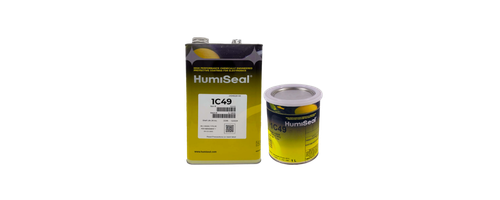
HumiSeal
HumiSeal conformal coatings protect ADAS control boards and sensor electronics from moisture, contamination, condensation, and harsh automotive environments.
Material focus
Acrylic, urethane, silicone, and UV-curable conformal coatings
Typical applications
ADAS PCBs, radar modules, sensor control boards, connectors, and automotive electronics

Support Reliable ADAS and Autonomous Driving Electronics
Selecting the right thermal interface materials, coatings, encapsulants, adhesives, and sealants helps improve heat dissipation, protect sensitive electronics, and support long-term reliability in ADAS and autonomous driving systems.
```