
-
Home

-
Products
-
Encapsulants & Underfills
-
Liquid Encapsulants
- LOCTITE STYCAST E2517
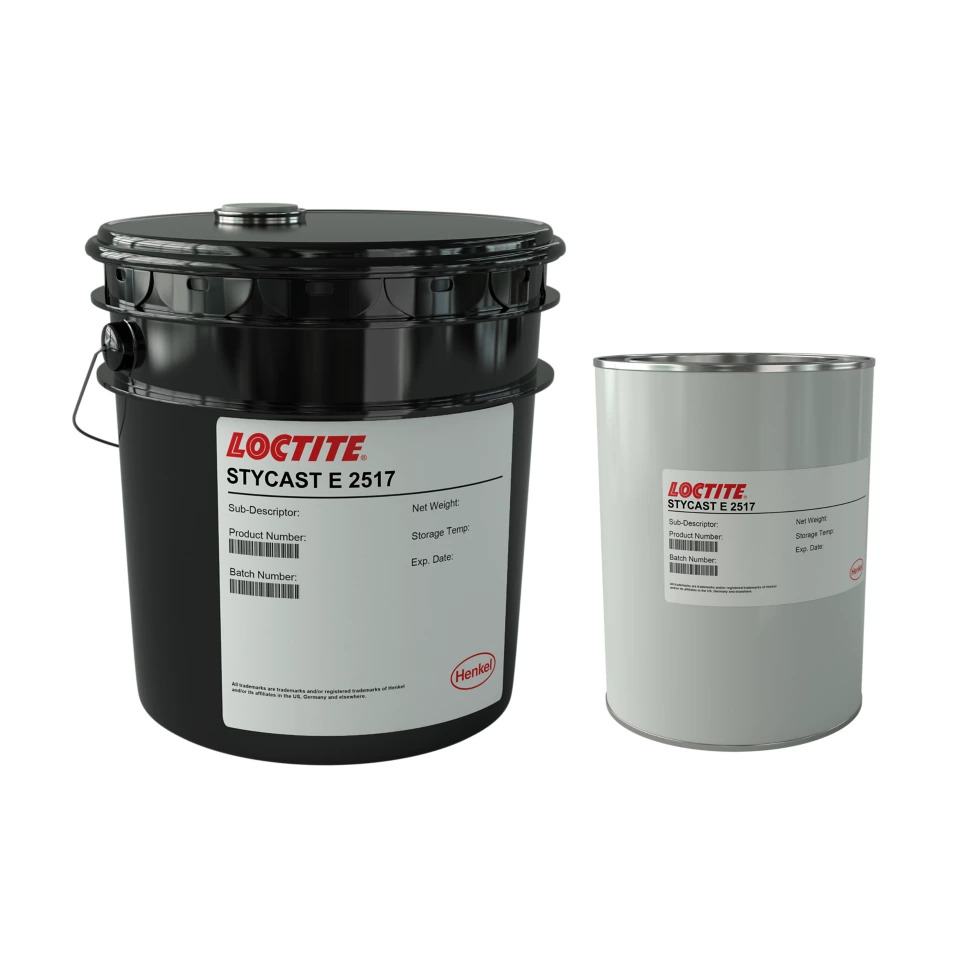
LOCTITE STYCAST E2517
Harmonization Code : 3907.30.00.85 | Polyacetals, other polyethers and epoxide resins, in primary forms; polycarbonates, alkyd resins, polyallyl esters and other polyesters, in primary forms : Epoxide resins : Other
Main features
- Low CTE
- Low Viscosity
- High temperature resistance
Product Description
LOCTITE® STYCAST E 2517 epoxy encapsulant is formulated for use on bare chip protection in a variety of advanced packages where ease of flow and high thermal stability are required.
Recommended Cure Schedule
- Precure 1 hour @ 120°C
- Full cure 1 hour @ 150°C
- Post cure 2 hours @ 200°C
Technical Specifications
| General Properties | |||||||||
|
|||||||||
| Mechanical Properties | |||||||||
|
|||||||||
|
|||||||||
|
|||||||||
| Thermal Properties | |||||||||
|
Glass Transition Temperature (Tg)
Glass Transition Temperature (Tg)
The glass transition temperature for organic adhesives is a temperature region where the polymers change from glassy and brittle to soft and rubbery. Increasing the temperature further continues the softening process as the viscosity drops too. Temperatures between the glass transition temperature and below the decomposition point of the adhesive are the best region for bonding. The glass-transition temperature Tg of a material characterizes the range of temperatures over which this glass transition occurs. |
220 °C | ||||||||
|
Thermal Conductivity
Thermal Conductivity
Thermal conductivity describes the ability of a material to conduct heat. It is required by power packages in order to dissipate heat and maintain stable electrical performance. Thermal conductivity units are [W/(m K)] in the SI system and [Btu/(hr ft °F)] in the Imperial system. |
0.5 W/m.K | ||||||||
|
|||||||||
| Chemical Properties | |||||||||
| Water Absorption | 0.08 % | ||||||||
|
|||||||||
| Physical Properties | |||||||||
|
Viscosity
Viscosity
Viscosity is a measurement of a fluid’s resistance to flow. Viscosity is commonly measured in centiPoise (cP). One cP is defined as the viscosity of water and all other viscosities are derived from this base. MPa is another common unit with a 1:1 conversion to cP. A product like honey would have a much higher viscosity -around 10,000 cPs- compared to water. As a result, honey would flow much slower out of a tipped glass than water would. The viscosity of a material can be decreased with an increase in temperature in order to better suit an application |
22,500 mPa.s | ||||||||