

Adhesives
General and Industrial applications

Adhesives
Adhesives are essential bonding solutions used across industries to hold materials together and resist separation. Krayden's adhesives are engineered to deliver superior performance and ease of application across various industries. Our comprehensive bonding solutions, including epoxy, acrylic, cyanoacrylate, polyurethane, silicon, and hybrid adhesives, cater to diverse needs from electronic, automotive, and other industrial engineering.
We offer options tailored to your specific application, including different curing methods such as UV-curing, temperature-curing, one-part or two-part adhesive, various viscosity range, etc. Our products boast exceptional adhesion, flexibility, and resistance to chemicals and environmental factors, ensuring reliable performance even in the most demanding conditions.
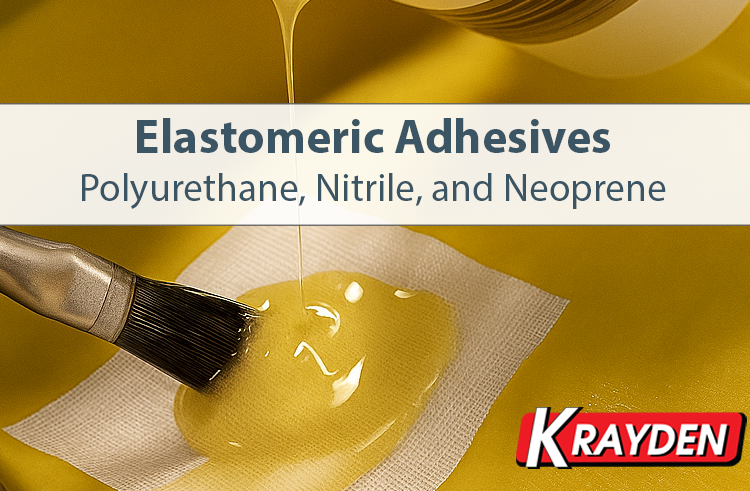
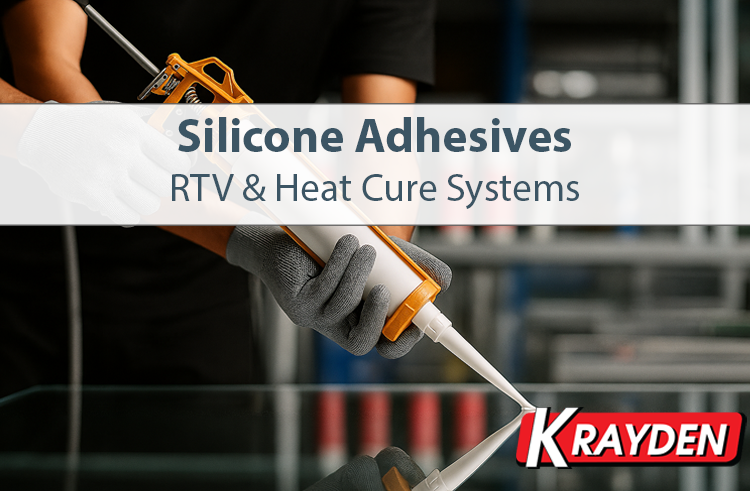
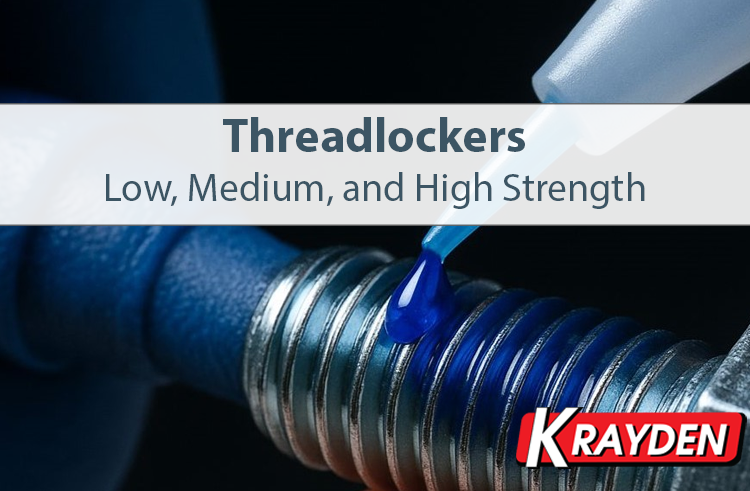
Frequently Asked Questions
Frequently Asked Questions about Adhesives
Structural adhesives are specialized adhesives designed to bond materials together under mechanical stress. They are used in applications where the bond is expected to withstand forces such as tension, shear, or peel and provide long-lasting and durable bonds that can withstand significant loads.
The bondline thickness could work with a minimum of 2 mm thickness. This thickness impacts the elastic bonding properties of the SMP technology, so we recommend 20 mm for ideal elastic bonding properties.
Viscosity is a measure of a fluid's resistance to flow. It essentially describes how thick or sticky a fluid is. A fluid with high viscosity flows slowly, while a fluid with low viscosity flows easily. The rheological index, on the other hand, is a dimensionless number that indicates how the viscosity of a fluid changes with the shear rate. This means it describes how the fluid's thickness changes when it is subjected to different levels of force.
Compared to 1 part PU, 2 part PU can cure more quickly and is not dependent on moisture or heat to cure, ambient temperature will do the justification.
Generally, the two-component polyurethane can be cured at room temperature at a certain curing time and one-component polyurethane cures typically by moisture reaction.
Learn More
Adhesive Core Benefits
.png)
Adhesives offer significant benefits across industries such as electronics, automotive, construction, and manufacturing. They enable high-strength structural bonding, distribute stress more evenly than mechanical fasteners, and create lightweight, aesthetically clean joints.
In many applications, adhesives also simplify assembly, reduce part count, and improve resistance to corrosion, vibration, and impact.
High Mechanical Strength
Structural adhesives can achieve very high bond strengths, often exceeding those of mechanical fasteners.
Material Bonding
Creates strong, durable bonds between different materials, providing structural integrity and stability.
Uniform Stress Distribution
Distributes stresses more evenly across bonded surfaces, reducing the risk of failure.
Aesthetics
Creates clean, seamless joints that improve the appearance of finished products.
Lightweight
Can replace mechanical fasteners, resulting in lighter, more efficient products.
Effectiveness
Applies more efficiently than mechanical fasteners, reducing labor costs and streamlining production.
Corrosion Protection
Provides a protective barrier against corrosion, especially in harsh-environment applications.
Impact Resistance
Strong, durable bonds enhance a joint's ability to withstand external shocks and forces.
Vibration Damping
Some adhesives absorb vibrations and reduce noise, improving product performance and comfort.
Adhesive Failure Modes
The adhesive failure model describes how a bond breaks under stress. Analyzing these failure types helps identify the factors affecting bond strength, leading to better bonding processes, adhesive selection, and more durable joints.

Adhesion Failure
Occurs at the interface between the adhesive and the substrate, indicating the bond was weaker than its strength. Improve surface preparation and adhesion properties.

Cohesive Failure
Occurs within the adhesive itself, indicating the adhesive was weaker than the materials it bonds and could not withstand the applied stress.

Mixed Mode Failure
Combines cohesive and adhesive failure, breaking partly within the adhesive and partly at the interface — a sign of multiple contributing factors.

Substrate Failure
Occurs within the substrate itself, indicating the adhesive bond and cohesion were stronger than the material's own strength.
Common Adhesive Stresses
Understanding these stress types is essential for selecting the right adhesive and designing durable joints. Knowing how different adhesives respond to various stresses ensures optimal performance and reliability across applications.
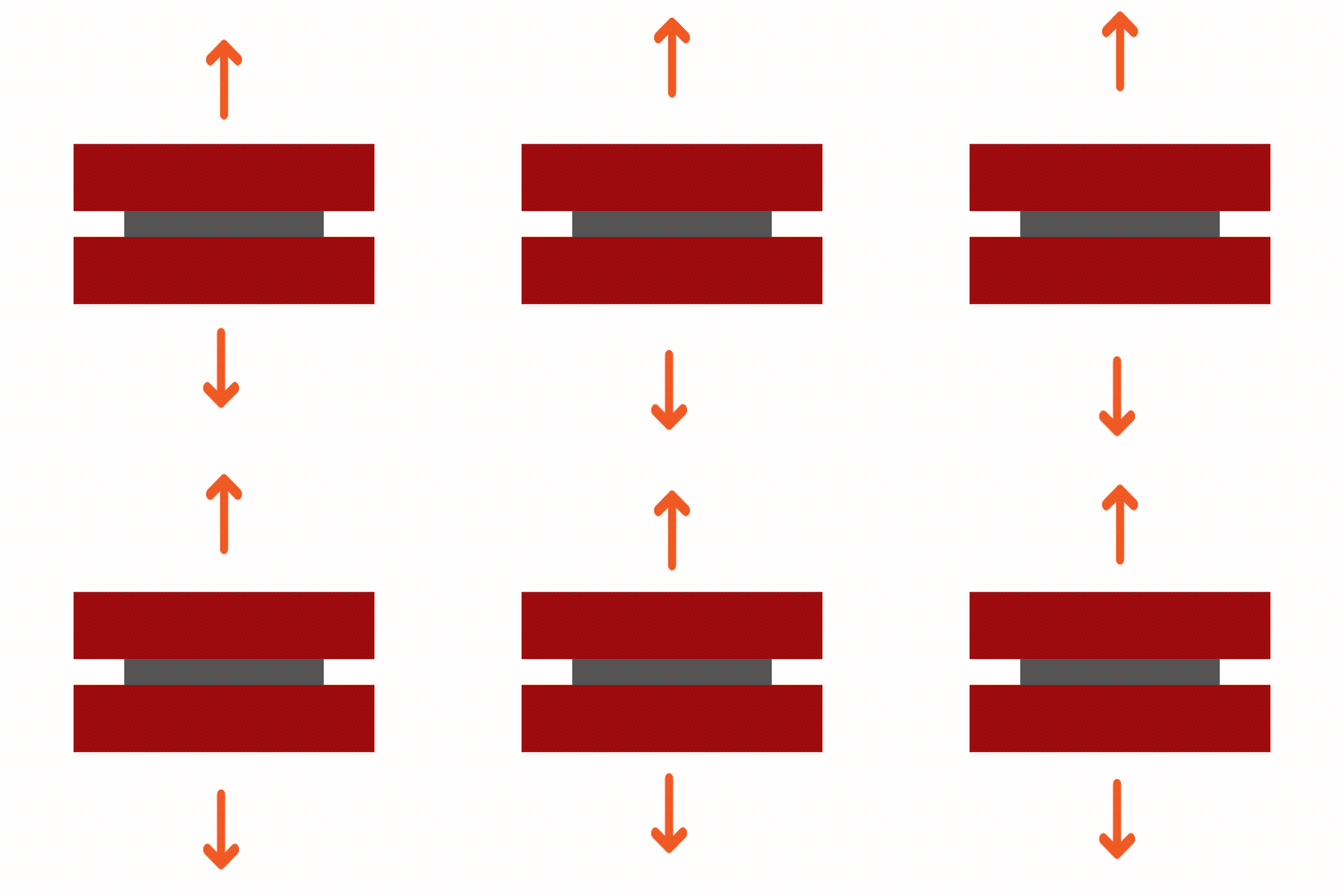
Tensile
A pulling force applied uniformly across the joint, acting directly away from the bond line and distributed evenly over the bonded area.
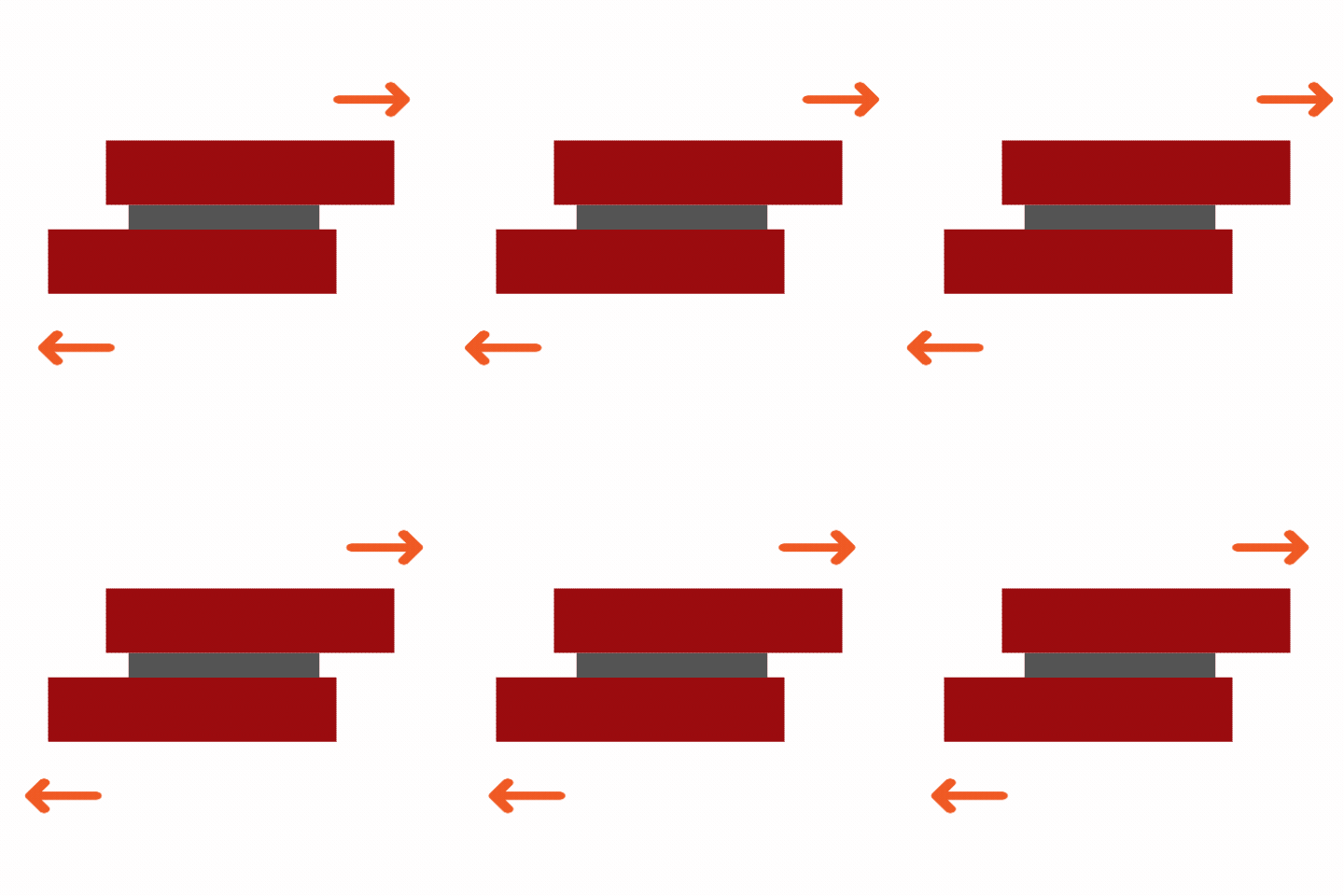
Shear
A force applied parallel to the bond, causing substrates to slide past each other within the plane of the bond line.
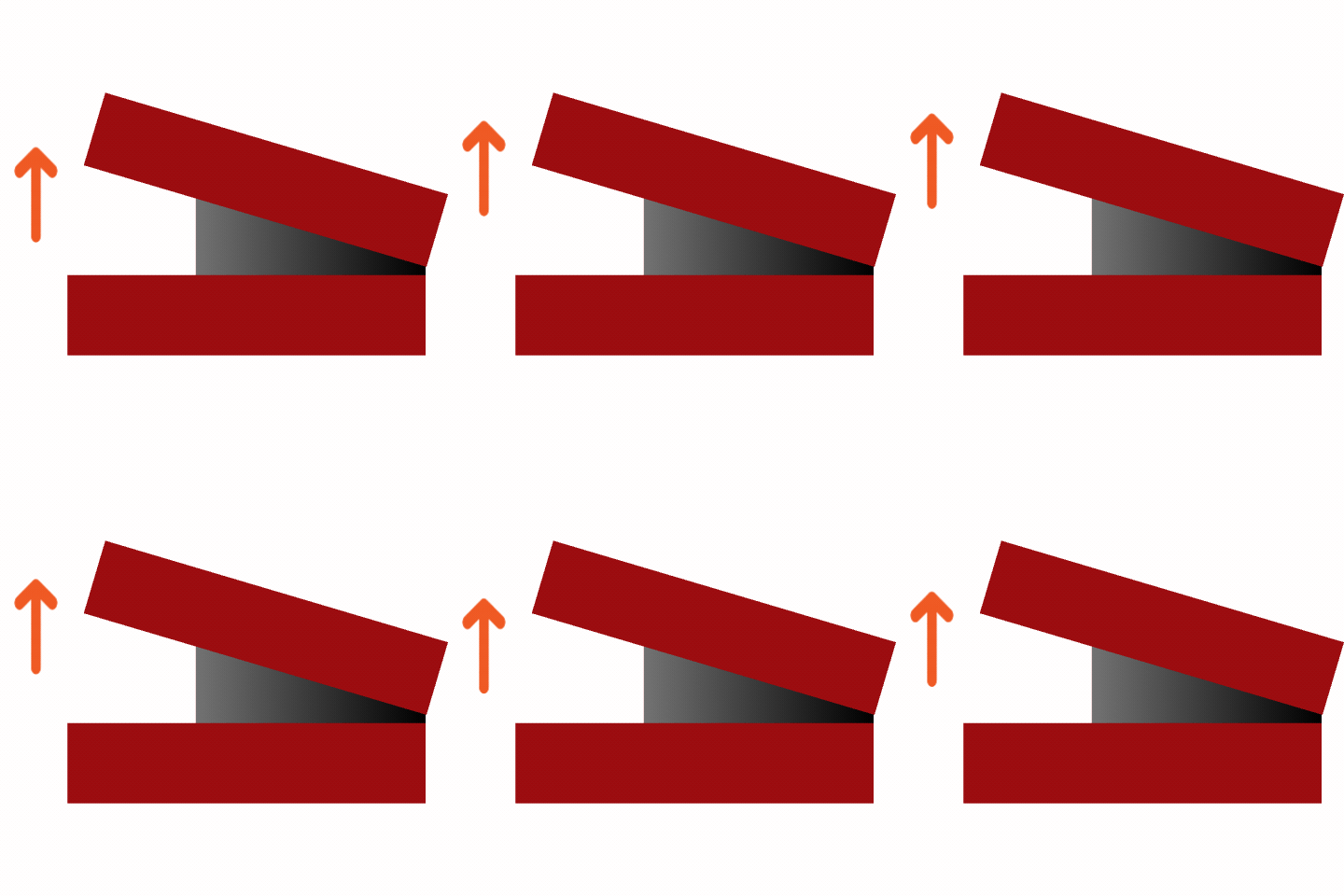
Cleavage
Force concentrated at one edge of the joint, creating a prying action. Typically occurs when both substrates are rigid.
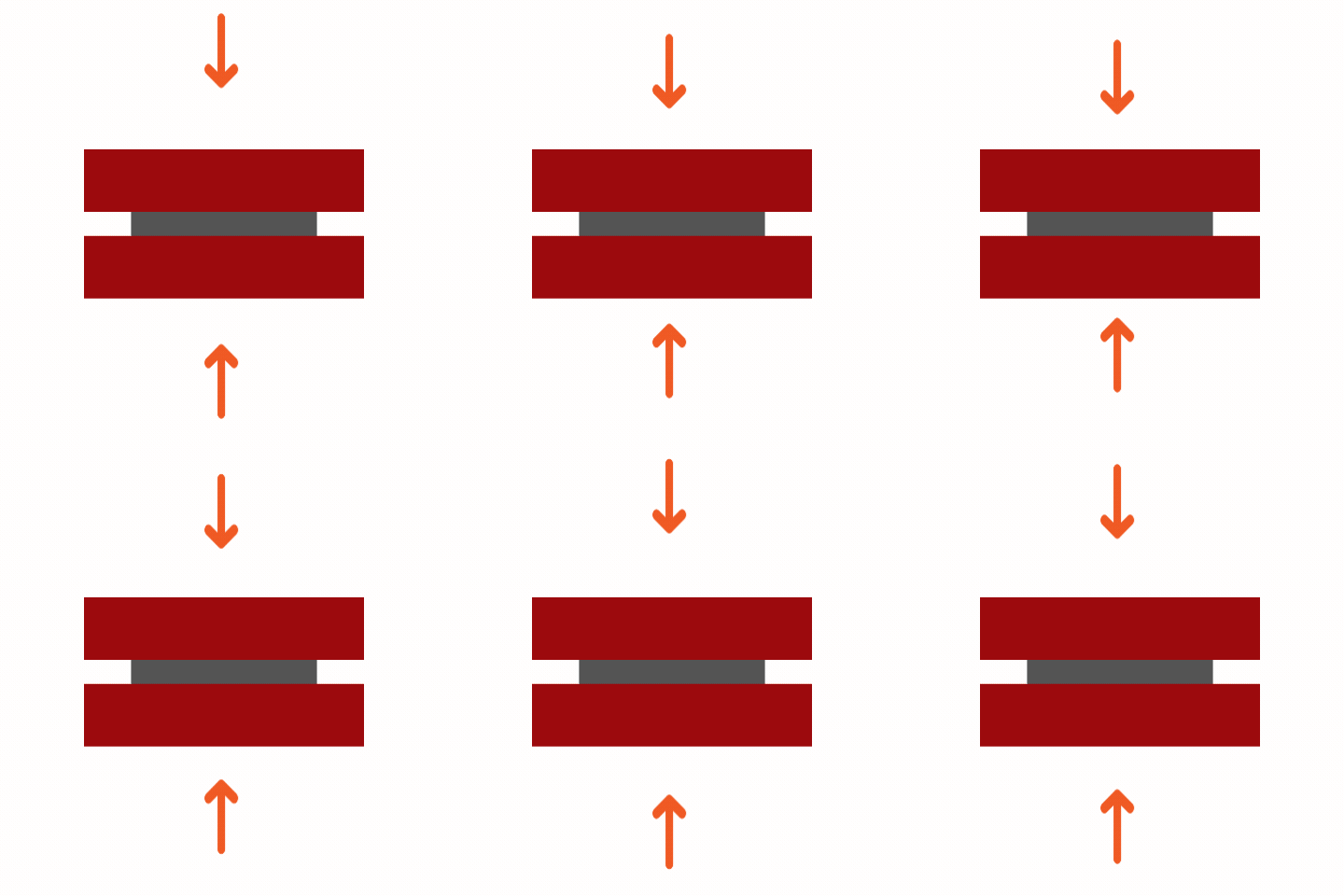
Compression
A force applied directly toward the bond in a straight, in-plane direction, evenly distributed across the bonded area.
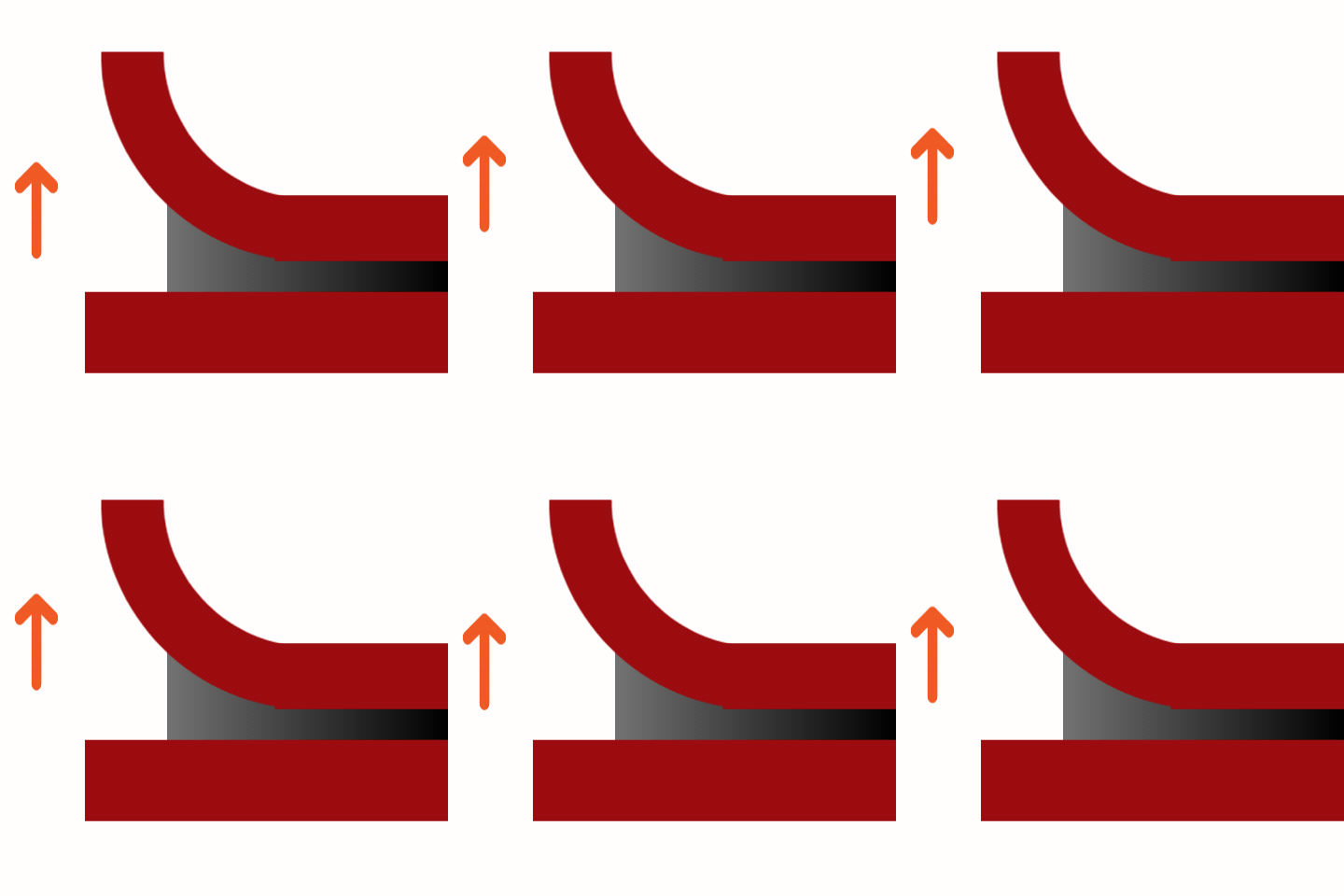
Peel
Force applied at one edge with a flexible substrate, concentrating stress even further and making it a demanding strength test.
Adhesive Curing Mechanisms
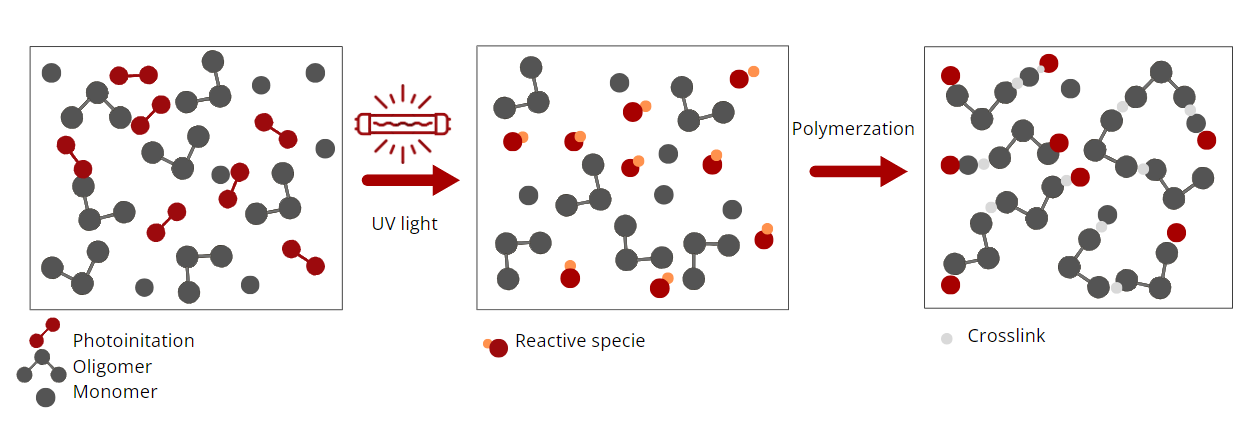
UV-curable materials contain photoinitiators that are activated by UV light. When exposed to UV radiation, these photoinitiators trigger polymerization, causing the adhesive to solidify. Epoxy acrylate, polyurethane acrylate, and polyester acrylate adhesives are widely used UV-curing chemistries.
Benefits include fast cure times, lower energy consumption, environmental friendliness, and accurate, consistent results.
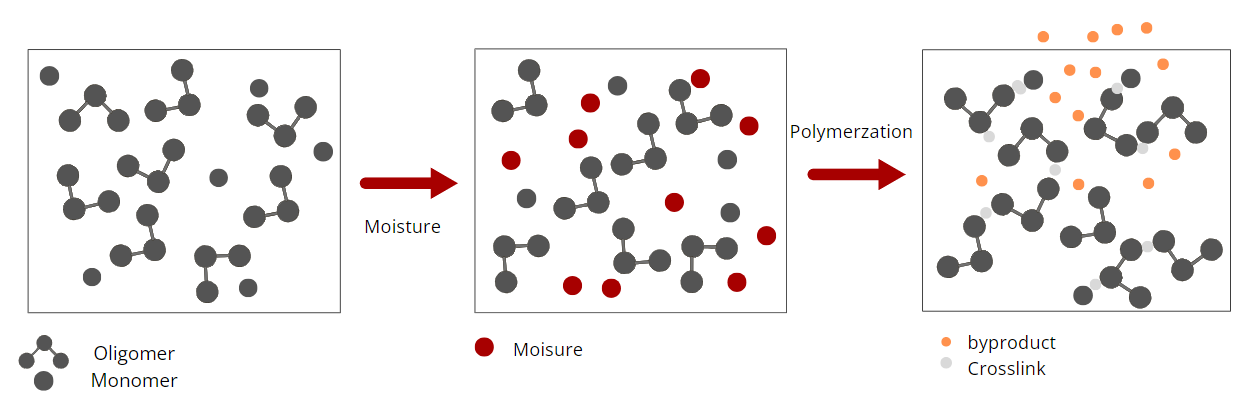
Moisture-curing adhesives contain reactive groups — such as isocyanates or hydroxyl groups — that react with water molecules. Exposure to ambient moisture triggers a chemical reaction that forms new bonds and solidifies the adhesive.
These systems are easy to apply, require no special equipment or curing conditions, and are environmentally friendly. Common types include polyurethanes, silicones, and cyanoacrylates.
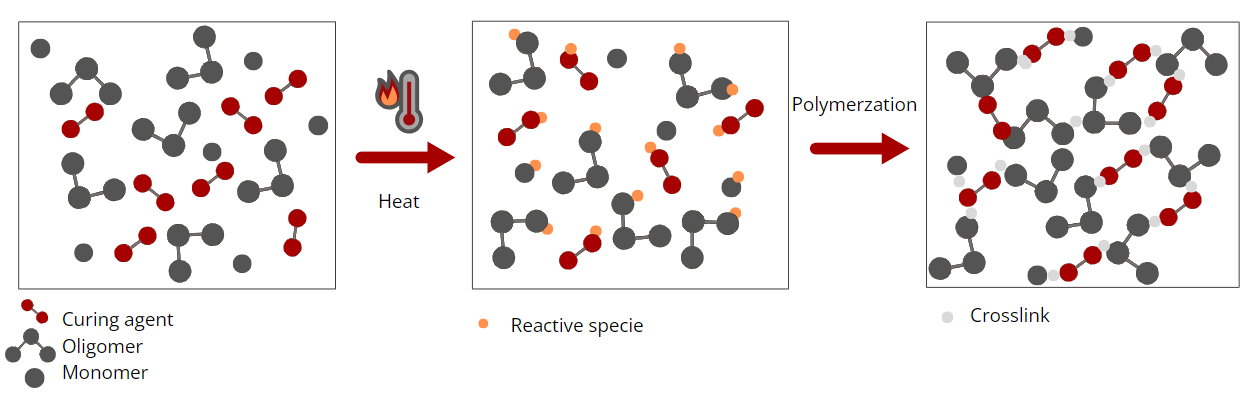
Heat-curing adhesives solidify when exposed to heat, which activates reactive groups within the material and drives them to form a polymer network. Most heat-curing adhesives are supplied as two-component systems — a resin and a hardener — though some are single-component systems that require cold storage to delay cure.
Epoxies are among the most common heat-curing adhesives, alongside polyester resins and phenolic resins.
Presentations
Adhesives Introduction
This presentation provides a foundational overview of adhesive technology, covering the definition and function of adhesives, their key chemical components, and the principles behind adhesive bonding. It explores how different adhesive systems are formulated and selected for various industrial applications, helping users understand the relationship between material properties, performance requirements, and bonding success.